

You're halfway through a hard set, you reach overhead, and your cropped workout tank climbs toward your ribs. You stop to tug the hem down, check the sports bra underneath, and wonder whether the problem is the size, the cut, or the fact that the tank was never made for training in the first place.
That's the core buying question. A cropped workout tank isn't just a shorter top. Crop length, fabric blend, armhole shape, hem construction, and support level determine whether it stays useful through presses, squats, rows, runs, and floor work. Choose those details around your body and training style, and the cropped silhouette becomes practical. Ignore them, and it becomes a piece you're constantly adjusting.
Table of Contents
- What a Cropped Workout Tank Actually Is
- From Poolside to the Gym Floor
- Fabric and Construction That Actually Perform
- Getting the Fit Right for Real Training
- Matching the Tank to Your Workout
- Misconceptions That Lead to Bad Buys
- Your Shortlist and Buying Checklist
What a Cropped Workout Tank Actually Is
A cropped workout tank is a sleeveless performance top cut to finish above the natural waist, commonly around two to four inches above the navel. The exact length varies by design, but the important feature is intentional proportion. It should expose enough midsection to reduce excess fabric while still covering the area you need covered during movement.
A regular workout tank usually extends toward the hip. That extra length can work well for running, general gym sessions, or anyone who prefers more coverage, but it may bunch under a lifting belt or collect around the waist during floor exercises. A fashion crop top is shorter for styling and layering, yet may lack moisture management, recovery stretch, or reinforced construction. A vintage ribbed tank often prioritizes soft cotton and casual texture over support, ventilation, and repeated high-range movement.
The construction tells you more than the label
Look for these structural markers:
- A stable hem: Reinforced stitching, a clean binding, or a shaped hem helps prevent the fabric from folding and crawling upward.
- A body-skimming fit: The tank should follow your torso without compressing your ribs. Excess looseness gives the hem room to shift.
- Functional armholes: Sleeveless cuts or dropped armholes should allow overhead movement without exposing more of your sports bra than you want.
- Durable stretch recovery: The fabric should return to shape after repeated reaching, bending, and washing.
The category has become a foundational part of women's activewear, not a fringe fashion item. One market estimate places women's sport shirts and tops at $28.4 billion globally in 2025, with a projection of $51.7 billion by 2034. Tank tops represented about 22.8% of that category in 2025, behind T-shirts at 34.2%, according to market coverage of women's sport shirts and tops.
Practical rule: Buy the tank for the movement you perform, not the mirror pose you imagine.
From Poolside to the Gym Floor
The modern tank top began in the water. Its name comes from “tank suits,” sleeveless swimsuits worn in swimming tanks, which explains why the silhouette has always carried an athletic association rather than starting as ordinary casualwear.
For years, the cut belonged mainly to sport and poolside settings. The shift into everyday clothing happened later. Fashion history sources trace regular everyday tank-top wear for men and women to the 1970s, when the garment moved beyond swimming and became part of the mainstream wardrobe. The transition from poolside clothing to a casual staple also explains why today's cropped workout tank can sit comfortably between technical apparel and athleisure, as described in this history of the tank top's journey.
Why the gym adopted the cropped silhouette
The gym didn't need to reinvent the tank. It refined an existing athletic shape.
Shorter hems reduce fabric around the waist during lifting and make it easier to see how clothing interacts with a belt, waistband, or bracing position. Open armholes give the shoulders more freedom for pressing and pulling. A fitted torso also helps prevent the garment from catching on equipment or folding into the abdomen during floor work.
That practicality became more visible as strength training, group fitness, and studio workouts expanded. The same shape now appears under an open shirt, with high-rise leggings, or on its own during a demanding session. The casual styling works because the garment still retains its original visual language: sleeveless, mobile, and built around the body's movement.
The result is a hybrid with a clear purpose. A good cropped tank looks relaxed outside the gym, but its pattern should still make sense when you're reaching overhead, rotating through a lunge, or bracing under load.
Fabric and Construction That Actually Perform
Fabric decides whether a cropped workout tank feels like equipment or decoration. Start with the fiber content, then inspect the knit, ventilation, and seams.
Synthetic fibers such as polyester and nylon are useful because they move moisture away from the skin and recover their shape more reliably than many cotton-rich casual fabrics. Polyester also performed strongly in dynamic testing, recording the highest heat-loss rate in the cited study at 388 W/m² during activity. The study concluded that polyester can provide strong cooling and moisture-management performance under exertion, as discussed in this dynamic activewear performance reference.
That number doesn't mean polyester eliminates sweat. Wicking moves moisture away from your skin. It doesn't stop perspiration. The knit structure, fabric weight, air movement, and drying behavior determine what happens next.
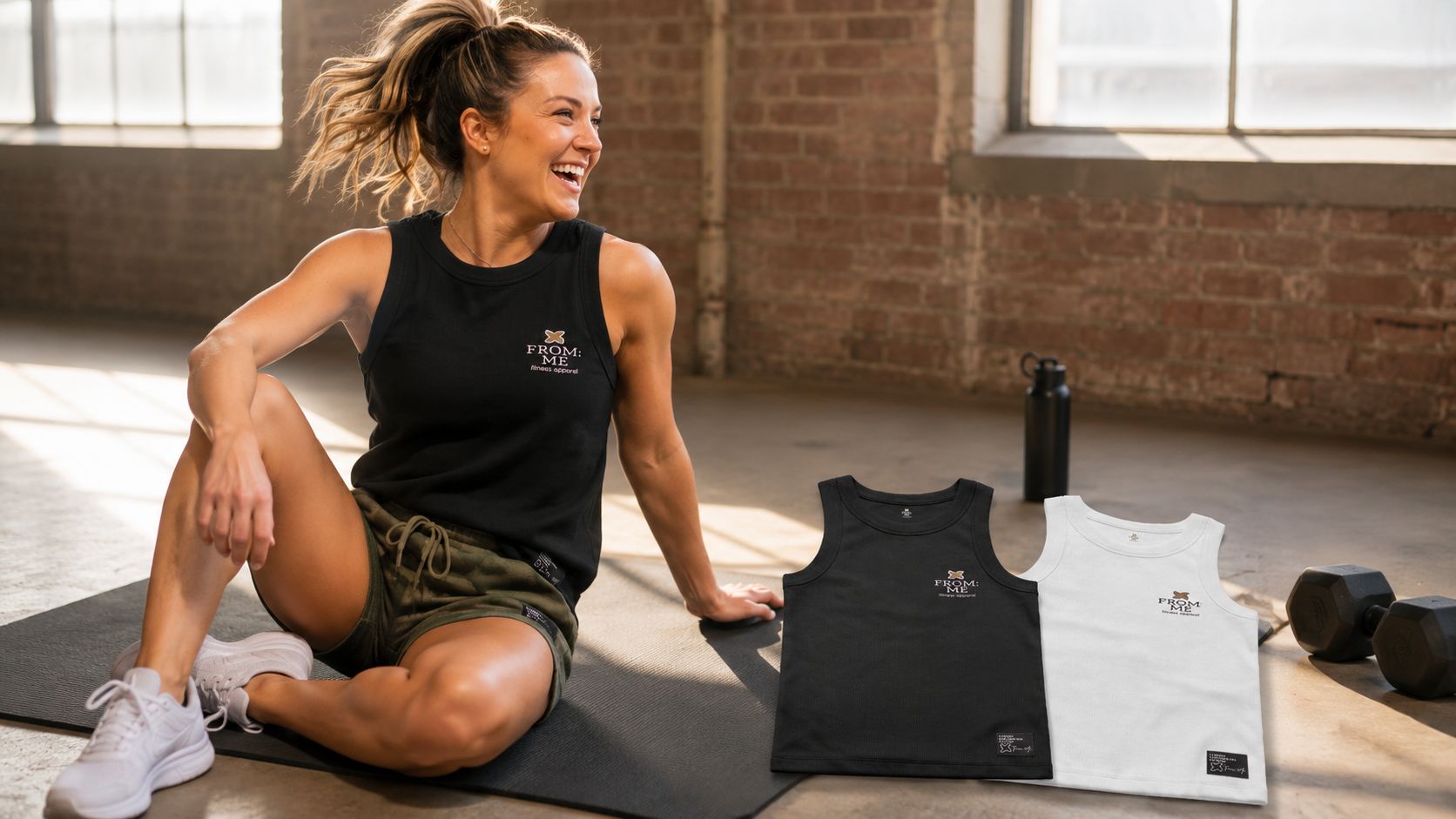
Choose the construction for the session
A lightweight polyester jersey suits high-output training where you need quick moisture transfer and unrestricted movement. A nylon-spandex blend often feels smoother and more supportive against the body. Retail specifications commonly use blends such as 74% nylon and 26% spandex or 85% polyester and 15% elastane, with moisture-wicking, quick-dry, and four-way-stretch claims documented in technical cropped-tank specifications.
Mesh panels can help in predictable heat zones, especially along the upper back or side seams. They're useful when placed with purpose, but decorative mesh doesn't automatically improve ventilation. If you're comparing airflow-focused designs, this guide to women's mesh tank tops offers a helpful construction reference.
| Fabric | Moisture Wicking | Drying Speed | Stretch Recovery | Best Use |
|---|---|---|---|---|
| Polyester jersey | Strong | Fast when lightweight and ventilated | Good with elastane | High-output training |
| Nylon-elastane blend | Strong | Moderate to fast | Excellent | Close-fitting gym and studio work |
| Brushed interlock | Moderate to strong | Moderate | Good | Warm-ups and cooler sessions |
| Cotton-spandex rib | Moderate | Slower when saturated | Moderate | Low-intensity training and everyday wear |
The Womens Organic Rib Tank is a different proposition. It uses 95% organic cotton and 5% spandex, with a 2x2 rib knit, wide binding, double-needle hem, and preshrunk construction. That combination makes sense for soft everyday wear and lighter activity, but I wouldn't choose a cotton-rich rib tank for repeated high-sweat intervals when drying speed is the priority.
Construction matters just as much as the fiber label. Flat seams reduce irritation during carries and floor work. A shaped or reinforced hem helps keep the tank from rolling upward. Check whether the shoulder and side seams sit directly where your backpack, barbell, or arm movement will rub. A technically impressive fabric can still fail if the pattern creates friction.
Getting the Fit Right for Real Training
Fit problems rarely come from one measurement. Torso length, bust shape, armhole depth, and hem tension interact, so “just size up” is lazy advice.
Start with the hem. For lifting, a shorter crop can finish around one to three inches below the ribcage, giving you a clear waist and reducing interference with a belt or high-rise waistband. For studio training, choose more length, often around four to six inches below the ribcage, so the tank stays in place during forward folds, transitions, and inverted positions.
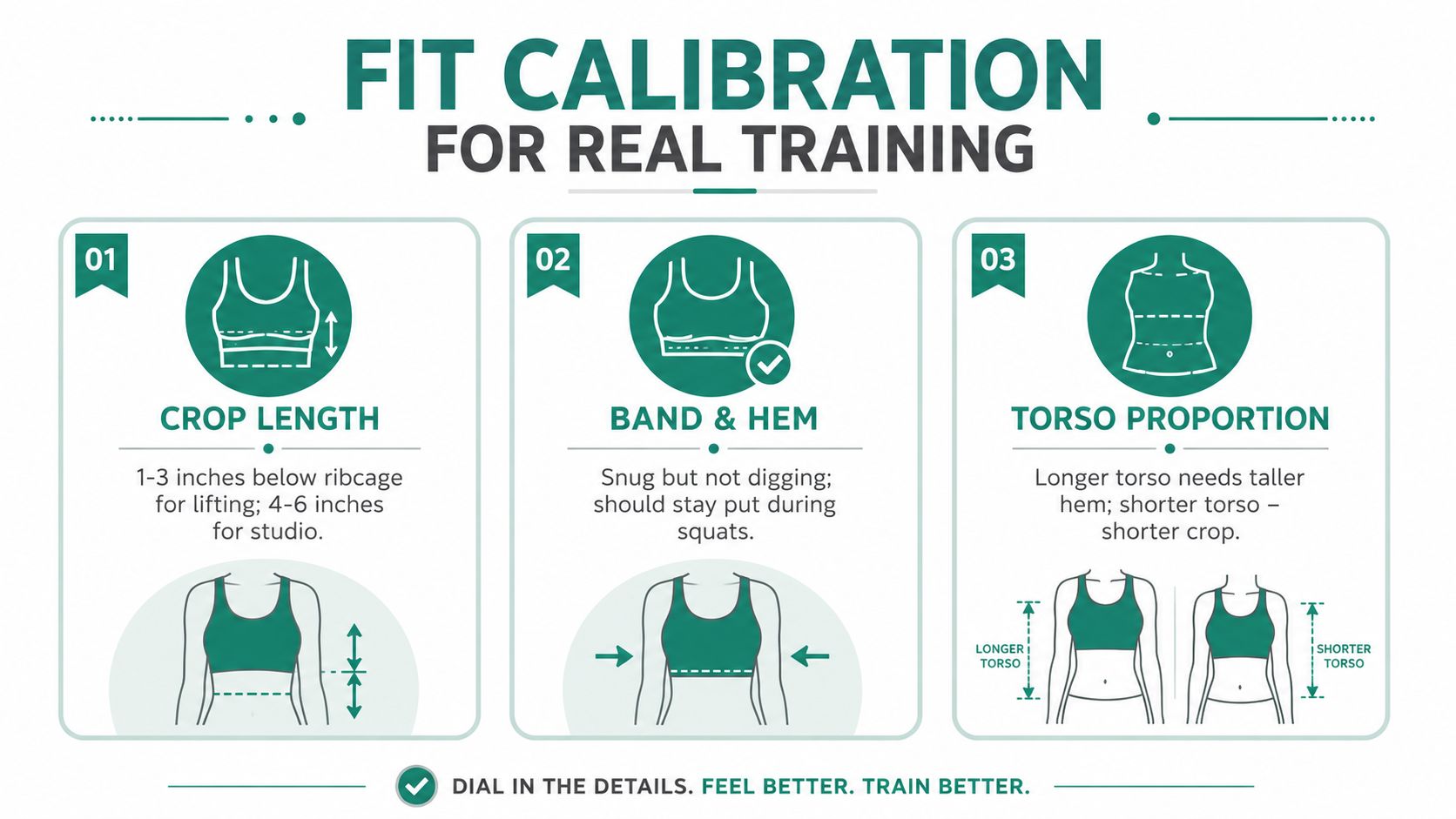
Calibrate the fit in this order
- Check torso proportion first. A longer torso usually needs a taller body panel, even if the wearer wants a cropped look. A shorter torso may need a shorter hem to prevent the tank from landing at the widest part of the waist.
- Test the armholes overhead. Raise both arms, reach forward, and mimic a press. The armhole should clear the pec or lat without cutting into tissue or exposing the side of the sports bra. Tight armholes restrict shoulder movement. Very deep armholes improve airflow but may require a deliberate bra-and-tank combination.
- Assess the hem while moving. Perform a squat, hinge, overhead reach, and torso rotation. The hem should remain snug without digging into the ribs. If it flips immediately, the issue may be weak recovery or an overly wide opening, not a need for a larger size.
- Evaluate support separately. A built-in bra can provide coverage and modest compression, but support depends on the underband, strap geometry, fabric tension, and your chosen activity. For running or jumping, the tank may still need to be paired with a dedicated sports bra.
The category is increasingly adding integrated bras and adaptive sizing, but practical fit guidance remains limited. Recent coverage emphasizes that torso length, underbust, and bust measurements matter more than relying on S, M, or L alone, as discussed in this women's tank-top trend coverage.
A tank fits correctly when you stop thinking about it during the hardest part of the workout.
For a broader apparel perspective on choosing pieces around movement and training needs, see this guide to women's fitness apparel.
Matching the Tank to Your Workout
There isn't one ideal cropped tank. Studio work, lifting, and everyday wear place different demands on the same garment, so buying one shape for all three usually creates compromises.
| Workout Type | Crop Length | Fabric | Support | Hem |
|---|---|---|---|---|
| Studio training | Longer crop | Four-way stretch knit | Moderate to high | Snug and stable |
| Strength lifting | Shorter, boxier cut | Low-stretch technical blend or structured soft blend | Separate sports bra as needed | Wider or weighted |
| Everyday athleisure | Flexible, torso-dependent | Soft nylon blend or casual stretch fabric | Light | Relaxed and clean |
Studio sessions
Choose the longest crop you can comfortably tolerate without excess fabric. Pilates, yoga, and mobility work involve repeated bending, folding, and transitions, so a stable hem matters more than showing the most waist. Four-way stretch is essential, and moderate compression can keep the fabric close without making breathing feel restricted.
A relaxed armhole is useful for reaching and rotating, but it shouldn't gape when you fold forward. If the tank includes a shelf bra, test it through a plank and a standing fold. Coverage that shifts during the warm-up will become a distraction later.
Lifting days
Lifters usually benefit from a shorter, slightly boxier cut. It clears the belt line, reduces fabric bunching, and allows you to observe your trunk position during bracing. A wider hem can anchor the tank better than a narrow elastic edge, particularly when the torso moves between upright and hinged positions.
A cotton-modal-style blend can feel comfortable for strength sessions, but it won't manage heavy sweat like a technical synthetic. For high-output circuits between strength sets, choose polyester or nylon with elastane instead.
Everyday wear
Athleisure needs a softer drape and cleaner layering. A dropped armhole works with a fitted sports bra, tee, or open shirt, while a moderate neckline prevents the tank from looking like specialized gym gear. Prioritize comfort and styling flexibility over aggressive compression.
Cut-out details can change ventilation and visual proportion, but they also affect coverage. This overview of cut-out tank tops is useful when deciding whether an open panel serves a training purpose or adds visual interest.
Misconceptions That Lead to Bad Buys
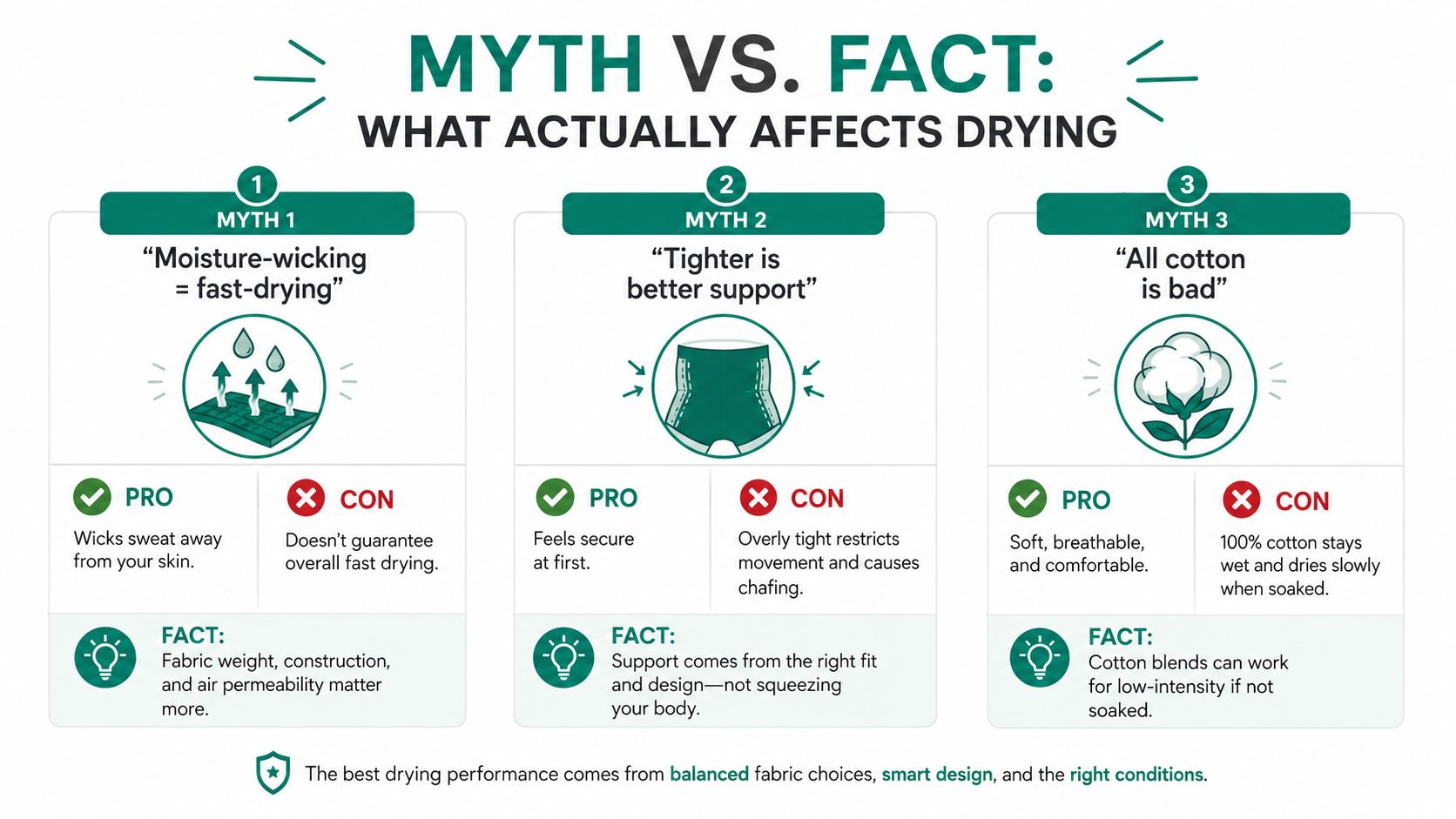
Myth one: Moisture-wicking means fast-drying. Wicking describes movement of moisture away from the skin. It doesn't guarantee that the garment will dry quickly once saturated. Fabric weight, knit construction, and air permeability decide how long the dampness remains.
Better rule: Treat “moisture-wicking” as one requirement, not the complete performance test. Look for a lightweight synthetic blend, open knit zones, and a construction that allows air to move through the garment. Dynamic testing matters because arm elevation and torso flexion change the microclimate inside the tank.
Myth two: A built-in bra replaces a sports bra. It doesn't. A shelf bra may improve coverage and reduce movement, but compression alone isn't the same as support. Underband stability, strap width, cup structure, and the intensity of your workout matter more than the presence of an internal layer.
Better rule: Do a jump test, reach overhead, and bend forward. If the bust moves beyond your comfort level or the underband rolls, use a separate sports bra and treat the tank as the outer layer.
Myth three: Sizing up fixes every fit issue. A larger size may create more room across the bust, but it can also produce loose armholes, a drifting neckline, and more hem movement. The garment may feel less restrictive while performing worse.
Better rule: Adjust the pattern problem directly. Choose a longer body for a long torso, a deeper armhole for shoulder mobility, and stronger recovery for ride-up. Cotton blends can still work for low-intensity sessions if they aren't exposed to prolonged saturation. The research on fabric performance and sweat management supports judging the complete construction rather than trusting one marketing phrase.
Your Shortlist and Buying Checklist
Use this checklist in the fitting room or on the product page. If a tank fails two of these tests, skip it.
- Crop length: Match the hem to your torso and workout. Shorter works well for belt-focused lifting, while studio training needs more coverage through bends.
- Fabric blend: Verify the fiber content. For sweaty training, prioritize polyester or nylon paired with elastane, rather than assuming a “performance” label proves anything.
- Seam placement: Run your fingers along the side and shoulder seams. Avoid bulky edges where a bar, strap, or repeated arm swing will rub.
- Range of motion: Perform an overhead reach, hinge, squat, and torso rotation. The armhole should clear your movement without pulling the neckline.
- Breathability: Look for purposeful mesh or ventilation zones, particularly across the upper back and side seams.
- Care and durability: Read the care label before buying. Preshrunk construction helps with dimensional stability, while gentle washing protects stretch and finish.
My three practical picks
For studio training: Choose a compressive polyester-elastane tank with a stable shelf bra and a longer crop. It should stay close during folds without turning the ribcage into a compression chamber.
For lifting: Choose a shorter, boxier tank with a structured hem and enough room through the shoulders. Pair it with the sports bra that matches your support needs instead of expecting the tank to do both jobs.
For everyday layering: Choose a softer technical nylon tank with a dropped armhole and moderate drape. It should layer cleanly without the restrictive feel that makes a training top uncomfortable outside the gym.
Give yourself 90 seconds to make the final decision. Check the hem at rest, raise your arms, hinge forward, squat, rotate, and take one deep breath. If the neckline, armholes, bust, and hem all stay where they should, you've found a functional fit. Wash it without fabric softener, which can interfere with moisture-management finishes, and follow the care label so the stretch recovery lasts.
From: Me Fitness Apparel offers women's tanks and athleisure basics alongside performance and graphic tops, outerwear, shorts, and accessories for training-to-everyday wardrobes. Visit From: Me Fitness Apparel to compare its apparel lineup and choose a top that matches how you train.