

The most common advice about a mesh tank top womens shoppers hear is wrong. Breathability isn't guaranteed by the word mesh, it comes from how the garment is built, where the mesh sits, and whether the top is lined where your body needs coverage. A tank can look airy on a hanger and still feel clingy, transparent, or useless once the sweat starts.
That's why the construction details matter more than the trend cycle. Open-knit fabrics have a long place in performance apparel, and mesh fits neatly inside a women's activewear market that keeps expanding, with one major report valuing the category at USD 17.50 billion in 2022 and projecting it to reach USD 70.89 billion by 2030 (Data Bridge Market Research). In other words, buyers aren't just chasing style, they're buying into a category built around training, layering, and comfort.
Table of Contents
- Why Most Mesh Tank Tops Fail at the Gym
- The Science Behind Mesh Breathability
- Strategic Mesh Placement for Real Workouts
- Layering Strategies That Actually Work
- From Gym to Street Styling Principles
- What to Look for When Buying Mesh Tanks
- Building a Versatile Mesh Tank Collection
- Women's collection scan for the right mix
Why Most Mesh Tank Tops Fail at the Gym
Most mesh tanks fail for a simple reason, they treat ventilation like the only job. In the gym, airflow matters, but so do opacity, shape retention, and how the fabric behaves once sweat hits it. A tank that feels breezy during warm-up can become awkward during intervals if the mesh stretches too far, clings in damp patches, or shifts out of place.
Breathable does not mean functional
The core issue is construction. Women's mesh tanks typically use an open-hole knit geometry to improve airflow, and the mesh aperture is the main design variable that affects breathability, opacity, structural integrity, and moisture management (Montforge). Bigger openings can move heat away faster, but they also reduce coverage and can weaken abrasion resistance and UV shielding. That's why the smartest performance pieces use mesh in zones, not everywhere.
A fully uniform mesh front can look sleek in a mirror and still feel wrong in a real workout. Once a sports bra, barbell knurling, or sweaty skin comes into play, the wrong knit density can expose more than the wearer wants and do less than the label promises.
Practical rule: if the product page only talks about “sheer style” and never says where the mesh is placed, expect fashion-first construction, not gym-first construction.
Here's where a different kind of tank can matter. A piece like Womens Organic Rib Tank shows the opposite approach, a dense rib knit that prioritizes softness and everyday coverage instead of open-air performance. That doesn't make it a mesh substitute, it just makes the contrast clear, different knit structures solve different problems.
What to scan before you buy
Look past the model photo and check whether the listing mentions lining, panel placement, or knit density. If it doesn't, the garment may be engineered for the rack more than the workout floor.
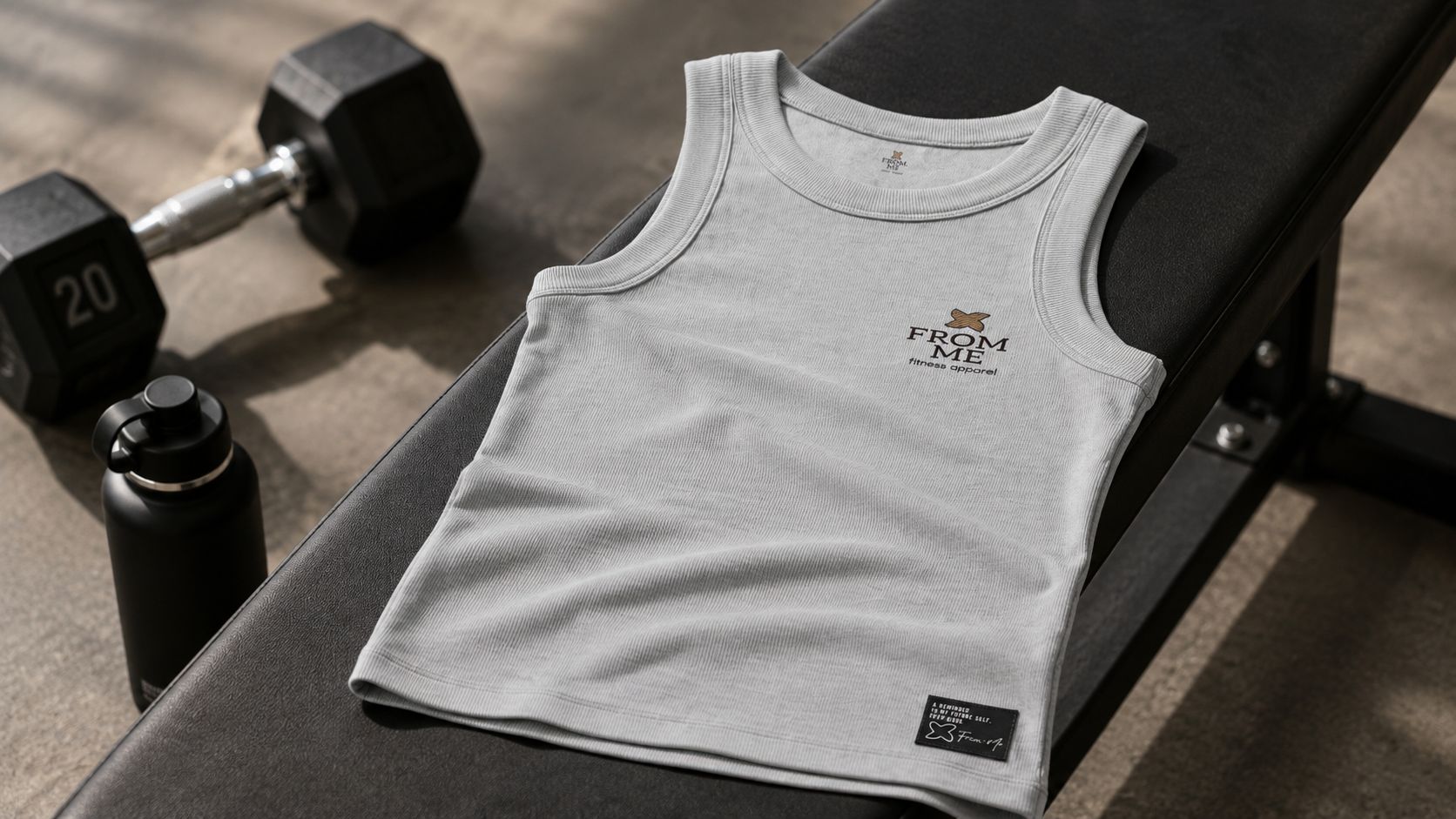
A top can be trendy and still be the wrong tool for lifting, running, or HIIT. The best gym pieces make sweat management and coverage work together, not compete.
The Science Behind Mesh Breathability
Mesh breathes because its open grid changes how air and moisture move across the body. In performance activewear, polyester-based mesh is common because synthetic hydrophobic fibers, paired with moisture-wicking finishes, pull sweat off the skin and spread it toward the outer surface so it can evaporate faster than it would in a dense knit. That is the practical advantage buyers are paying for, not just the see-through look (Suerte Textile).
How construction changes performance
Larger apertures move air faster, but they introduce transparency and durability costs. Bigger holes can improve exchange at the skin surface and speed evaporation, yet they also raise the odds of visible sports bras, snagging, and wear under friction. Fine mesh usually makes more sense for tanks that need to survive squats, presses, and cardio without becoming distracting.
The technical difference is not abstract. Aperture size, panel placement, and lining decide whether a mesh tank manages heat or just looks airy on a hanger. If the mesh sits where the torso bends and sweats, it can help. If it lands across the chest with no lining, it often creates the exact coverage problem buyers are trying to avoid.
The market backdrop matches that reality. One 2025-focused estimate said conventional and synthetic materials represented 85.25% of revenue in 2025 in women's active wear, which helps explain why synthetic mesh stays common in performance apparel (The Report Cubes). Buyers want fabrics that dry quickly, keep shape, and do not trap sweat against the skin.
| Mesh Construction Performance Comparison | Airflow Rating | Coverage Level | Drying Speed | Best Use Case |
|---|---|---|---|---|
| Fine honeycomb mesh | High | Moderate to high | Fast | Lifting, studio work, layering |
| Large open-hole mesh | Very high | Low | Very fast | Short cardio bursts, warm conditions |
| Dense stretch knit with mesh accents | Moderate | High | Moderate | Coverage-first gym wear |
| Fully lined mesh panel | Moderate | High | Moderate | Modesty and layered looks |
The best test is not how sheer the fabric looks under store lights, it's how it handles sweat, motion, and recovery between sets.
For the wider buying picture around women's fitness apparel, these fabric choices explain why so many shoppers want one top that can handle training and everyday wear.
Strategic Mesh Placement for Real Workouts
Placement decides whether a mesh tank helps you train or just looks athletic. The body doesn't sweat evenly, and the zones that heat up during overhead work, deep squats, or cardio are not always the same spots that need the most coverage. That's why the strongest designs use mesh where airflow helps and structure where support matters.
Where mesh works hardest
Upper back mesh is usually the most useful placement. It can release heat during rowing, presses, and treadmill sessions without turning the front of the tank into a transparency problem. Side panels also earn their keep because they give stretch and ventilation where the torso twists, bends, and expands under load.
Center chest mesh is the trickiest choice. It can look edgy in product photos, but it often creates the exact coverage problem many buyers are trying to avoid. Lower-back mesh can also be annoying during dynamic moves because it shifts into the waistband area and can ride up when you're moving fast.
Use the body's sweat map, not the mannequin's silhouette. Mesh belongs where heat builds, not where modesty breaks down.
The infographic below makes the contrast easy to read.
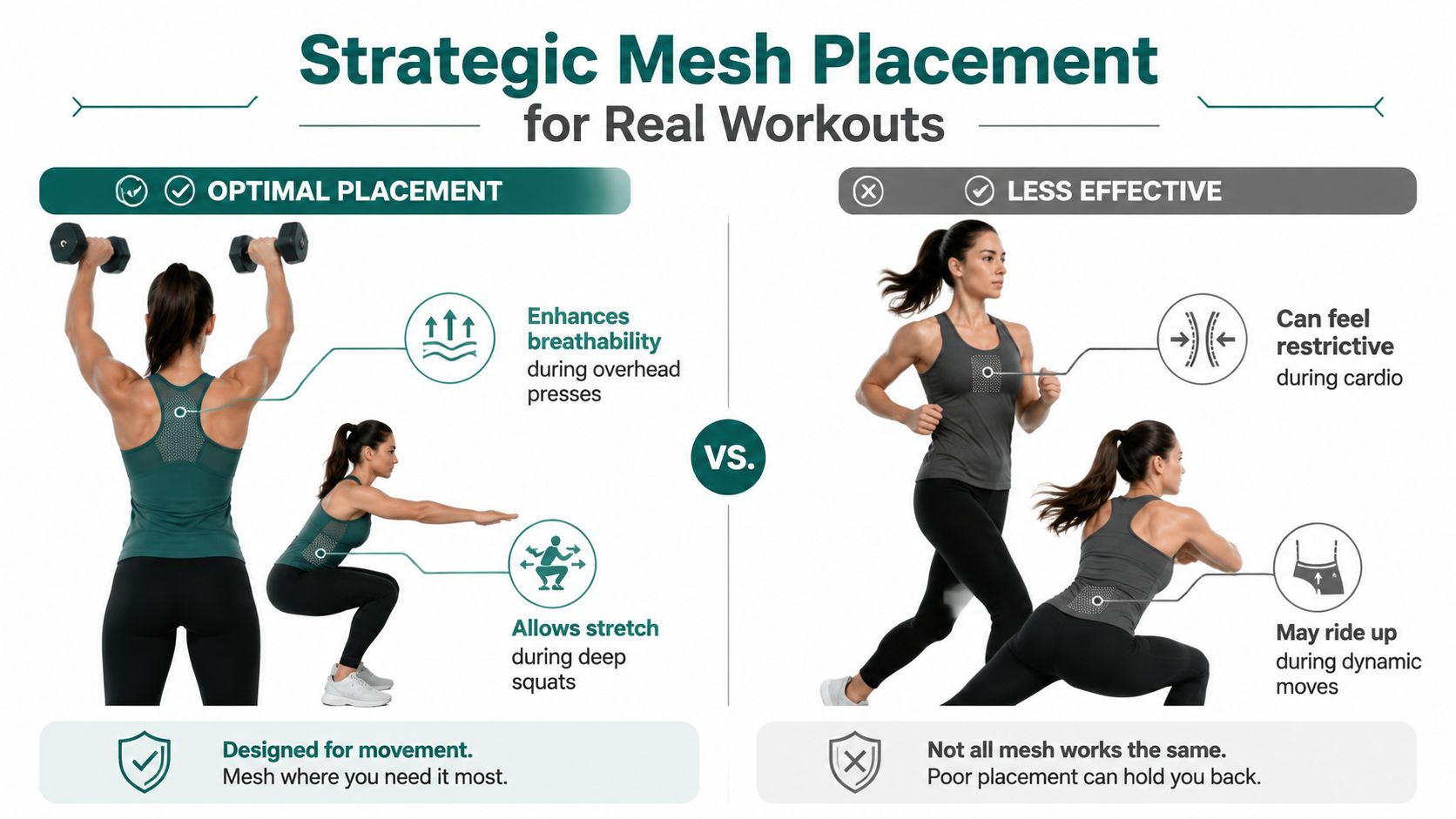
Full mesh versus targeted panels
Full-mesh tanks can work for cool-downs, layering, or very hot environments, but they're the least forgiving option in public gyms. Targeted mesh panels usually perform better because they preserve airflow where you need it without exposing every movement under the lights.
When I've tested tanks in real sessions, the difference is obvious. The ones that stay in rotation are the designs that breathe through the back and sides, keep the chest opaque, and don't shift once sweat starts building. Anything else usually ends up in the “looks good, trains badly” pile.
Layering Strategies That Actually Work
The transparency problem is the main reason people hesitate to wear mesh tanks outside a private studio. The fix isn't avoiding mesh, it's pairing it with the right base and outer layers so you keep airflow without giving up comfort. Recent fashion coverage has pushed mesh toward layering, which lines up with how it works best in practice, as a texture that sits over something more opaque.
Build coverage from the inside out
Start with a solid sports bra in a color that either matches the tank or intentionally contrasts with it. If the mesh is fine and the fit is close to the body, that base layer does most of the work. A looser mesh tank can also sit over a fitted, opaque crop when you want less skin show and more shape control.
The next layer depends on the setting. An unzipped hoodie gives you pre- and post-workout coverage, while a button-down can push the look into casual territory without hiding the mesh texture completely. For cooler days, a structured vest keeps the outfit balanced and lets the mesh stay visible where it adds visual interest.
Match layer weight to the situation
The biggest mistake is mixing a very sheer mesh with a flimsy bra and expecting the outfit to feel secure. Lightweight layers work for the gym, but they need to be coordinated so the tank doesn't cling or flash too much when you bend, stretch, or raise your arms.
For relaxed off-duty wear, a mesh tank can sit under a structured layer and pair cleanly with something grounded below, like the Women's Camo Wave Wash Fleece Shorts, which bring a more casual, substantial feel to the outfit. That kind of balance matters because mesh reads lighter and more delicate than your other pieces, so the rest of the look has to hold its own.
From Gym to Street Styling Principles
Mesh turns into a strong street piece when you stop treating it like a novelty and start treating it like texture. The trick is to anchor the openness of the tank with solid shapes, cleaner lines, and one or two pieces that feel deliberate instead of gym-rushed. That's why mesh looks sharp with denim, structured outerwear, or simple bottoms that don't fight for attention.
The image below shows how that balance works in motion.

Keep the outfit grounded
Jeans are the easiest place to start because they immediately move the look away from the studio. A mesh tank with straight-leg denim and clean sneakers reads intentional, not overstyled. If you want a sharper edge, layer the tank under a jacket or use a crisp overshirt so the mesh acts like a texture accent instead of the centerpiece.
The same principle shows up in other cutout or sheer styles, including the styling ideas discussed in cut-out tank tops. The lesson is the same, the more open the garment is, the more important the rest of the outfit becomes.
Let one piece lead
Don't stack too many statement elements at once. If the tank is sheer, keep the pants simple. If the jeans are distressed, keep the mesh placement strategic. That restraint makes the outfit look current without trying too hard.
Mesh earns a place in a modern wardrobe. It can move from class to coffee run to dinner, but only if the rest of the outfit gives it structure.
What to Look for When Buying Mesh Tanks
Buy mesh tanks by construction, not by mood board. The right piece should tell you how it behaves before you even click checkout. If the listing is vague about knit density, lining, seam type, or fit, assume the garment was designed to look good in a thumbnail first.
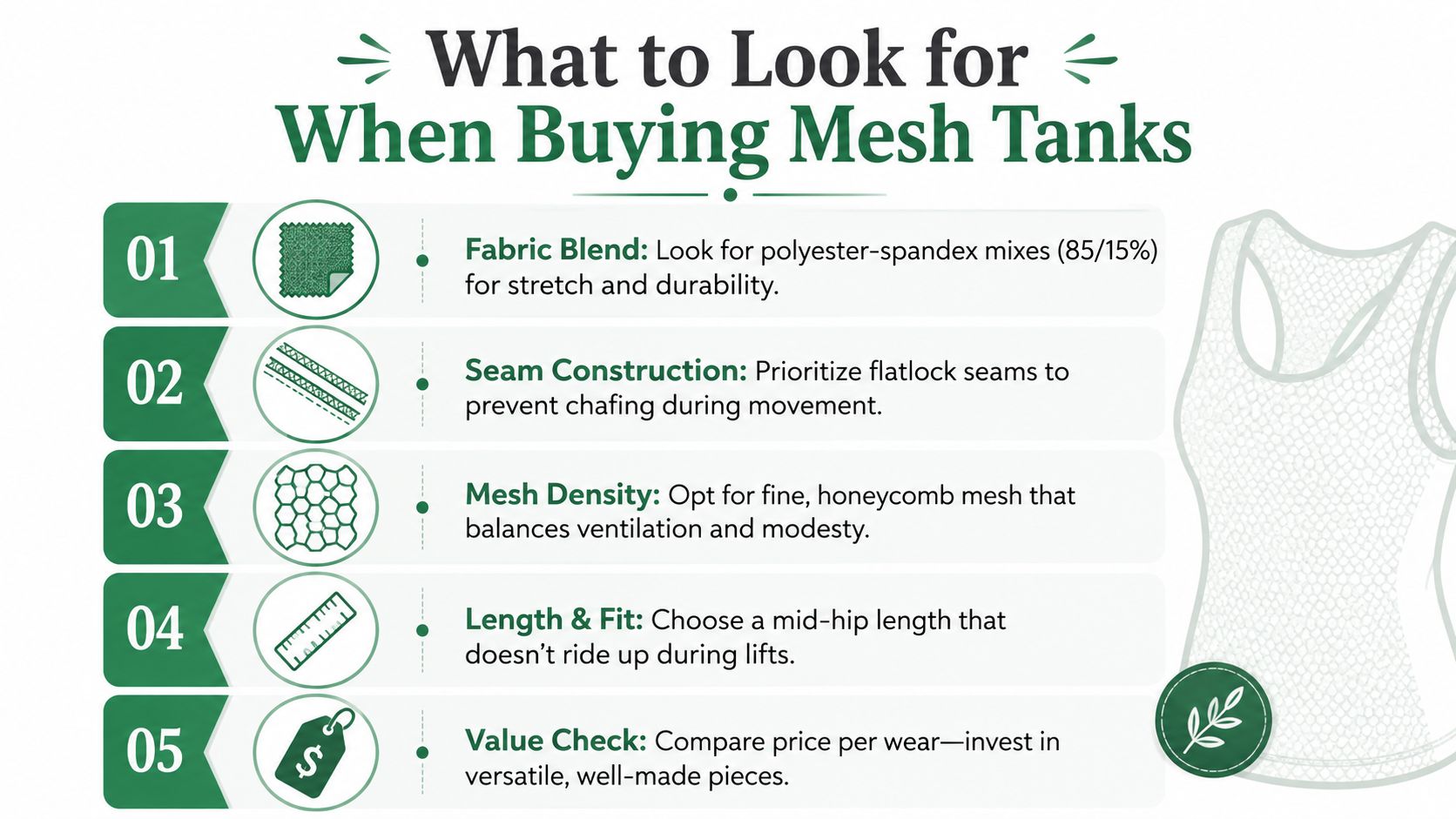
The five checks that matter
- Fabric blend: Favor polyester-spandex construction when the goal is movement, recovery, and sweat handling.
- Seam construction: Flat, clean seams matter because rough edges become obvious once the tank starts moving.
- Mesh density: Fine or honeycomb mesh usually gives a better balance of airflow and modesty than oversized holes.
- Length and fit: A mid-hip cut is safer for lifting because it's less likely to ride up.
- Value check: Compare how often you'll wear it, not just how striking it looks on day one.
The women's activewear market is large enough that shoppers can find both fashion-first and performance-first versions, so the label alone doesn't tell you much. The useful question is whether the tank solves a real training problem or just borrows workout language. That's especially relevant in a category where online retail keeps gaining importance, with one report projecting an 8.59% CAGR through 2031 for online retail stores tied to specialized apparel (Data Bridge Market Research).
I also pay attention to how much a brand says about return policies and made-to-order production. A product like the Organic Rib Tank is a good reminder that not every tank needs to be mesh to earn a place in rotation. Sometimes the better buy is the one that gives you clean fit, stable fabric, and a reliable base layer for the rest of your wardrobe.
Building a Versatile Mesh Tank Collection
A small mesh collection works better than a crowded drawer full of near-matches. One tank should handle sweaty sessions, another should cover layering days, and a third should stay in the street-style lane. That's enough variety for most wardrobes without repeating the same function three times.
Women's collection scan for the right mix
The women's collection is the right place to look for that kind of rotation because it sits in the overlap between training and everyday wear. A practical buyer isn't chasing every trend, she's choosing pieces that can be rotated, washed, and worn often without becoming disposable.
A smart lineup usually looks like this. One tank with tighter mesh for gym use. One more opaque top for errands and public spaces. One layer-friendly option that works under jackets, hoodies, or open shirts. That mix gives you coverage where you want it and airflow where you need it.
Care matters too. Wash mesh with similar fabrics, avoid rough agitation, and don't treat open-knit garments like heavy cotton basics. If the mesh loses shape, the whole point of the construction starts to disappear.
From: Me Fitness Apparel builds training apparel and athleisure for real wear, not just product photos, and that makes it a useful place to shop when you want a tank that works in the gym and still looks right outside it. If you're comparing mesh, ribbed, or layered tops for coverage and comfort, visit From: Me Fitness Apparel and look for pieces that match how you train.