

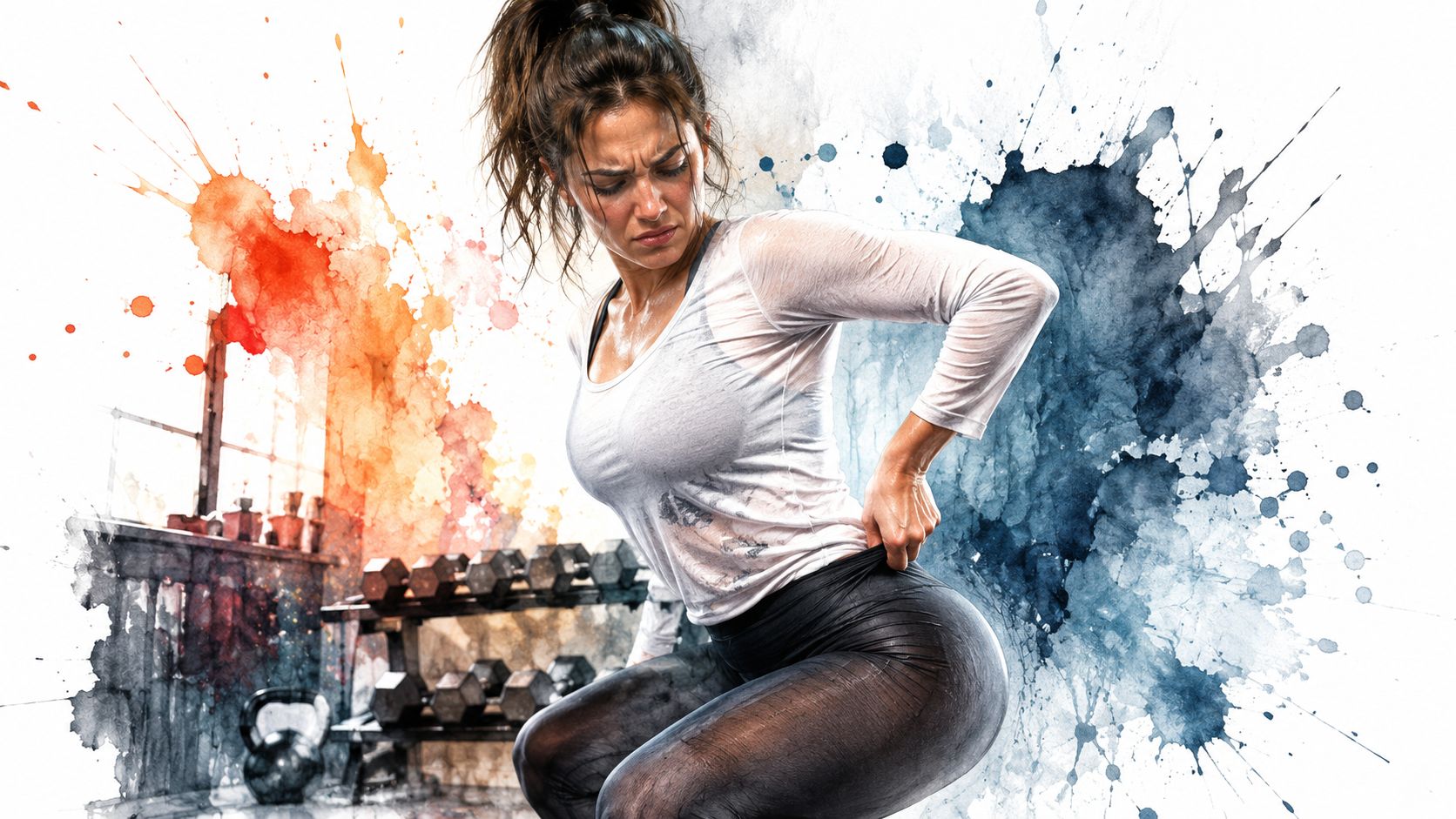
You've got the right outfit on for the gym. Then you bend into a squat, the waistband rolls, the tee sticks at the lower back, and suddenly you're thinking more about your clothes than your training. That tiny distraction matters. Women's fitness apparel isn't just about looking put together, it's the gear between your body and the workout, and that middle layer can either support your effort or make every rep feel harder.
The smartest way to think about it is as a system. Fabric, fit, support, and styling all work together, almost like the moving parts in a well-tuned bike. If one part is off, you feel it fast. If they all work together, you move more freely, stay cooler, and stop fighting your clothes when you should be focusing on form, pace, or recovery.
Table of Contents
- Why Your Workout Wardrobe Makes or Breaks Performance
- Understanding What Counts as Women's Fitness Apparel Today
- How Fabrics Work for Sweat Breathability and Durability
- Choosing Silhouettes and Support for Every Workout
- Finding Your Perfect Fit and Size Without the Guesswork
- Building Versatile Athleisure Looks from Gym to Street
- Smart Shopping Gifts and Care That Make Apparel Last
Why Your Workout Wardrobe Makes or Breaks Performance
You know the moment. You are halfway through a busy morning, you have class, work, or errands after the gym, and you reach for the leggings that looked sleek in the mirror but turn sheer under a deep squat. Or you pull on a cotton tee because it feels soft at first, only to spend the whole HIIT session in a damp layer that clings to your back. That is a performance problem.
Clothes can steal attention from the workout
The wrong outfit splits your attention. Instead of focusing on stride length, breathing, or bracing your core, you keep adjusting straps, tugging hems, or checking coverage. Good training gear removes those small interruptions so your energy goes where it belongs.
That is part of why the category keeps expanding. One market estimate values the women's activewear segment at USD 212.11 billion in 2025 and projects it to reach USD 341.33 billion by 2034, with North America at 35.4% in 2025 (Grand View Research). The growth makes sense because more shoppers want clothes that behave well during training and still feel comfortable afterward.
The right gear feels invisible
That is the goal. The best pieces do their work, like a reliable coach who does not need to shout. A top that stays dry, a waistband that stays put, and a bra that holds steady let you train without a running checklist of fixes.
Practical rule: If you keep adjusting it before the warmup ends, it is not workout-ready for you.
Performance wear matters because clothing can either interrupt movement or support it. Once you see that difference, shopping gets easier. You stop asking whether something looks good on the hanger and start asking whether it lets you squat, sprint, stretch, and leave the gym without thinking about your outfit every few minutes.
Understanding What Counts as Women's Fitness Apparel Today
A workout closet is more than leggings and sports bras. It is a small system, with each piece doing a different job depending on whether you are lifting, running, stretching, commuting, or keeping the clothes on after the session ends.
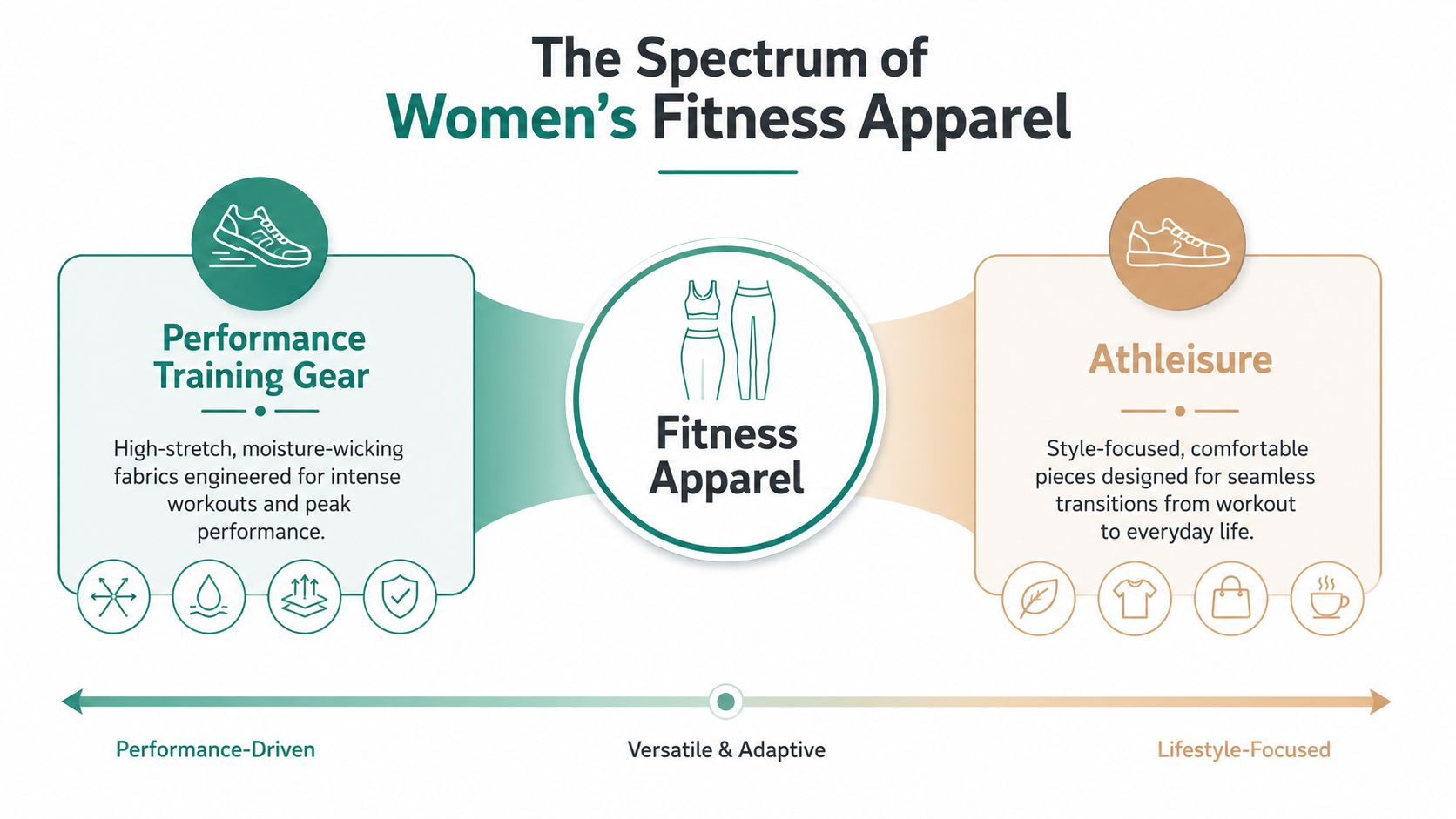
Performance gear and athleisure solve different problems
Performance training gear is built around movement first. Leggings need to stay opaque under load. Bras have to manage impact. Tanks should breathe as your heart rate climbs. Shorts should stay in place through burpees and lunges.
Athleisure plays a different role. It still borrows athletic fabrics and shapes, but its main job is comfort, layering, and looking clean outside the gym. A soft hoodie can work well for the ride home. A high-support bra belongs in a run or jump session.
The difference matters because a yoga-and-errands outfit does not need the same structure as gear for sprints or heavy lifting. Once you separate those jobs, shopping becomes clearer.
Match the piece to the type of work
Start with the workout itself.
- Strength and lifting: Look for stable waistbands, enough stretch to reach depth, and tops that stay in place when you hinge.
- Running and HIIT: Prioritize support, sweat control, and seams that hold steady as impact rises.
- Yoga and Pilates: Soft stretch, smooth seams, and coverage that stays put through deep bends matter more than compression.
- All-day wear: Choose pieces that layer cleanly, keep their shape, and do not feel overbuilt after training ends.
Market research shows how shoppers divide their spending across these roles. Leggings and tights held 27.42% of women's activewear sales in 2025, sports bras were forecast to grow at a 7.92% CAGR from 2026 to 2031, and conventional or synthetic fabrics made up 85.25% of revenue in 2025 (Archive Market Research). The pattern is straightforward. Core training pieces keep selling because they solve the most common fit and performance needs.
That is the useful way to read the category. Instead of asking whether something looks sporty, ask what kind of effort it is meant to handle. A shirt, bra, or pair of leggings that matches the work acts like a well-set tool, quiet during the session and still comfortable afterward.
How Fabrics Work for Sweat Breathability and Durability
A shirt can look right on the hanger and still fail once the workout starts. Some fabrics trap heat after a few minutes of movement. Others feel ordinary at first, then prove they dry faster, breathe better, and keep their shape after repeated washes. The skill is learning to read beyond the fiber name and notice how the fabric is built.
Construction matters more than a fiber name alone
A fabric is more than “polyester” or “cotton.” Knit density, surface texture, moisture transport, and airflow all shape how it behaves on skin. A useful comparison is home ventilation. If airflow is blocked, heat lingers. If the material lets air and sweat move through, the body stays more comfortable during effort.
Research on exercise clothing shows synthetic sportswear fabrics can improve thermal comfort because lower evaporative resistance and better moisture transport reduce the temperature of the microenvironment next to the skin. In a controlled endurance study, synthetic cycling clothing improved 20 km time-trial performance versus cotton while also lowering skin temperature and improving thermoregulatory responses (Frontiers in Sports and Active Living). The takeaway is simple, fabric construction can change how hard a workout feels.
What to look for on the hanger
A breathable knit, light hand feel, and targeted ventilation zones usually matter more than a vague “performance” tag. If you can see or feel panels made to let air move, that is a good sign. If the fabric snaps back after stretching and does not stay wet-looking after a splash test, that gives you another clue.
Useful shortcut: For training clothes, ask how fast the fabric moves sweat away and how well it recovers shape after movement.
Durability matters for value too. A piece that performs and lasts can be a better purchase than a cheaper garment that pills, stretches out, or needs replacing too soon. If you are looking at a training tee like Varsity Active Tee, the useful details are straightforward, it is lightweight, moisture-wicking, and built with a relaxed athletic fit that is meant to move and hold shape through training. Those are the kinds of facts that help you judge whether a shirt belongs in your rotation.
Comfort, care, and real-world use
For everyday training, the best fabric depends on how you sweat and where you train. Some people want a smooth synthetic layer for interval work. Others prefer a softer blend for low-intensity days or travel. Pre-laundered or shrink-resistant fabrics also make sizing more predictable, and easy-care materials help a piece survive repeat wear without losing its shape.
Fabric architecture beats fabric hype. Breathability, moisture transport, and durability are the traits that keep a workout piece useful after the first impression wears off.
Choosing Silhouettes and Support for Every Workout
Fabric handles sweat, but silhouette handles motion. Cut, compression, and support do different jobs. A fitted tank, a relaxed tee, a racerback bra, and a high-rise short each solve a different problem, and the right choice depends on the workout, not just the look.
Match the shape to the movement
Leggings usually make the most sense when you need coverage, compression, or a smooth line through lunges and squats. Shorts can feel better when your session runs hot or you want more leg freedom. Fitted tops stay close to the body, which helps with layering and keeps fabric from flapping during cardio. Oversized or relaxed tops work well after training, on the commute, or when you want less cling without losing the athletic feel.
The same logic applies to bra support. Sports bras are not interchangeable, and biomechanical support changes with the level you choose. In large-breasted participants, treadmill running produced mean unilateral bra-breast forces of 8.7 ± 6.4 N in a high-support condition versus 14.7 ± 10.3 N in a low-support condition, and the same study also found differences in vertical breast displacement during jogging (PubMed). Greater support has also been linked with movement patterns associated with ACL injury risk, including reduced knee flexion and valgus angles (PubMed).
A bra can feel snug and still not control motion the way you need it to. Support should match both activity and breast size range.
Think in terms of impact, not just style
Compression by itself is not enough as a selling point. A bra can feel tight and still let too much movement through. Support has to match the workout and the body it is supporting.
| Silhouette and Support Matched to Workout Type | Best For | What to Look For |
|---|---|---|
| High-support sports bra | Running, jumping, HIIT | Locked-in straps, firm band, verified bounce control |
| Medium-support bra | Strength training, brisk walking, mixed workouts | Stable fit with enough give for breathing and overhead movement |
| Low-support bra | Yoga, mobility, low-impact studio work | Soft hold, smooth seams, comfort through floor work |
| Leggings | Lifting, cooldowns, cool climates | Opaque fabric, stable waistband, no front seam issues |
| Shorts | Cardio, heat, outdoor training | Secure rise, inner lining if needed, no ride-up |
The workout-specific approach is easier to see when you compare pieces side by side. Design details like neckline shape, armhole cut, and coverage change how a top behaves in motion, which is why a guide such as this cut-out tank tops article can help you read the structure instead of guessing from the hanger.
Build a rotation instead of chasing one perfect outfit
One flattering look will not solve every session. A rotation does more for you.
- Running day: High-support bra, sweat-ready top, and bottoms that stay secure under impact.
- Strength day: Mid-support bra, stable waistband, and a cut that does not restrict hinging.
- Studio day: Lighter support and softer silhouettes that let you move on the floor.
- Rest or travel day: Relaxed layers that still look intentional.
Once you start choosing silhouettes by movement, your clothes start working like equipment instead of costume pieces.
Finding Your Perfect Fit and Size Without the Guesswork
Sizing gets frustrating fast because fit changes across brands, cuts, and fabrics. A number on the tag means little if the waistband rolls, the top rides up, or the chest feels tight when you inhale. The simplest fix is to use a repeatable fitting system instead of guessing.
Start with your own measurements
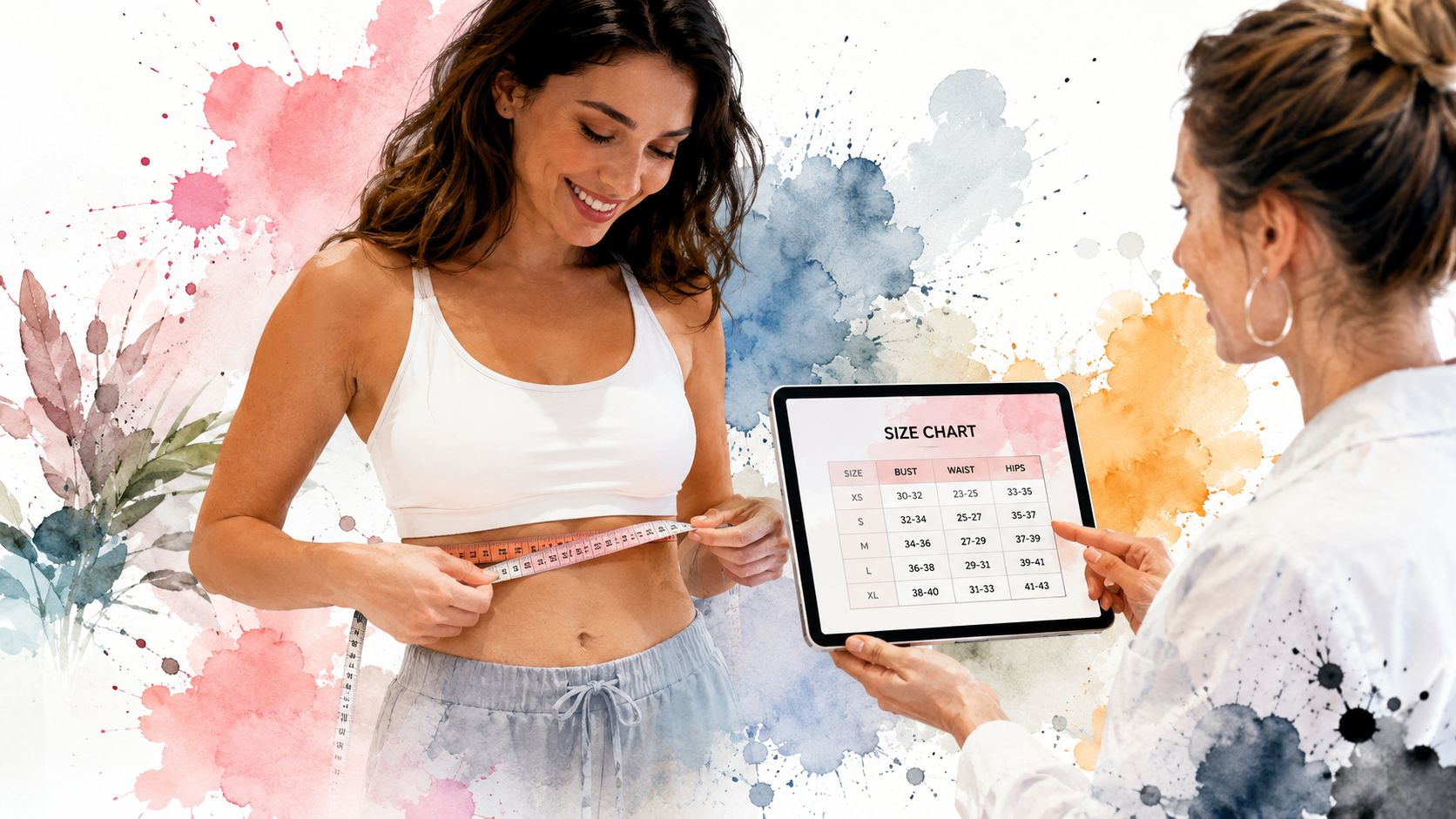
Measure the parts that affect movement, chest width, body length, inseam, waist, and sleeve length. Compare those numbers to the brand's chart, not to the size you usually buy in jeans or dresses. Two pieces marked the same size can still fit very differently once stretch and cut enter the picture.
That is why a chart matters. For tops, the chest and length measurements need to work together, the way a good frame and canvas need the right proportions to hold shape. A helpful reference is the Women's Tank Size Chart, which shows how those measurements are meant to be read together instead of in isolation.
Use a quick try-on test
A 30-second fit check catches most problems before you wear the piece outside.
- Squat once. Watch for opacity, waistband roll, and thigh pull.
- Raise both arms. Check whether the hem lifts too far or the underarm feels tight.
- Twist at the waist. Feel for shoulder drag, seam pinch, or twisting side seams.
- Walk a few steps. Notice ride-up, chafe points, or slipping straps.
This is the part many shoppers skip, then notice the problem later in class or on a run. A garment that looks neat on a hanger can still fail the moment you bend, reach, or breathe. If it passes those motions, it is far more likely to work the way you need it to.
The fit test becomes easier when you treat measurements and movement as one check, not two separate ones. The measurement tells you where to start, and the try-on tells you whether the fabric and construction can keep up.
Choose for body shape, climate, and workout
A firmer compression feel can make sense for running or HIIT, while a looser fit often works better for travel, layering, or lower-intensity days. Inseam length, top length, and rise should shift with body shape and climate, because the same cut will not solve every comfort problem.
Fit should also match how the fabric sits on you, not just the size printed inside the garment. If the piece clings in the wrong place, gaps at the waist, or pulls across the shoulders, the size is off even if the tag says it should fit. A good fit feels like equipment that stays in place, not clothing you keep adjusting.
Fit rule to remember: If a piece looks great standing still but breaks down when you bend, squat, or reach, it is not the right fit for training.
Fit is a skill. Once you know how to test it, you buy with more confidence and return less.
Building Versatile Athleisure Looks from Gym to Street
A strong athleisure outfit works like a small system. The fabric has to move, the fit has to stay tidy, and the layers have to make sense once you leave the gym. If one piece feels too stiff, too bulky, or too casual in the wrong way, the whole look breaks down.
Start with a small set of anchor pieces
A good capsule usually begins with one or two tops that can live in both settings. A clean tank layers easily under a hoodie in the morning and still looks finished after class. A quarter-zip adds warmth when the weather shifts, then keeps its shape with leggings, shorts, or straight-leg pants.
Choose pieces that work with your schedule, not against it. A lightweight training tee can go from the gym to a coffee run. A French terry layer can sit over a performance top without adding bulk. In that category, the Women's Quarter-Zip is a straightforward example of a layer built for both movement and street wear, with a standard fit, 4-way stretch French terry, and a clean silhouette.
Build outfit formulas instead of random outfits
- Studio to coffee: Soft tank, leggings, and a quarter-zip. Keep the outer layer structured so the outfit reads polished.
- Commute to class: Performance tee, relaxed shorts, and a light hoodie. The proportions should feel balanced, not sloppy.
- Weekend travel: Stretchy base layer, outer layer for the plane or car, and bottoms that do not wrinkle easily.
Texture does more than people expect. A smooth performance bottom paired with a brushed outer layer creates contrast that looks finished. Color matters too. Neutrals make layering simpler, while one grounded accent color can keep the outfit from feeling flat.
Think about cost per wear, not just first impression
Athleisure earns space in your closet when it gets used often. A piece that only works for one kind of day has limited value. A piece that layers over workout gear, looks clean enough for errands, and still feels comfortable for travel does real work.
That same logic is why shoppers compare options like brands like Vuori when they want a polished athleisure look without giving up comfort. The style may seem casual, but the details matter, from fabric recovery to how the garment holds its line after movement.
Motivation-forward graphics can help too. They are not only decorative. They can give you a small cue on an ordinary morning, the same way a well-placed sign reminds you which direction to go. The best athleisure pieces are the ones you reach for without overthinking, because they fit your routine as well as your body.
Smart Shopping Gifts and Care That Make Apparel Last
Buying fewer pieces and taking care of them well usually beats chasing constant replacements. That's especially true with training apparel, where repeated washing, stretching, and sweat exposure can wear down weak construction fast. Durability is part of performance because clothes that last stay in rotation.
Choose materials and policies that support longer use
Recent reporting says polyester and nylon still dominate stretch activewear, but they're fossil-fuel-derived, shed microplastics during washing, and can take centuries to break down. The same reporting highlights lower-impact options like organic cotton and wool, plus buyer checks such as recycled content, OEKO-TEX or B Corp style certification, traceability, and take-back or repair programs (The Guardian). That turns sustainability into a practical shopping question, not just a branding claim.
Made-to-order production can also reduce waste when it's done thoughtfully. It slows the buy-to-wear cycle and can keep only-needed pieces from sitting around unused. For shoppers who want that kind of model, the free U.S. shipping and 14-day returns on eligible items offered by From: Me Fitness Apparel are part of the low-friction side of smarter buying, especially when you're trying to build a rotation without overcommitting.
Gift with the workout in mind
The most useful gifts are the ones matched to how someone trains.
- For the runner: High-support bra, sweat-ready top, or a layer that doesn't bounce around during pace work.
- For the lifter: Stable leggings, breathable tees, and tops that don't shift during hinges or presses.
- For the all-day mover: A clean hoodie, quarter-zip, or relaxed tee that works beyond the gym.
- For the frequent traveler: Pieces that pack well, hold shape, and can go from airport to session.
Care matters just as much as selection. Wash in cold water, skip heavy heat when you can, and dry gently so stretch fibers keep their shape. Turn bras and leggings inside out before washing, because that protects the outer surface and the seams that do the most work.
Choose clothes like tools, care for them like tools, and they'll keep showing up for you.
If you want fitness apparel that supports training, layering, and repeat wear without making the buying process complicated, take a look at From: Me Fitness Apparel. You'll find performance tops, athleisure layers, and practical shipping and returns that fit the way real people shop. Build a rotation that helps you move better, feel more confident, and stay consistent.