

You finish a hard conditioning session, peel off your shirt, and find it stuck to your back, twisted under your bra, and riding above your waistband. On lifting day, the same top bunches under the bar or catches against your arms. Then you wear it for a recovery walk and realize it looks fine, but the fabric still feels damp.
That's the problem with shopping for women's workout tops short sleeve. A shirt can look excellent on a product page and fail the moment you hinge, sprint, press overhead, or sweat heavily. The right choice depends on your training, your movement pattern, and how quickly the fabric can move moisture away from your skin.
Table of Contents
- Why the Right Short-Sleeve Top Changes Your Training
- How Short-Sleeve Workout Fabrics Actually Work
- Polyester vs Cotton vs Bamboo vs Merino Compared
- Choosing Fit by Workout Type
- Construction Details That Move the Needle
- Wearing Short-Sleeve Tops From Gym to Street
- Your Short-Sleeve Workout Top Buying Checklist
Why the Right Short-Sleeve Top Changes Your Training
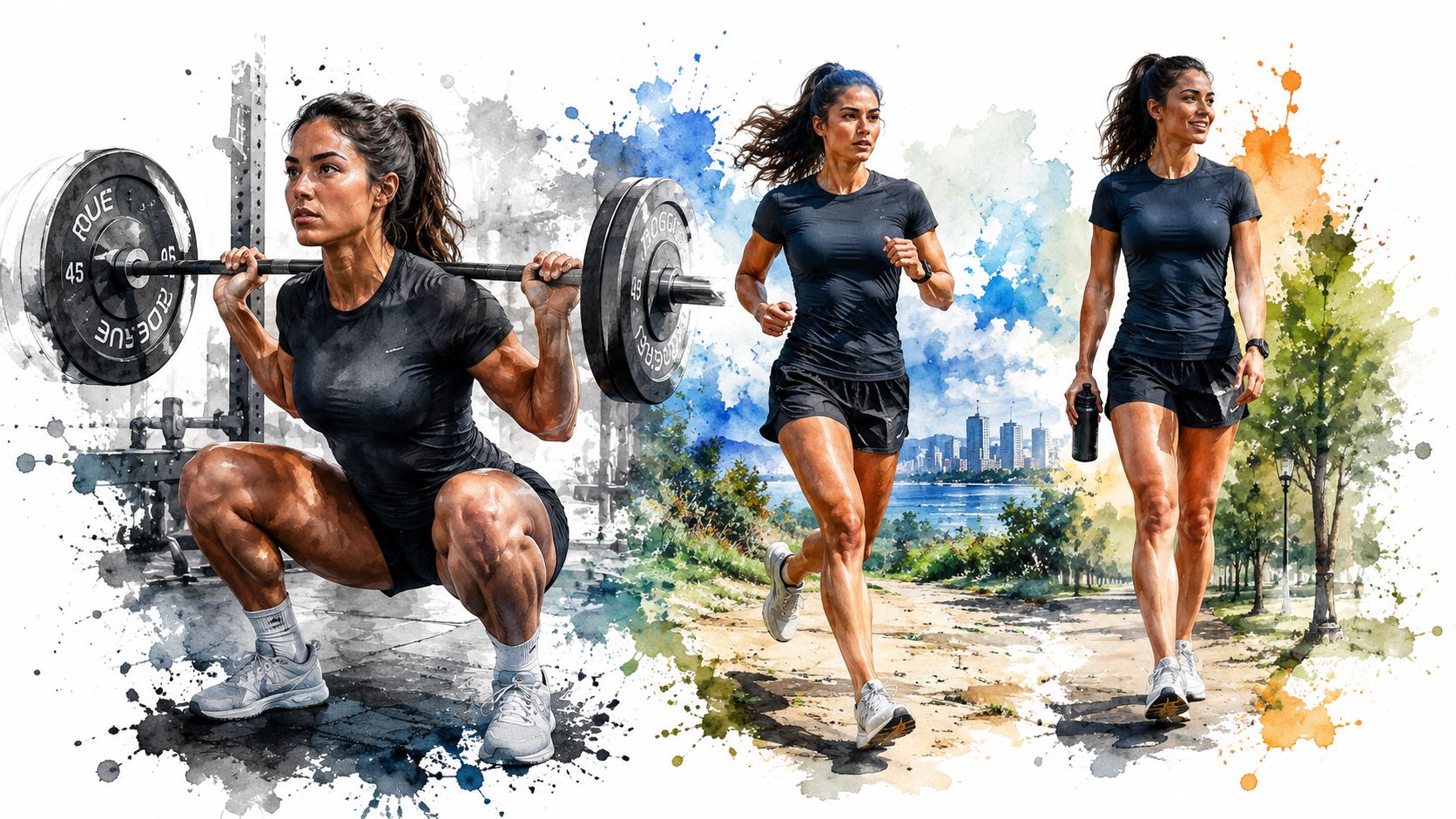
Your training week probably includes more than one demand. Heavy squat day needs a top that stays put under a barbell. A conditioning session needs airflow and fast drying. An outdoor tempo run needs stable shoulder movement and a hem that won't flap or cling. A recovery walk gives you more freedom, but you'll still notice a damp collar or rough underarm seam.
A bad top doesn't always stop a workout. It creates small interruptions. You tug at the waist during a hip hinge, pull fabric away from your chest, adjust a sleeve before a press, or ignore sweat collecting at the neck. Those distractions add up, especially when you're trying to control a bar path or maintain a steady arm swing.
The four places tops usually fail
- Under the arms: Tight sleeves or bulky seams restrict shoulder rotation and trap heat. A shaped sleeve, raglan construction, or a little stretch gives your arms room to travel.
- Across the chest: Excess tension creates pulling and exposure during pressing or burpees. Too much fabric can shift under a sports bra and feel just as distracting.
- At the waist: A long, loose hem can catch on equipment or pile up during deadlifts. A secure athletic hem works better for lifting, while a cropped cut can suit high-waisted bottoms and inverted movements.
- At the neck: A high, tight collar becomes irritating when body heat rises. Look for a neckline that sits flat without pressing into the throat.
The market context matters. Tops represented 39.42% of women's activewear market share in one industry analysis, which shows that upper-body pieces are a central part of the category, not an afterthought (Mordor Intelligence's women's activewear market analysis). Buyers need more than a generic “breathable” label. They need a shirt matched to the session.
Training rule: If you notice the shirt during the hardest part of a movement, the fit or construction is wrong.
How Short-Sleeve Workout Fabrics Actually Work
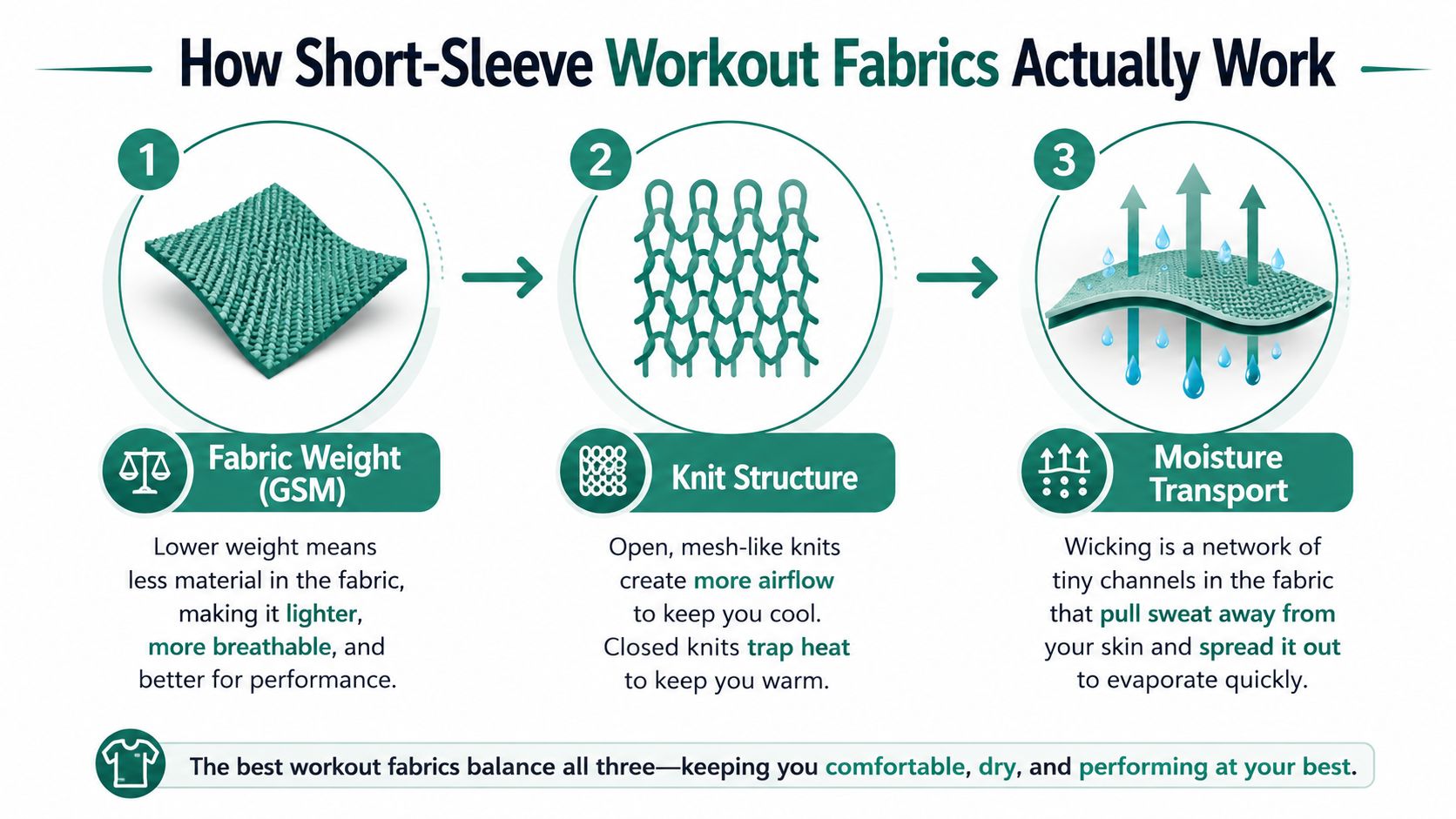
Fabric performance comes down to three connected variables: weight, knit structure, and moisture transport. Think of the material as a network of tiny straws. A more open network lets air move through and gives sweat a route toward the outer surface. A dense network can feel smoother and more substantial, but it may hold heat and moisture closer to your body.
Fabric weight is often expressed in GSM, or grams per square meter. A lower-weight fabric usually feels lighter and more breathable. A heavier fabric can offer better opacity and a more substantial drape, but that extra mass can become uncomfortable during high-output work. Don't choose weight in isolation. A lightweight closed knit may feel warmer than a slightly heavier, open knit with good airflow.
Read the knit before you trust the label
An open knit behaves like a ventilated screen. It encourages air exchange and can help sweat evaporate, which is useful during HIIT and hot-weather running. A closed knit behaves more like a solid wall. It may provide better coverage and warmth, but it can trap more heat when your output rises.
A 2022 review found that water-vapor permeability increases as fabric thickness decreases and openness increases, while construction changes the resistance of the finished garment (Springer's review of clothing comfort and fabric structure). That translates into a simple buying rule: choose an open, lighter knit for sweaty intervals, but avoid a fabric so thin that you lose confidence in its opacity or durability.
Fiber choice changes the result too. Polyester and nylon are commonly engineered to move moisture toward the surface, while cotton absorbs sweat and can remain wet against the skin. Bamboo-based fabrics can feel soft and perform well when knitted in a suitable structure, but softness alone doesn't guarantee fast drying.
Stretch content matters most where your shoulders and torso rotate. A small amount of elastane helps the shirt recover after overhead presses, rows, and arm swing. For most lifting and conditioning, I'd look for a modest stretch blend rather than a rigid tee. The exact percentage isn't a universal guarantee, so judge the fabric by recovery, opacity, and whether it pulls across the shoulders.
A comparison study found that bamboo-based bi-layer knitted fabric delivered higher air permeability, thermal conductivity, water-vapor permeability, wicking ability, and drying rate than comparison materials, while moisture absorption was lower (the sportswear fabric study in Materials). The same source reported a plaited knit using 120 D polyester and 20/80 cotton/polyester yarns reached 264 cm³/cm²/s air permeability, with the lowest thermal resistance linked to a 3.3 mm loop length. Those figures matter because knit engineering can change performance as much as the fiber name.
For a softer, non-training option, the Women's Camo Wave Wash Fleece Shorts use a 7 oz./yd², 230 gm, 55/45 ring-spun cotton/polyester fleece blend, so they make more sense for lounging or casual styling than demanding sweat sessions.
For broader wardrobe planning, the guide to women's fitness apparel is useful when you're building outfits around more than one training environment.
Polyester vs Cotton vs Bamboo vs Merino Compared
There isn't one perfect fabric. There's only the fabric that behaves correctly for the session you do.
| Fabric | Moisture Wicking | Dry Time | Odor Resistance | Best Workout |
|---|---|---|---|---|
| Polyester | Strong when engineered for wicking | Fast | Variable, depending on finish and wear | HIIT, running, high-sweat conditioning |
| Nylon | Strong, with a smooth and durable hand | Fast to moderate | Variable | Running, lifting, repeated training |
| Cotton | Absorbs sweat rather than moving it outward | Slow when saturated | Limited once damp | Light yoga, warm-ups, lounging |
| Bamboo blends | Can provide good airflow and a soft feel | Moderate, construction dependent | Moderate | Low to moderate output, travel, casual wear |
| Merino | Good moisture and temperature management | Moderate | Strong natural odor resistance | Hiking, travel, variable-intensity sessions |
Polyester and nylon
Polyester wins for hard, sweaty work. A well-built polyester top can move moisture outward and dry quickly, which makes it the practical choice for HIIT, running, and conditioning. It also gives designers plenty of room to adjust knit openness, stretch, and mesh placement.
Nylon feels smoother and often handles abrasion well. Choose it when you want a durable running or lifting top with a clean surface, but don't assume every nylon shirt dries at the same speed. Construction still controls the result.
Cotton and bamboo
Cotton feels familiar and comfortable when your output stays low. It fails during long, sweaty sessions because it absorbs moisture and can become heavy, clingy, and slow to dry. Use it for easy mobility work, light yoga, or post-workout wear, not for a humid metcon.
Bamboo blends offer a soft hand and can provide useful breathability. The independent study cited earlier found strong performance from a bamboo-based bi-layer knit, but that doesn't mean every bamboo top performs the same way. For shoppers, the blend and knit matter more than the bamboo label alone.
Merino
Merino is the strongest choice when you'll wear the shirt repeatedly across changing conditions. It helps manage temperature and resists odor, making it valuable for travel, hiking, and sessions that shift between easy and demanding work. It isn't my first pick for maximum sweat output if you need the fastest possible drying, but it earns its place when versatility matters more than pure speed.
For more detail on sweat-focused construction, use this guide to women's moisture-wicking tops.
Choosing Fit by Workout Type
Fit dictates how a top behaves under load. A shirt that photographs well may still restrict your shoulder, expose your midsection, or bunch under a belt.
| Workout Type | Best Fit | Why It Works |
|---|---|---|
| Running | Fitted or lightly compression | Limits excess movement and keeps the fabric close during arm swing |
| HIIT | Fitted athletic or controlled compression | Reduces ride-up during burpees and supports fast moisture transfer |
| Lifting | Semi-fitted athletic | Balances shoulder mobility, hem security, and equipment clearance |
| Yoga and mobility | Relaxed or fluid athletic | Allows folding, rotation, and breathing without a restrictive torso |
| Casual wear | Relaxed but intentional | Gives comfort without looking accidentally oversized |
Running and HIIT need control
For running, choose a close fit that follows your torso without squeezing your ribs. Extra fabric can flap, twist, or rub during repeated arm swing. A fitted sleeve also stays out of the way when you move quickly.
HIIT adds more positions, including burpees, mountain climbers, jumps, and overhead work. A top that ends near the waistband or has a controlled cropped hem is less likely to cover your face or expose your bra. Skip extreme compression if it limits breathing or makes shoulder movement feel forced.
Lifting needs room where it counts
A semi-fitted athletic cut is the reliable middle ground for squats, deadlifts, presses, and rows. You want enough ease across the upper back and shoulders to reach overhead, but not so much fabric that the hem catches on a bench, cable, or bar.
Check the shoulder seam. If it sits far down the arm, the shirt may feel relaxed but can drag during pressing. If it lands too far inside the shoulder, the garment may bind when you row or reach.
Choose the silhouette by the movement that repeats most often, not by the mirror pose you like best.
Relaxed tops work well for warm-ups, mobility, and low-intensity recovery. They also make sense for casual wear, but a loose neckline can shift during burpees or downward-facing positions. Built-in shelf bras can simplify light sessions, yet I'd skip them for lifting or running if the support isn't enough. Pair the shirt with a properly supportive sports bra instead.
Sleeve opening matters during overhead mobility. A narrow opening can bind against the upper arm. A wider opening improves airflow, but too much exposure can reveal the bra or shift during floor work. Try the shirt with your intended bra before keeping it.
Construction Details That Move the Needle
Marketing language is cheap. Construction is what you feel after the workout starts.
Sleeve and shoulder design
A standard set-in sleeve works for general lifting and everyday training. Raglan or yoked sleeves usually give the shoulder more room to rotate, which helps during presses, snatches, rows, and running. Dropped armholes increase ventilation during high-output intervals, but they can expose more of the bra and may shift during inverted movements.
The right sleeve depends on the dominant action:
- Standard set-in: Choose it for controlled lifting and gym-to-street wear.
- Raglan or yoked: Choose it for running, pressing, and broad shoulder movement.
- Dropped armhole: Choose it for hot conditioning when ventilation matters more than coverage.
Hem, seams, and ventilation
A curved shirttail can improve coverage during deadlifts without requiring a long, loose body. Cropped or elasticated hems reduce bunching during burpees, forward folds, and inverted presses. A straight hem is fine for casual wear if it stays flat and doesn't twist.
Flatlock seams are worth paying attention to for running and repeated high-friction work. They sit flatter than standard seams and can reduce irritation around the underarm and side body. Bonded or welded edges can feel even cleaner, but inspect how the finish behaves after washing. A smooth seam today isn't useful if it stiffens or peels later.
Mesh panels should appear where heat builds, such as the upper back, under-bust area, and side ribs. Random mesh is decoration. Targeted mesh can improve airflow without making the entire shirt transparent.
Small features with real value
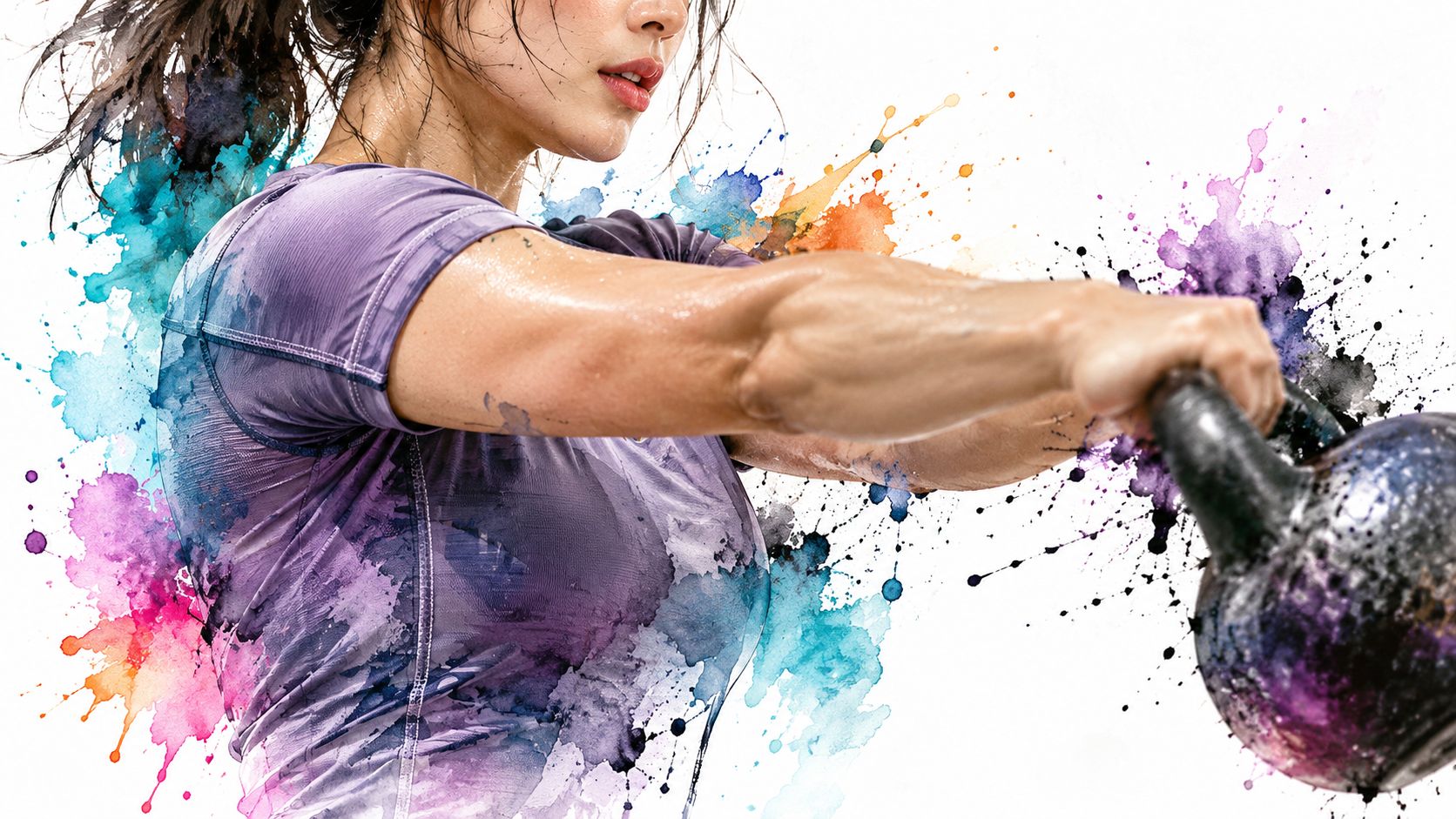
Tagless neck labels prevent a minor irritation from becoming a daily annoyance. Underarm gussets can improve reach during overhead work. Thumb loops help with layering and keep sleeves positioned, though they're unnecessary if you only train indoors.
Odor-resistant finishes deserve skepticism. They can help, but the label doesn't tell you how the treatment will behave after repeated washing. If odor control is a priority, merino is the safer material choice. For synthetics, wash promptly, follow the care instructions, and don't expect a finish to replace basic garment care.
Wearing Short-Sleeve Tops From Gym to Street
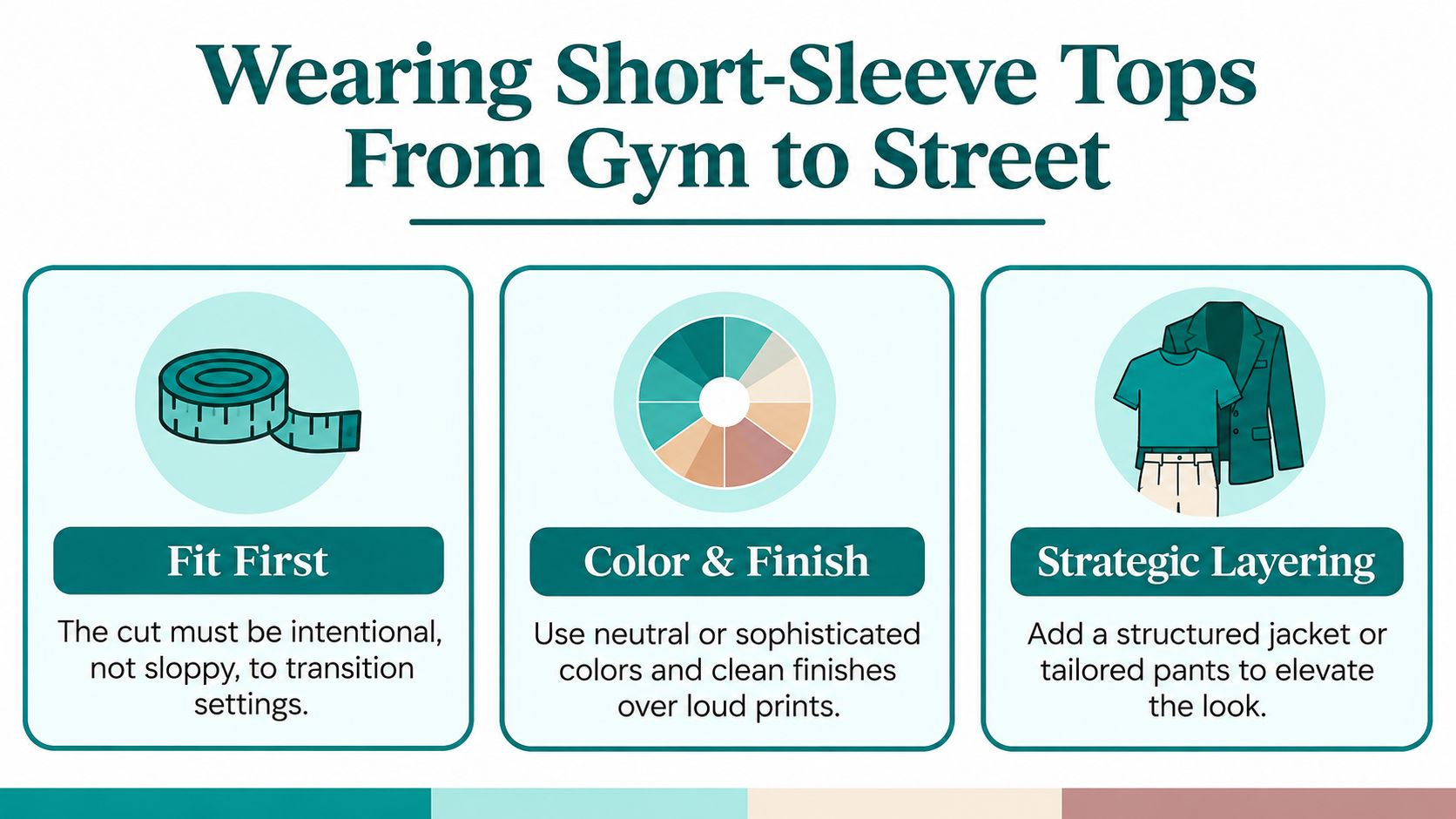
A workout top only works outside the gym when the fit looks intentional. Styling cannot rescue a stretched neckline, a transparent fabric, or a hem that rolls every time you raise your arms.
Start with three standards: the fabric must hold its shape, the hem must look clean, and the neckline must work without relying on a sports bra for visual structure. Matte or heathered performance fabric usually transitions better than shiny material with loud branding. A simple technical tee can look polished when its seams and proportions are controlled.
Pairings that don't look like an afterthought
- Matte tee with denim: Wear a heathered or neutral performance tee with high-rise straight-leg jeans and low-profile sneakers. The jeans give the athletic fabric enough structure to read as everyday clothing.
- Cropped top with tailoring: Pair a controlled cropped athletic top with structured trousers and an open blazer. Keep the top fitted and the outer layer clean.
- Tonal training outfit: Match a monochrome technical tee with tonal leggings, then add a crossbody bag. The consistent color makes the outfit look planned rather than assembled after class.
Layering solves the biggest visual problem, which is excess technical detail. An open shacket, chore jacket, or overshirt can hide mesh panels and sports-bra straps while preserving the top's comfortable base layer. Choose a layer that drapes over the shoulders instead of clinging to damp fabric.
The guide to what to wear to the gym as a woman reinforces the practical side of the outfit, but the same rule applies after training: prioritize movement-friendly pieces that still have a deliberate shape.
Style rule: In a coffee shop, seam placement and drape matter more than a fabric's technical promise.
Your Short-Sleeve Workout Top Buying Checklist
Choose for the workout that sets the highest demand. A top can serve several activities, but only when its fabric, fit, and construction handle the hardest session in your week.
Start with the session
- Lifting: Pick a semi-fitted polyester, nylon, or engineered blend with free shoulder movement, a stable hem, and flat seams where your arms brush the torso.
- HIIT: Use a fast-drying synthetic with ventilated knit zones, controlled room through the body, and a hem that stays down during burpees.
- Running: Choose a close athletic fit, smooth seams, dependable stretch recovery, and a neckline that remains flat through repeated arm swings.
- Yoga and mobility: Select a softer fabric with enough stretch for rotation. Keep the cut controlled if the session includes inversions.
- Casual wear: Look for opaque fabric, a clean hem, restrained technical details, and a neckline that looks finished without extra layers.
Read the label, then test the garment. Moisture-moving fibers suit heavy sweating, while an open knit helps during hot HIIT sessions. Stretch the fabric across your chest and shoulders, then release it. It should recover without sagging. “Performance” on the label does not automatically mean fast drying.
Eliminate weak options quickly
Reject the top if it fails any of these checks:
- The shoulder seam limits overhead reach.
- The neckline shifts when you bend or jump.
- The hem rises above the waistband during a hinge.
- The fabric turns visibly sheer when stretched.
- The underarm seam feels rough or bulky.
- The shirt remains damp long after training.
- The fit works only with one bra or one pair of bottoms.
For sizing, judge placement instead of trusting the label. The shoulder seam should sit on your shoulder, or follow the intended raglan line. The hem should cover what you want covered during hinges. A cropped style should meet the waistband without exposing more than planned. Product roundups include broad size ranges, including XXS to 4XL and 2 to 14, so compare garment measurements and fit notes rather than relying on a number alone, as shown in Women's Health's workout-top coverage.
One dependable starting point is a semi-fitted, moisture-managing synthetic blend. Add a relaxed top for warm-ups and casual wear. Build specialist options around the workout: fitted construction for running, high ventilation for HIIT, or merino for travel and changing conditions.
The market is expanding, but your wardrobe does not need to. Women's activewear estimates project the market to reach USD 333.4 billion by 2030, from USD 193.7 billion in 2024, according to Mordor Intelligence's market estimate. Buy fewer tops and make each one earn its place in your training week.
From: Me Fitness Apparel offers women's graphic and performance tees, plus shorts, hoodies, sweaters, and outerwear for training and athleisure use. Visit From: Me Fitness Apparel to compare pieces for your gym routine and life after training.