

You're standing in front of your closet before sunrise, holding up two pairs of leggings and wondering which sports bra won't become a distraction halfway through your workout. One outfit looks polished but feels restrictive. Another offers coverage but traps sweat. You've also got somewhere to be afterward, so walking out in something that looks and feels like a damp costume isn't appealing.
The smartest answer to what to wear to the gym as a female isn't a matching set chosen for the mirror. It's an outfit built around the session, your comfort, the gym climate, and what comes next. You need coverage that stays put during squats and floor work, fabrics that manage sweat, support that matches impact, and layers that can move from training to errands without a full wardrobe change.
Table of Contents
- Why Gym Outfit Choices Matter More Than You Think
- Build Your Base With the Right Fabrics and Fit
- Match the Outfit to Your Workout Type
- Layer Smart for Climate and Studio Temperatures
- Coverage Comfort and Confidence in the Gym
- Pack the Gym Bag and Care for Your Gear
Why Gym Outfit Choices Matter More Than You Think
A gym outfit affects more than appearance. It determines whether you can hinge, press overhead, run, stretch, and sit on the floor without adjusting your clothes every few minutes. A waistband that rolls during deadlifts or a neckline that drops during downward dog pulls attention away from the work you came to do.
Women also make practical decisions about coverage every session. Some prefer shorts for airflow but want a longer liner for squats. Others feel more comfortable in leggings and a relaxed tee, especially in shared spaces with bright lighting and busy floors. Neither choice is automatically better. The right choice is the one that lets you move without monitoring your body or your clothing.
Sweat management creates a second trade-off. A cotton-heavy top might feel pleasant when you leave home, then become heavy and clingy during intervals or a long lifting session. A technical synthetic layer generally handles moisture more effectively, but fabric alone can't solve a poor fit, rubbing seams, or a bra that traps heat around the rib cage.
The final decision happens after the workout. You might need to collect a child, stop at the store, return to work, or join a video call. That makes gym-to-street versatility useful, not frivolous. A clean outer layer, opaque bottoms, and a structured tee can make the transition faster without asking you to sacrifice movement during training.
Practical rule: Choose gym clothes for the hardest movement in your session, then add one piece that makes the rest of your day easier.
Think in five questions:
- What are you training? Strength, cardio, mobility, and classes demand different support and shoe choices.
- How much coverage feels secure? Consider rise, neckline, hem length, and opacity.
- How much will you sweat? The harder and longer the session, the more you'll value quick-drying construction.
- What's the environment like? A cold weight room and a warm studio need different layers.
- Where are you going afterward? Add a presentable layer instead of forcing every workout item to do every job.
Build Your Base With the Right Fabrics and Fit
You finish a hard interval session, pull on your outer layer, and still feel damp fabric clinging to your back. The right base prevents that problem before it starts. Build your women's fitness apparel around fabric performance and fit, then choose the style that works for training and the rest of your day.
For intense sessions, start with polyester or nylon blended with elastane. Synthetic fabrics usually dry faster than natural fibers. Recent activewear drying research connects faster drying with higher synthetic-fiber content, greater air permeability, and stronger airflow. Lightweight construction also helps. Dense fabric, prolonged wetness, and friction can increase cling and chafing.
Cotton suits a low-sweat lifting session or warm-up, but it is a weak default for hard cardio. Merino blends can help with odor resistance and temperature regulation, provided the garment stretches comfortably and does not hold moisture against high-friction areas.
Market demand reflects these competing needs. One estimate places the global women's activewear market at USD 193.7 billion in 2024, with a projection of USD 333.4 billion by 2030 and a 9.6% CAGR. Shoppers expect one garment to support training, last through repeated wear, and fit ordinary life. Data Bridge Market Research's women's activewear estimate provides that market context.
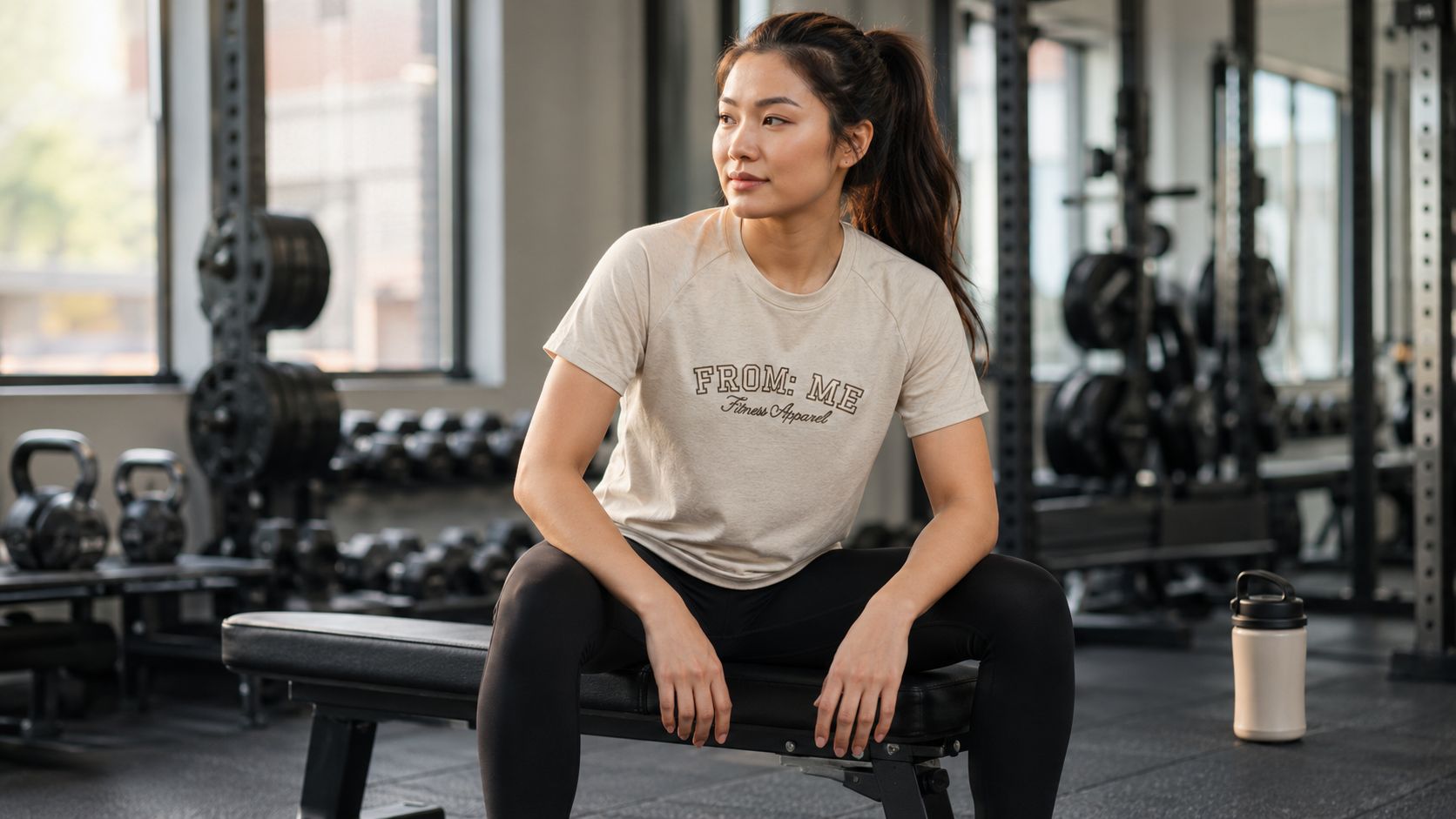
The Varsity Active Tee shows how a relaxed athletic top can serve more than one purpose. Its lightweight, moisture-wicking mid-weight fabric and built-in UV protection suit warm-ups, lifting, or the trip home. Its loose shape offers more coverage than a close-fitting race top, though extra fabric needs care around machines.
Let movement decide the fit
Compression should feel steady rather than punishing. A supportive piece must stay anchored while allowing full breathing and movement. Relaxed clothing should cover your body without catching on equipment or exposing your midsection during overhead work.
Try each piece through the positions you use:
- Sports bra: Set the underband first, then check strap tension, cup containment, and motion control. In a study of female marathon runners, 75% reported bra fit issues, including chafing and digging straps. The finding appears in this PubMed-indexed study.
- Leggings: Choose a waistband that stays level, a gusset that limits pulling at the crotch, and seams away from friction zones.
- Shorts: Test the liner with lunges and squats. If it rides up in the fitting room, sweat and repeated movement will expose the problem faster.
- Tops: Raise your arms, bend forward, and rotate your torso. The hem and neckline should keep useful coverage in each position.
- Opacity: Stretch the fabric under bright light and perform a deep squat. If coverage changes sharply, choose another size or construction.
| Option | Best For | Watch Out For |
|---|---|---|
| Polyester or nylon blend | Cardio, circuits, long sessions | Heat retention in dense fabric |
| Cotton-heavy top | Light training, warm-ups, casual wear | Slow drying and cling |
| Compressively fitted bottom | Lifting, running, high-movement classes | Waistband pressure and restricted breathing |
| Supportive relaxed top | Coverage, errands, warm-ups | Excess fabric near machines |
| Gusseted bottom | Squats, lunges, floor work | Poor seam placement if badly cut |
Choose the fabric for the session and the fit for your movement, while keeping coverage and your post-gym plans in view.
Match the Outfit to Your Workout Type
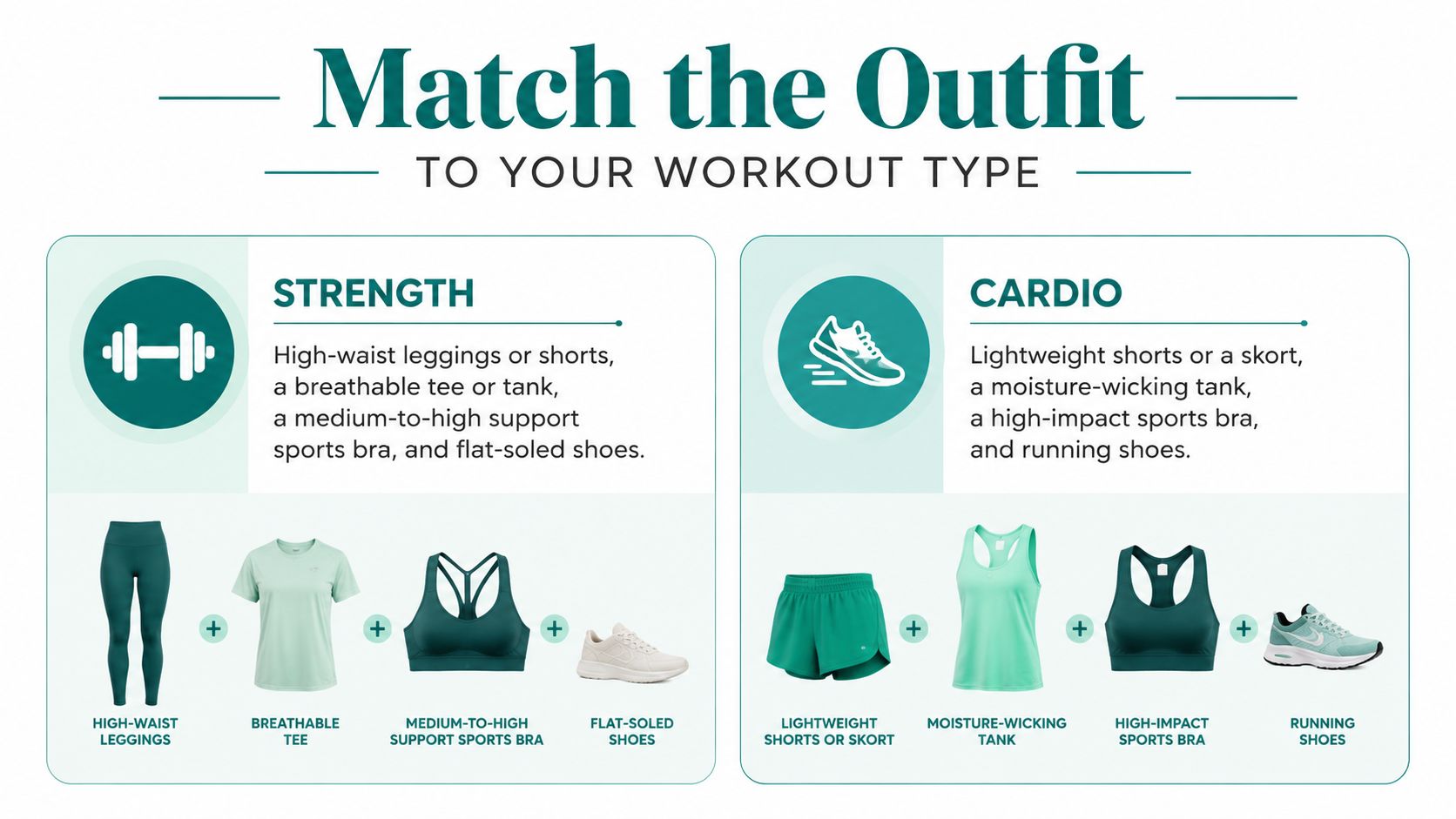
Your calendar should determine your outfit more than a trend feed. A strength session needs stability and coverage, while a treadmill workout prioritizes impact support, airflow, and shoes that match repeated foot strikes. Yoga and Pilates create a different problem, your clothing must stay opaque and controlled through deep bends without bunching under your body.
Strength training
Wear high-rise leggings or longer shorts, a breathable tee or tank, and a medium-to-high support sports bra. Choose flat-soled training shoes with a secure heel and a firm, grippy base. You want your feet to feel planted during squats, presses, rows, and deadlifts, not cushioned into instability.
For the top, a fitted or lightly relaxed cut works better than a dramatic oversized shape near cables and racks. If you prefer looser coverage, make sure the hem won't fall over your hands during pressing or obscure equipment controls.
Cardio and treadmill work
Choose lightweight shorts, a skort, or capris in a quick-drying synthetic fabric. Pair them with a moisture-managing racerback or tank, a high-impact sports bra, sweat-resistant socks, and running shoes that feel secure without squeezing your toes.
Running creates repeated movement, so test the bra with jogging, jumping, or fast arm swings before committing. A loose top can work, but it shouldn't stay wet against your skin or flap into your face during faster intervals.
Yoga and Pilates
Use squat-proof leggings, a fitted tank, or a cropped long-sleeve top that stays close to the torso. Grippy socks can help in studio settings, while barefoot training or studio-friendly shoes may suit the surface and class rules.
Avoid waistbands that dig in when you fold forward or lie on your back. A high-rise cut can feel secure, but only if the front rise and gusset allow you to breathe and rotate comfortably.
Hybrid classes
Hybrid workouts demand the most versatile formula: a supportive bra, opaque leggings or a secure skort, a breathable top, and shoes that can handle the class's dominant movement. Add a lightweight layer for the commute, then remove it before intensity rises.
A matching set can work here, but it isn't mandatory. A neutral tank with black bottoms and a clean overshirt often handles sweat, stretching, and post-class errands just as well, with more outfit combinations already in your drawer.
Layer Smart for Climate and Studio Temperatures
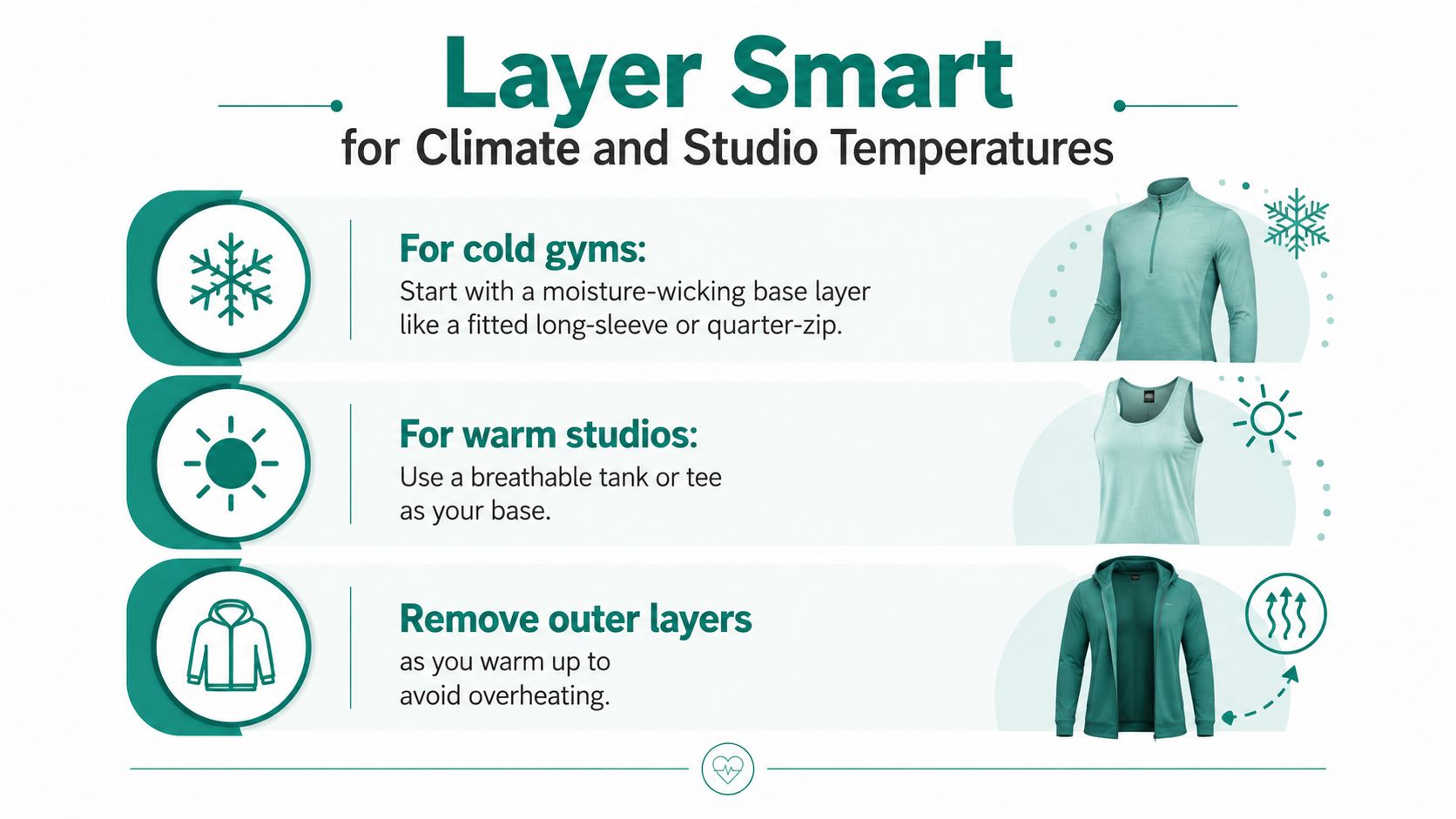
A gym can feel cold during the first warm-up and overheated once the work begins. The answer isn't carrying half your closet. Build layers that each have a clear job, then remove them before they interfere with training.
Cold gyms need removable insulation
Start with a moisture-wicking fitted long-sleeve or a quarter-zip. Add a fleece or cropped hoodie if you warm up slowly or the room stays chilly during strength work. The outer layer should come off easily and fit in your bag without creating a bulky bundle.
A packable wind shell works well for outdoor walks or a cold commute because it blocks moving air without adding much volume. For colder outdoor sessions, thin gloves and a headband protect hands and ears while remaining easy to remove indoors.
Warm studios need less fabric
In a hot studio or during high-intensity intervals, begin with one breathable tank or tee. Bring a removable top for the trip in, but don't plan to train in a fleece or heavy sweatshirt once your body temperature climbs.
Neutral layers make packing simpler. Black, beige, gray, and other quiet tones can sit over multiple base outfits, so you aren't forced to coordinate a separate jacket with every bra and bottom.
Use the room temperature as a starting point, not a rigid command. If the studio runs below 65°F, plan three layers that can reduce to one. If it runs above 72°F, plan one training layer and one removable piece for the walk in.
Coverage Comfort and Confidence in the Gym
Coverage problems are often fit problems wearing a confidence costume. If a neckline drops when you bend, the solution usually isn't avoiding overhead presses or floor work. Try a higher-cut tank, mock neck, longer hem, or a different bra shape in the same breathable fabric.
A long-sleeve sun hoodie suits runners who want shoulder coverage outdoors. Lifters who dislike managing two layers may prefer a cropped tank with a built-in shelf bra, provided the bra offers the support their session requires. The best garment is the one that reduces adjustments without adding heat or restricting your breathing.
Build security from the bottom up
High-rise leggings can feel stable during kettlebell swings when the waistband reaches the navel or slightly above it. Look for a gusset, comfortable elastane stretch, and fabric that stays opaque at full squat depth. Don't judge the fit while standing still. Walk, hinge, lunge, squat, and reach before deciding.
For modesty in shared spaces, use a direct opacity test. Hold the garment up to a bright light, stretch it, and inspect the seat and inner thigh areas. If you can clearly see skin, switch styles or choose a different size. A longer top can add useful coverage, but it shouldn't become a substitute for opaque bottoms.
Confidence needs an engineering solution
Self-consciousness isn't solved by being told to ignore your body. Recent independent research found almost one in three women felt self-conscious at least half the time in activewear, while only about one in ten wore activewear exclusively for exercise. Those findings appear in this independent research release on women's activewear experiences.
That means gym clothes often serve several settings, and confidence depends on practical design. Choose the rise, compression, neckline, and coverage that let you focus. If shorts feel too exposed, a longer liner or skort may solve the issue. If leggings feel too revealing, a structured tee can provide coverage without forcing a heavy layer.
For more perspective on choosing comfortable lengths, see this guide to shorts that feel too short. Your outfit should support your training choices, not pressure you into a silhouette you don't enjoy wearing.
Pack the Gym Bag and Care for Your Gear
A repeatable gym bag saves more time than another pair of leggings. Pack around your actual training week, not an imaginary version of yourself who attends every class and never forgets a clean bra.
Keep a reliable core kit
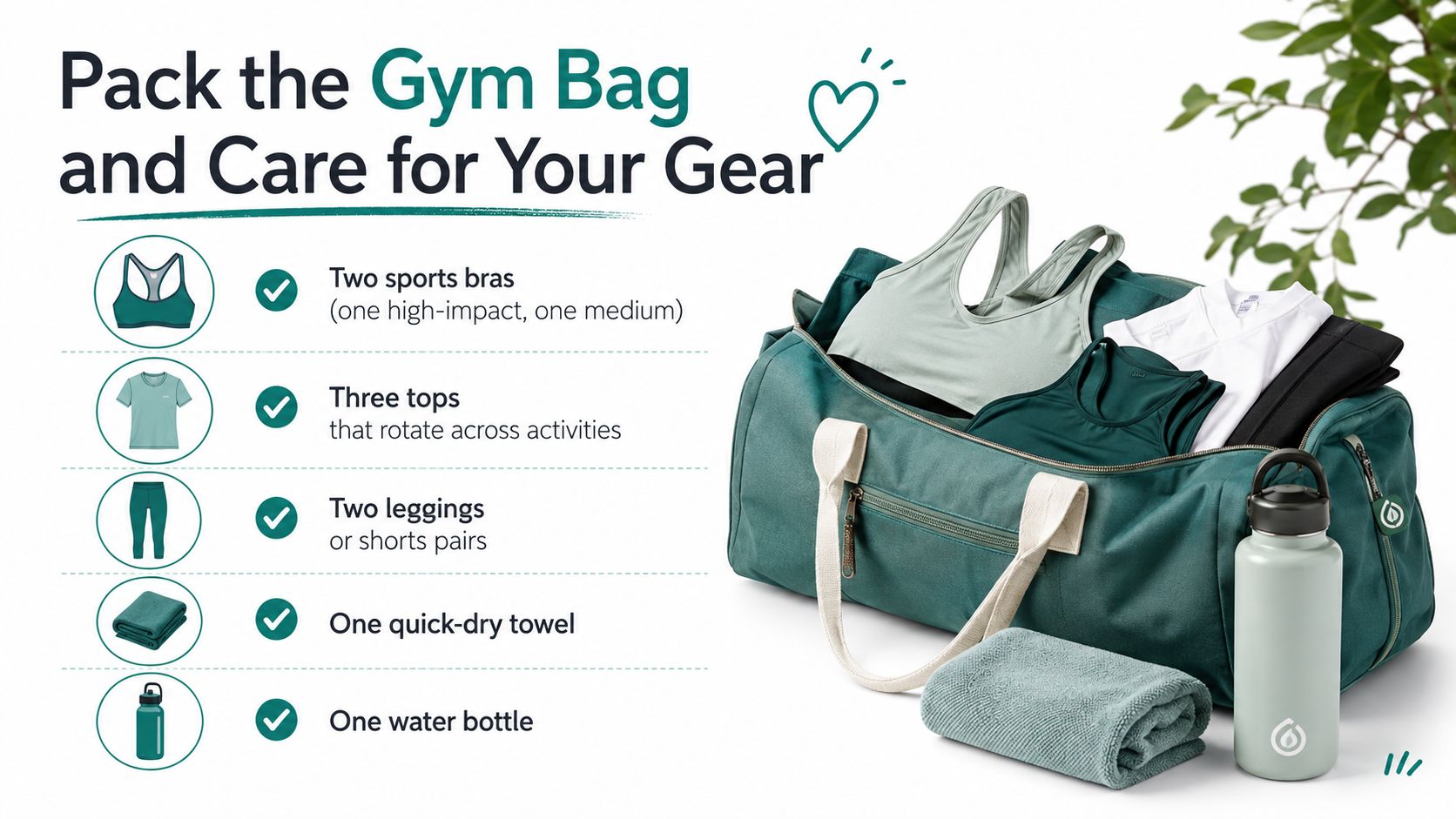
Start with:
- Two sports bras: Keep one high-impact option and one medium-support option available for different sessions.
- Three tops: Rotate a tank, tee, and longer or relaxed layer across strength, cardio, and errands.
- Two bottoms: Use leggings, shorts, or a skort based on climate and workout type.
- Training shoes: Reserve one pair for gym use so the sole stays clean and dependable.
- One mid-layer: Choose a hoodie, quarter-zip, or light jacket for the commute and warm-up.
- Small essentials: Add a quick-dry towel, deodorant, hair ties, dry shampoo, refillable bottle, and zip pouch for damp clothing.
A bag such as the From: Me multipocket tote bag can help separate clothing, accessories, and used gear. The point isn't owning a special bag. It's giving every item a consistent place so you can pack without searching.
Use a three-step night routine
Lay out tomorrow's outfit beside your shoes. Move the previous session's sweaty clothing into the laundry hamper or a ventilated pouch, then zip the bag and put it by the door. That small routine removes the early-morning decision that sends many workouts off schedule.
Wash activewear in cold water on a gentle cycle. Skip fabric softener because it can coat moisture-managing fibers, then air-dry garments or use low heat to protect stretch and shape. Turn graphic tops inside out when washing, and don't leave damp clothing compressed in the bag.
Shoes also need rotation and ventilation. Remove the insoles when they're damp, let the pair dry fully, and alternate pairs if you train often. Retire leggings when they become transparent, lose recovery at the knees, or slide during lifts. Replace sports bras when the band no longer anchors the garment or support has clearly weakened through repeated washing.
A small note in your phone can track what was washed and what needs replacing. You don't need a complicated system. You need clean, dry gear ready before the next session.
From: Me Fitness Apparel offers performance and athleisure pieces including graphic tees, the Varsity Active Tee, women's outerwear, shorts, and accessories for training and everyday transitions. Visit From: Me Fitness Apparel to choose a breathable training top or removable layer that fits your workout routine and the rest of your day.