

You're halfway through a squat when your shorts climb toward your hip crease. Standing still, they looked perfectly respectable. Under movement, the waistband shifts, the hem rides up, and you start adjusting your clothes instead of focusing on the workout. That's the moment you decide your shorts are too short.
The problem usually isn't the label alone. Shorts length is a moving fit problem, shaped by inseam, rise, thigh circumference, fabric stretch, leg opening, and the activity you're doing. A pair that works for walking may fail during squats. A short running silhouette may feel practical on a track but uncomfortable at a family event.
The reliable answer is to test shorts in motion, then judge them against the setting where you'll wear them.
Table of Contents
- Why Your Shorts Feel Too Short Even When the Tag Says Otherwise
- Understanding Inseam Measurements and Thigh Clearance
- How Shorts Length Standards Have Changed Over Time
- Choosing the Right Inseam for Your Activity
- The Three-Step Motion Test for Perfect Shorts Fit
- Layering and Styling Solutions for Confidence in Any Setting
- Your Quick-Reference Shorts Shopping Checklist
Why Your Shorts Feel Too Short Even When the Tag Says Otherwise
At the gym, the failure often happens fast. You step under a bar, lower into a deep squat, and feel the hem pull across your thighs. On the way up, the fabric stays high instead of settling back into place. The shorts may have a reasonable listed inseam, but your body has changed the garment's position.
That happens because a tag records a static measurement. It doesn't show what the shorts do when your hips flex, your thighs widen under tension, or the waistband shifts across your torso. A pattern that looks long enough on a hanger can expose more skin when the leg opening catches on the fullest part of the thigh.

Static fit versus moving fit
Body proportions change the result. Two people can wear the same labeled inseam and get different coverage because one has a longer torso, one has longer legs, or one carries more muscle through the upper thigh. A shorter rise can also pull the crotch seam upward, making the hem appear shorter even when the inseam hasn't changed.
Fabric creates another variable. Stretch can help a garment follow the leg, but it can also let the hem travel upward under tension. Rigid fabric may resist ride-up yet restrict a deep bend. A narrow leg opening can grip the thigh, while a wider opening can improve mobility but reveal more from the side.
The useful question isn't “How many inches is the inseam?” It's “Where does the hem sit when I move the way I plan to move?”
That's why “too short” isn't an objective verdict. It means the garment no longer delivers the coverage, comfort, or visual balance you need in a specific situation. A runner may prefer a short, open silhouette because it clears the leg. Someone doing floor exercises may want more coverage. Someone attending a game may care less about maximum mobility and more about staying comfortable while sitting.
Judge the shorts on your body, during your activity, in the venue you'll use them. The hanger can't make that decision for you.
Understanding Inseam Measurements and Thigh Clearance
A labeled inseam gives you a starting point, not a final fit verdict. Inseam measures from the crotch seam straight down to the hem. Shorts measurement guidance uses that same crotch-to-hem method, making it useful for comparing garments before you try them on.
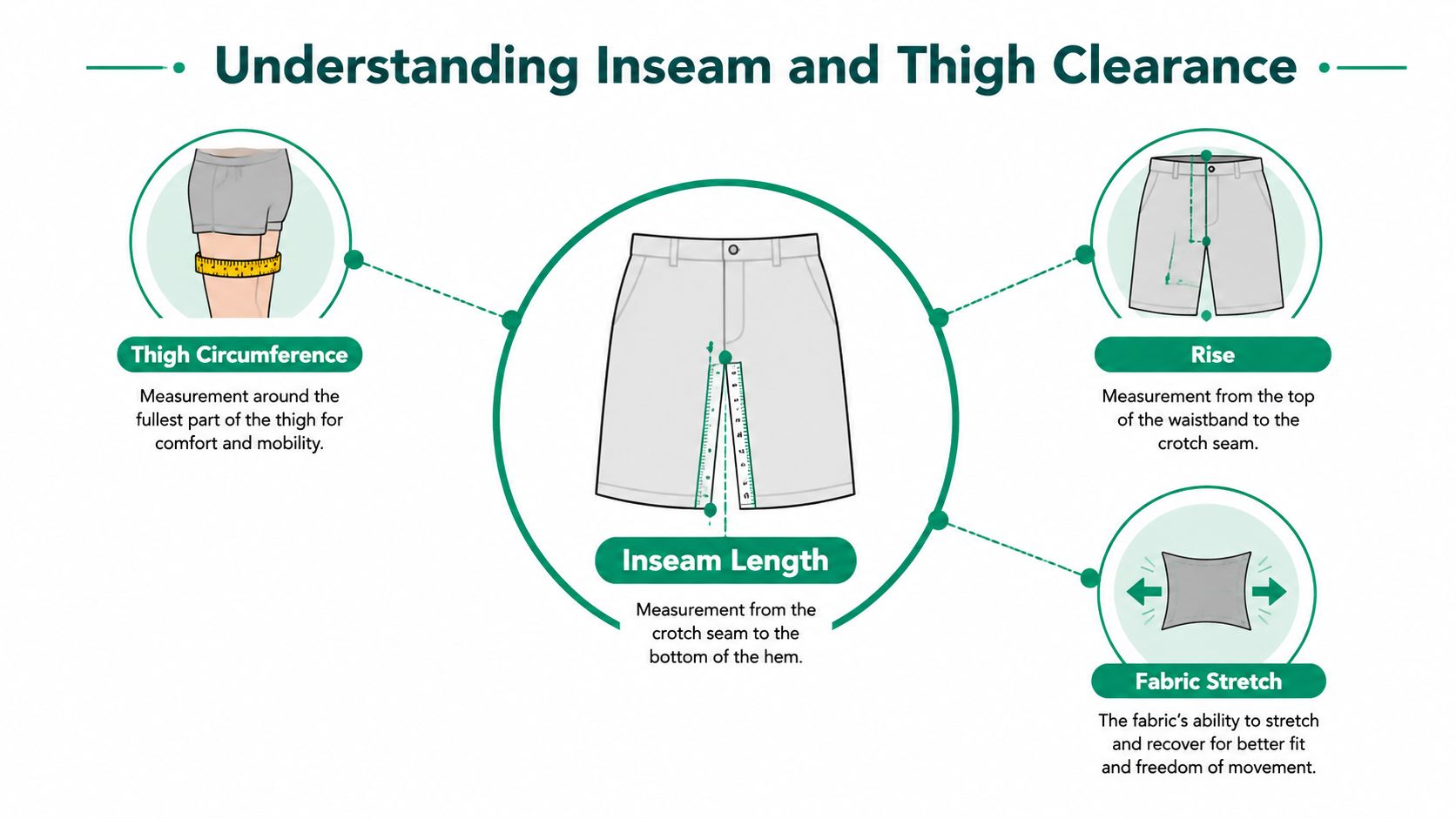
Four measurements that affect perceived length
- Inseam runs from the crotch seam to the hem. A 2- to 3-inch inseam usually sits high on the upper thigh. 4- to 5-inch inseams generally reach mid-thigh, while 6- to 7-inch inseams sit lower, according to industry inseam guidance.
- Outseam runs from the waistband to the hem along the outside leg. Because it includes the rise, a long outseam can still pair with a short inseam.
- Rise measures from the crotch seam to the top of the waistband. Its depth changes where the shorts sit on your body and how much fabric remains below the crotch.
- Thigh circumference controls room around the upper leg. A short inseam with a generous opening can move well. The same length in a narrow cut may grip the thigh and travel upward.
Thigh clearance is the practical test
Thigh clearance means the hem passes over the fullest part of your thigh without catching, bunching, or pressing into the skin. Test that clearance while walking, squatting, stepping up, and sitting. A hem that clears your thigh in a standing pose may still ride up under motion.
A muscular lower body usually needs a wider leg opening, more stretch, or added length. A slimmer thigh may handle a shorter inseam with less upward movement. The fit issue is the pattern, not your body.
Two pairs marked 7 inches can perform completely differently. One may combine a relaxed leg, flexible fabric, and a higher rise. Another may use a slim thigh, shallow rise, or curved hem that reduces coverage. Check the size chart, then inspect the fabric, opening, and seam placement.
The Women's Camo Wave Wash Fleece Shorts are presented as a short-silhouette style, but the catalog information does not specify an inseam range. Judge them by the actual hem position, leg opening, and movement you need. For training, confirm coverage during a squat and a step-up. For casual wear, check comfort while seated and walking. The right length is the one that stays in place for the activity and setting, not the one that wins on a measurement chart.
How Shorts Length Standards Have Changed Over Time
People often treat “too short” as if it describes a permanent rule. It doesn't. Shorts standards have always moved with sport, culture, and performance needs.
Running provides one of the clearest examples. Early running uniforms in the 1900s and 1920s were often knee-length or close to it. By the 1930s, elite competition had moved toward sharply shorter silhouettes, and by the 1950s, running shorts were commonly around mid-thigh, as documented in the history of running shorts. Shorter designs became associated with freer movement and the visual language of competitive athletics.
Basketball followed a different path. According to the evolution of basketball shorts, standard inseams were about 3 inches from the 1940s through the 1960s, reached 5 inches in the 1980s, then moved to 8 inches in the 1990s and 11 inches by the 2000s. In 1997, the NBA introduced a rule requiring shorts to remain at least one inch above the knee, formalizing the longer standard that had taken hold.
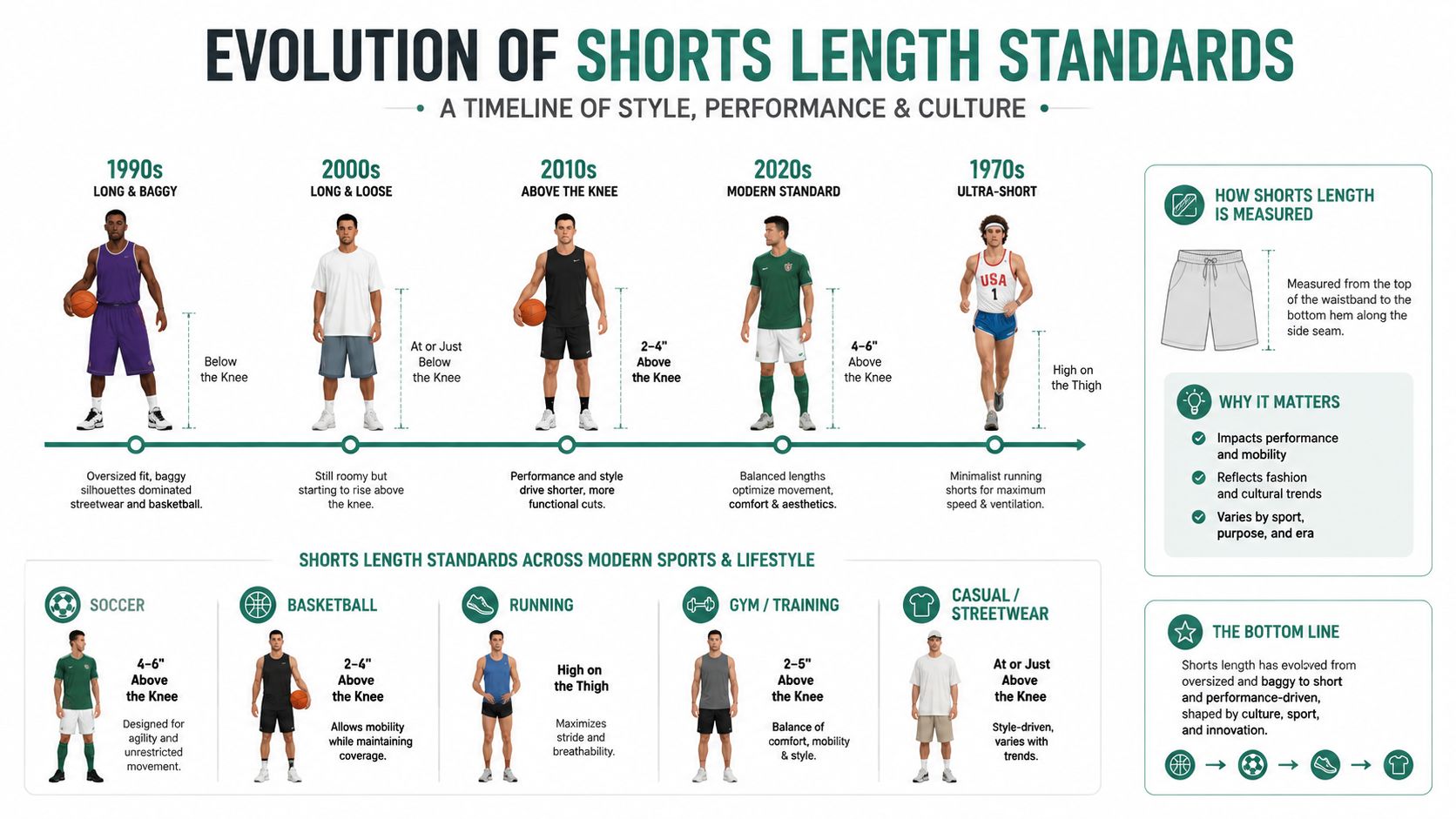
The venue changes the verdict
A short running or training short can make sense when you're sprinting, lifting, or moving through repeated hip flexion. The same garment may feel wrong at a restaurant, in a conservative workplace, or while sitting in crowded stadium seating. Volleyball, tennis, basketball, and casual streetwear each carry different expectations for coverage and leg exposure.
The current return of shorter performance silhouettes doesn't erase those differences. It gives athletes more options, but it also makes context more important. A lightweight Varsity Active Tee, for example, is described as a relaxed athletic top designed for training and everyday wear. The shorts paired with it still need to match the activity and venue.
Don't chase a universal correct length. Define your own baseline by asking three questions:
- What movement will I perform?
- How much coverage do I want while sitting or bending?
- Who and what surrounds me in the setting?
Your answer may be short for training, medium for travel, and longer for everyday wear. That isn't inconsistency. It's competent wardrobe planning.
Choosing the Right Inseam for Your Activity
The best inseam is the one that supports the job. Use current style guidance as a starting point, then confirm the fit with movement. This guide to 7-inch inseams is useful for understanding why a middle-length option often works across several settings, but no single length works for every athlete.
| Activity | Recommended Inseam | Key Benefit | Potential Trade-Off |
|---|---|---|---|
| Strength training | 3 to 5 inches | Clearer thigh movement and less fabric near the bar | More exposure during floor work and deep squats |
| Cardio and endurance | 5 inches for performance-focused use, 7 inches for broader coverage | Balances ventilation, stride freedom, and coverage | Longer hems may feel warmer or bunch during high-knee work |
| Casual and lifestyle wear | 7 to 9 inches | More dependable coverage while sitting and walking | Can look less streamlined and may limit thigh airflow |
| Basketball and other sport-specific use | Sport-dependent, often a longer cut for basketball | Matches the movement pattern and established venue expectations | Excess fabric can interfere with certain exercises |
For lifting, start shorter if the hem catches during squats, cleans, lunges, or sled work. Shorter isn't automatically impractical. Guidance on modern short lengths describes 5-inch shorts as standard for running and HIIT, while 7 inches can serve as a safer multi-sport default.
Cardio requires a sharper distinction. A runner who prioritizes open stride mechanics may like a shorter cut. Someone hiking, traveling, or moving from the gym to errands will usually appreciate the additional coverage of a longer hem.
Adjust for your frame
Taller wearers often find that a standard inseam looks visually shorter and provides less coverage. Instead of sizing up at the waist, look for a longer inseam or a different rise. Larger or more muscular thighs may need a roomier leg opening rather than adding length, because extra length won't fix a hem that grips the thigh.
For office-adjacent or social settings, choose the length that stays put while seated. For training, accept a shorter silhouette only when the motion test confirms it won't expose more than you want.
Activity context should make the final call, not the trend cycle.
The Three-Step Motion Test for Perfect Shorts Fit
A mirror check is incomplete. You need to recreate the positions that make shorts fail. Perform this test in a fitting room, at home before removing tags, or anywhere you can move safely.
Step one is the deep squat hold
Lower into your deepest comfortable squat and hold the position briefly. Keep your feet in the stance you use for training.
Pass: The hem stays below the area you want covered, the waistband doesn't slide, and the leg opening doesn't pinch the thigh.
Fail: The hem shoots upward, the crotch pulls, or you instinctively tug the shorts down. If you'd avoid the position in public, the fit has already failed.
Step two is the high-knee march
Drive one knee upward, then the other, until each reaches above hip level. This checks the relationship between rise, thigh room, and waistband stability.
Watch for fabric tension across the front thigh. If the waistband digs into your stomach or drops at the back, the problem may be rise or waist fit rather than inseam. If the hem twists toward the hip, the leg opening is likely too narrow for your movement.
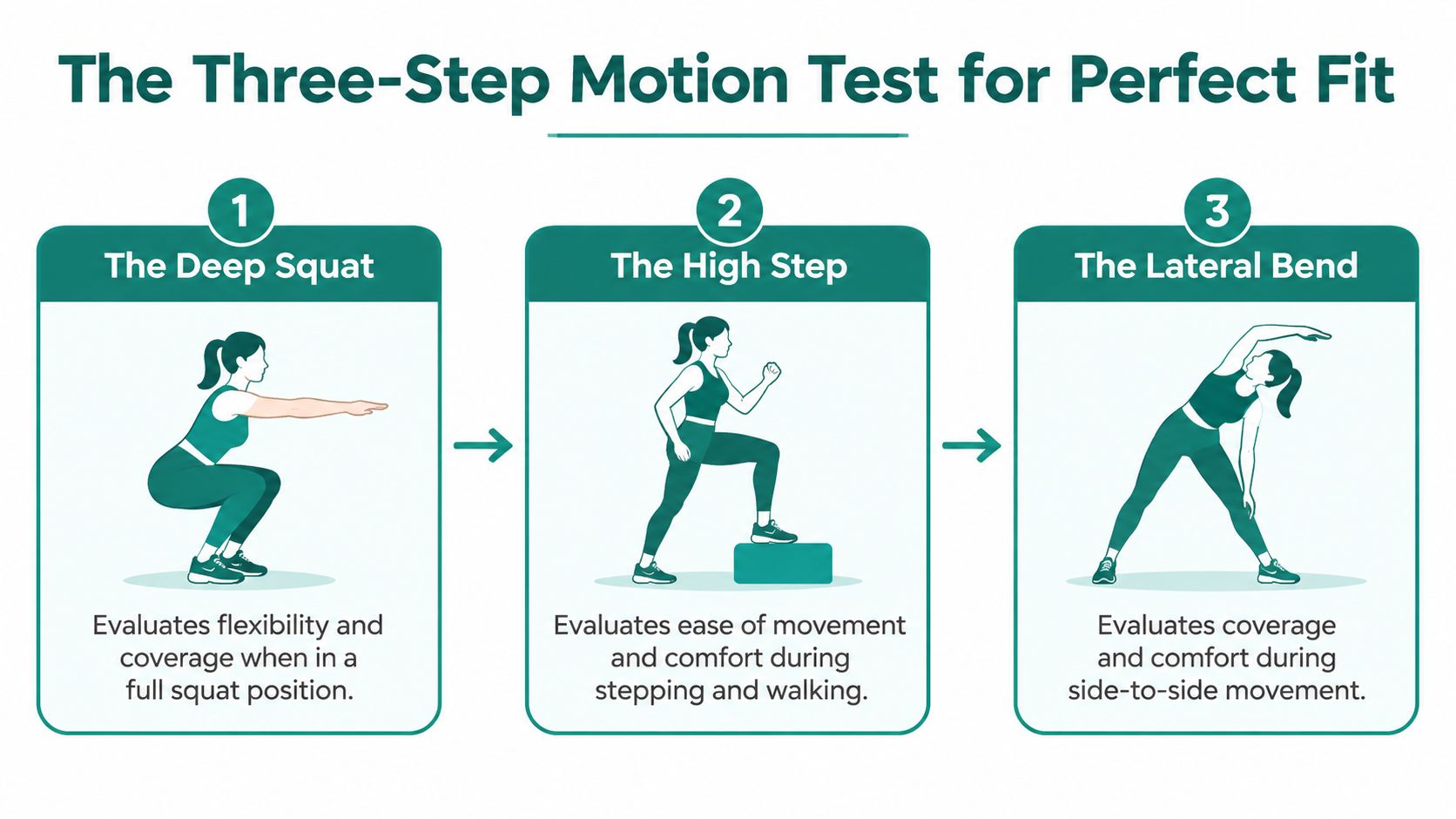
Step three is the seated spread
Sit on a chair or bench with your legs comfortably apart. This simulates desk work, travel, rowing, and the seated pauses that happen between sets.
Keep the shorts if the hem remains comfortable, the fabric doesn't bunch into a pressure point, and the leg openings don't gap more than you expect. Return or replace them if sitting reveals too much, the waistband rolls, or the pockets pull open.
A pair that passes standing but fails seated isn't versatile. It's only acceptable in one position.
Repeat the test after walking, bending sideways, and taking a few stairs if those movements match your routine. Pay attention to what your hands do. If you keep adjusting the garment, your body has already delivered the verdict.
Layering and Styling Solutions for Confidence in Any Setting
You don't have to abandon a mobile short because you dislike the amount of coverage in public. Layering can preserve the performance cut while solving the confidence problem.
Compression tights or fitted leggings under shorts are the most dependable fix. They add coverage during squats, lunges, and floor work without requiring a longer outer short that may bunch around the thigh. This combination is common in sports where athletes need both freedom of movement and a secure base layer.
A lightweight overshort works when you want quick changes between training and social settings. Look for a roomier cut that can go over the performance short without compressing the waistband. Longer tanks and relaxed tees can also extend past the hip line, but test them during movement so the top doesn't ride up and create a new distraction.
The fabric finish matters too. Matte materials attract less visual attention than glossy or reflective surfaces, especially under bright gym lighting. That doesn't change the actual coverage, but it can make a short silhouette feel less conspicuous.
Match the layer to the venue
A beach volleyball tournament allows a different visual language from a hotel gym, a family barbecue, or a workplace. Build a small rotation instead of forcing one pair to cover every situation:
- Short performance pair: Use for lifting, running, or high-mobility training.
- Middle-length pair: Use for gym-to-street days and active errands.
- Longer everyday pair: Use for travel, seated events, and settings where coverage matters most.
For more ideas on combining training pieces with everyday layers, see this women's fitness apparel guide.
An oversized outer layer can also restore balance when the shorts feel visually exposed. The Lifting Club Hoodie has a boxy relaxed fit, drop shoulders, and heavyweight cotton fleece, so it can function as a warm-up or off-duty layer rather than a solution for intense training heat.
Coverage preference isn't a failure of style. Experienced athletes choose layers based on the room, the movement, and how much attention they want to spend on their clothes.
Your Quick-Reference Shorts Shopping Checklist
Use this list before buying, and repeat the movement checks before committing to a new pair.
- Start with the activity: Choose a short performance cut for mobility-heavy training, a middle length for mixed use, and a longer cut when sitting coverage matters.
- Read the full chart: Check inseam, outseam, rise, waist, and thigh room. Don't treat the inseam as the whole fit.
- Check the fullest thigh point: The hem should clear it during a squat or high knee. If it catches there, switch to a wider opening or longer pattern.
- Test fabric recovery: Stretch the garment through a squat and watch whether the fabric returns smoothly or stays pulled upward.
- Use the seated check: Sit with your legs apart. If coverage changes beyond your comfort level, the pair isn't right for that venue.
- Size up carefully: A larger waist can create waistband movement without fixing a short inseam. Choose a longer cut or different pattern when length is the core issue.
- Layer with intention: Compression tights solve exposure while preserving mobility. A longer top helps with visual comfort but shouldn't interfere with movement.
- Review the training short size chart: Compare the listed measurements with your own body and intended use before ordering.
- Prioritize the moving fit: If the shorts look good standing still but fail the squat, high-knee, or seated test, they're too short for your routine.
The right pair should disappear once you start moving. If you're tugging, covering, or thinking about the hem between sets, change the garment instead of blaming your body.
From: Me Fitness Apparel offers training shorts, performance tops, relaxed tees, and outerwear for gym sessions and everyday athleisure, with product-specific sizing and U.S. shipping and return information. Visit From: Me Fitness Apparel to compare pieces by intended use and build a rotation that handles movement, coverage, and comfort.