

You pull on a long-sleeve shirt before heading to the gym, check the mirror, and notice three problems at once. The sleeves cling to your arms, the chest pulls when you raise your hands, and the hem rides up every time you reach overhead. Then you size up, only to find that the torso looks loose while the sleeves still stop short.
That frustration usually isn't caused by your body. A men's slim fit long sleeve is a connected fit system, and sleeve length, shoulder placement, chest ease, torso balance, and fabric recovery all affect one another. The right shirt should follow your frame without trapping movement, manage moisture without feeling clammy, and transition from a training session to everyday clothing without looking like gym gear.
Table of Contents
- Why Slim Fit Long Sleeves Feel Different
- Understanding the Slim Fit Cut
- Measure for a Better Long Sleeve Fit
- Choose Fabric for Comfort and Training
- Wear Slim Fit Long Sleeves for Training and Athleisure
- Style Slim Fit Long Sleeves Beyond the Gym
- Fix Common Slim Fit Problems
- Build Your Final Slim Fit Checklist
Why Slim Fit Long Sleeves Feel Different
Stand in a fitting-room mirror wearing a roomier shirt, then replace it with a slim-cut long sleeve. The change is immediate. The shoulder seam sits closer to the edge of your shoulder, the sleeves follow the biceps and forearms, and the fabric traces your chest instead of hanging away from it.
You may also notice the hem. Rather than drifting past the hips, it tends to sit close to the waistband or belt area. Raise both arms and the shirt gives you instant feedback. A little movement through the chest and back is normal. Sharp horizontal pulling, exposed midriff, or a hem that climbs repeatedly means the cut isn't working for your proportions.
The mirror test
A close cut feels more deliberate than the roomier shape many men wear every day. That doesn't mean it should feel restrictive. The shoulder should remain stable while the fabric moves around it, the chest should have enough room for a full breath, and the sleeves should stay near the wrist without cutting into the forearm.
Try four movements before deciding:
- Reach overhead: The hem can lift slightly, but it shouldn't expose your stomach or pull the neckline backward.
- Cross your arms: The upper back and chest should stretch without creating hard tension lines.
- Bend your elbows: Sleeves should follow the arm rather than bunching heavily behind the elbow.
- Relax your posture: The shirt should still look balanced when you stop flexing and stand naturally.
Slim-fit menswear has a longer history than the current gym-to-street cycle. Historical menswear sources describe noticeably narrower sleeves by the 1760s, followed by slimmer, flatter silhouettes in the 1780s and 1790s. Designers including Hedi Slimane helped bring lean tailoring back strongly in the 2000s, and a 2023 fashion report cited by The Guardian's history of skinny jeans said slim-stretch styles represented more than 70% of men's denim sales.
The practical lesson is simple. This guide treats fit as a working system, then applies it to measurements, fabrics, training, athleisure styling, common problems, and a final fitting-room checklist.
Understanding the Slim Fit Cut
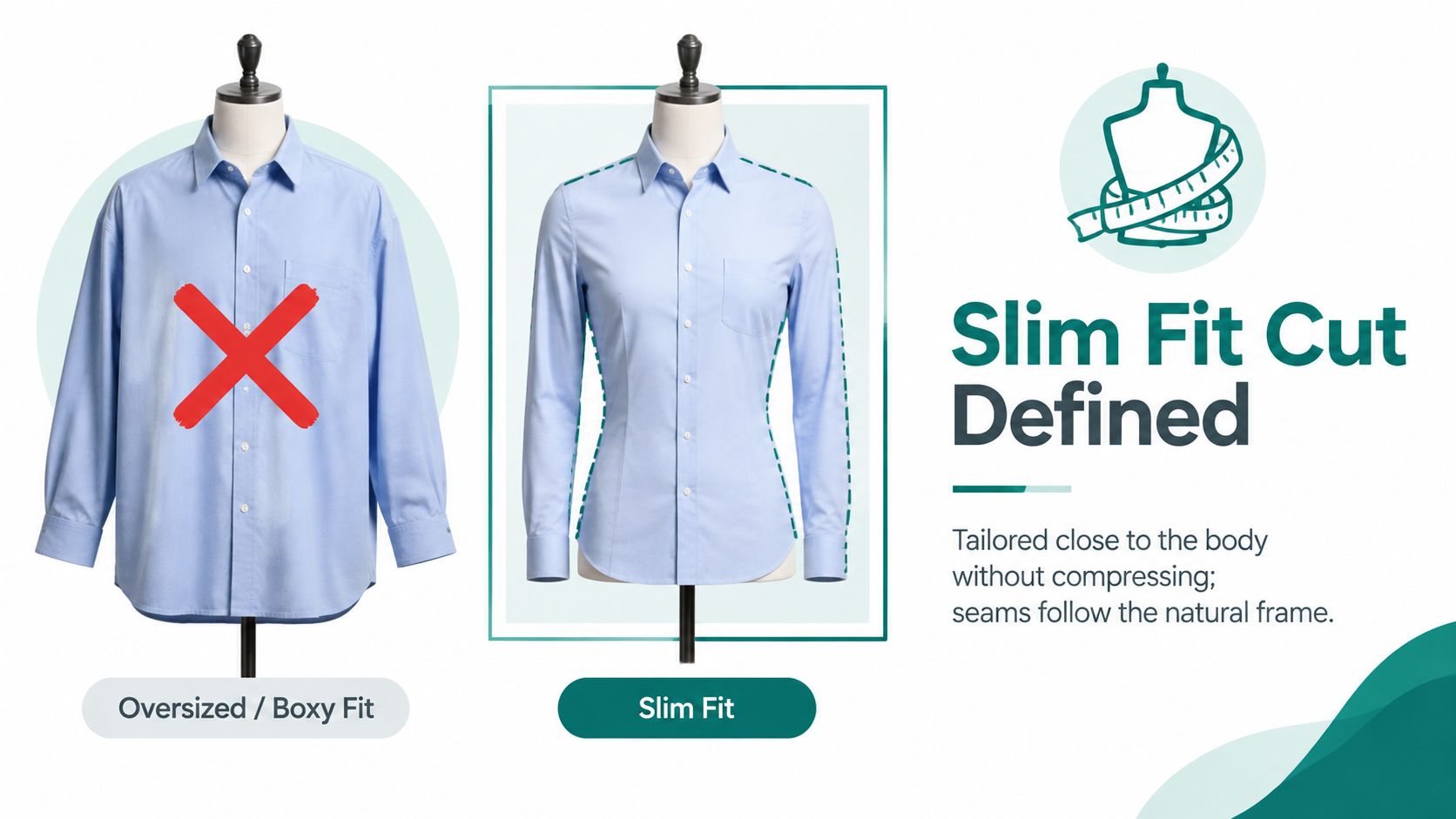
In a dressing room, a slim long sleeve can look sharp while you stand still, then feel restrictive when you reach for the top shelf. The difference comes from several fit points working together. The shoulder must align with your frame, the chest needs breathing room, the sleeves must reach the wrist without trapping the forearm, and the torso should balance those proportions.
A slim fit follows the body's natural outline with a small margin for movement. It should sit close without compressing the ribs or forcing the arms into one position. The shoulder seam usually lands near the bony edge of the shoulder. From there, the chest stays close, the sleeve narrows gradually toward the wrist, and the torso creates a cleaner, more defined line than a regular cut.
Read the fit through four points
Slim fit works well as a close base layer under a jacket, an option for training, or an athletic outline without obvious compression. Regular fit gives more room through the chest, waist, and sleeves, which suits commuting, office hours, and general movement. Relaxed fit adds visible volume and often lowers or widens the shoulder line, making it better for casual oversized styling.
| Fit | Shoulder and chest | Sleeve shape | Practical impression |
|---|---|---|---|
| Slim | Close to the natural frame | Tapered | Athletic, fitted, easy to layer |
| Regular | Moderate room | Balanced | Versatile and comfortable |
| Relaxed | More volume and ease | Roomier | Casual, loose, streetwear-oriented |
Width alone does not determine the result. A slim shirt may look short when the torso lacks room for the chest, while a regular shirt can look untidy when its shoulders extend beyond your frame. Sleeve taper connects those points. A narrow sleeve looks deliberate when it follows the arm, but strained when the upper arm or cuff has too little space.
Fabric recovery matters after movement, too. A shirt that stretches over the chest during a set should return to its intended shape rather than stay pulled out. For athleisure wear, that recovery helps the garment keep a clean outline after training.
For contrast, the Leave Your Mark Graffiti Heavyweight Oversized Tee uses an oversized, drop-shoulder shape with a roomy body. That belongs to a different styling category from a slim long sleeve.
Fit principle: Slim means close to the body, not smaller than the body.
Check the garment block before trusting the label. One brand's slim medium may fit like another brand's regular small. Compare the shoulder, chest, sleeve, and torso measurements to find the frame you need.
Measure for a Better Long Sleeve Fit
Start with your body, not the size tag. Wear a thin shirt, stand naturally, and ask someone to help with the tape. Pulling your shoulders back or expanding your chest creates measurements that won't match the way you train or spend the day.
Take the body measurements
Measure the neck around its base without tightening the tape. Measure the chest at its fullest point while breathing normally, then take the natural waist where your torso bends most comfortably. For the sleeve, begin at the shoulder bone, pass over the naturally bent elbow, and continue to the wrist bone.
The shoulder-to-wrist path matters because a straight-arm measurement can make the sleeve seem shorter than it needs to be. Compare both arms if they don't appear identical, and record the longer side for off-the-rack shopping.
Your intended use changes the fit tolerance. Training requires enough chest and shoulder ease for pressing, pulling, and overhead work. Casual wear can accept a slightly closer chest if you spend most of the day standing, walking, or sitting rather than lifting.
Compare the garment specs
Once you have your body measurements, look for garment measurements from the brand. Don't compare your chest directly with the shirt's chest unless the retailer explains how the measurement was taken. A garment measurement describes the shirt, while a body measurement describes you.
| Measurement | How to Take It | Slim Fit Target | Adjustment Notes |
|---|---|---|---|
| Neck | Measure around the base of the neck | Comfortable, not choking | Leave room for natural movement |
| Chest | Measure at the fullest point | Close with usable ease | More room helps broad or muscular chests |
| Shoulder | Find the bony shoulder edge | Seam lands near the deltoid edge | A dropped seam changes the cut entirely |
| Sleeve | Shoulder bone, bent elbow, wrist | Ends at the wrist break | Prioritize the longer arm |
| Torso | Waistline to desired hem | Covers the belt without pooling | Longer torsos may need a longer body |
Market examples use body measurements to control ease, and one technical long-sleeve sizing system shows chest increments of roughly two inches per size, with examples running from 36 to 46 inches in the cited product reference, WearFoehn's men's long-sleeve fit details. Treat that as an example of sizing logic, not a universal chart.
A mirror and a flexible tape outperform guesswork. If the shoulder fits but the chest is tight, don't automatically size up. First check whether the brand offers a different fit block, a stretch fabric, or a garment with a longer torso.
Choose Fabric for Comfort and Training
A slim cut exposes fabric weaknesses. A loose shirt can hide poor recovery or slight pilling because extra material breaks up the outline. A body-skimming long sleeve cannot. Fabric weight, stretch, opacity, drape, and recovery decide whether the shirt feels capable or frustrating.
For training, lightweight knits around 130 to 160 GSM are commonly positioned as a practical range because they support breathability while retaining some structure, according to the Dry-Fit fabric technical guidance from Fersan Tekstil. Heavier constructions around 180 to 220 GSM add opacity, drape, and perceived durability, but they can feel warmer during demanding sessions.
Match the textile to the use
| Fabric Type | Weight and Stretch | Best Activity |
|---|---|---|
| Lightweight performance knit | Around 130 to 160 GSM, often flexible | Indoor training, circuits, warm-weather movement |
| Mesh-panel performance fabric | Light and highly ventilated in selected zones | High-sweat sessions where airflow matters |
| Cotton-modal blend | Soft drape with moderate stretch | Year-round athleisure and commuting |
| Brushed or heavier knit | Around 180 to 220 GSM, warmer hand feel | Cool gyms, outdoor sessions, layering |
Four-way stretch helps the shirt travel with your shoulders during overhead presses, pull-ups, and arm swings. It doesn't automatically make a shirt comfortable. A high elastic-fiber share may feel close and supportive but can also hold more heat, especially when the fabric is dense.
Recovery is the overlooked test. Pull the fabric gently across the chest or sleeve, release it, and watch whether it returns to its original shape. Poor recovery leaves a slim shirt stretched through the elbows, waist, or seat after repeated wear.
Pale, close-fitting knits also deserve a transparency check. Hold the fabric toward a light source, move through a deep bend, and inspect the chest and back. A lined or double-knit construction can solve opacity problems, but it may add warmth and reduce the airy feel you wanted.
For broader wardrobe guidance, compare these decisions with the practical recommendations in this men's fitness apparel guide. The shirt should also work with the seam layout. Shoulder seams that sit directly over a prominent shoulder point can feel sharper, while carefully placed raglan or offset seams may distribute tension more smoothly under outerwear.
Wear Slim Fit Long Sleeves for Training and Athleisure
A men's slim fit long sleeve earns its place when loose fabric would interfere with the activity. During a weight-room session, a close torso stays out of the way during presses and rows, while a tapered sleeve is less likely to catch on a bar or bunch beneath wrist wraps.
Bodyweight circuits create a similar advantage. Burpees, mountain climbers, and fast transitions can make a roomy sleeve twist around the forearm. A close sleeve keeps the fabric near the arm, provided the cuff isn't tight enough to restrict circulation or make the fabric ride upward.
Choose the cut by movement
Spin and indoor conditioning often suit a lightweight slim long sleeve because the shirt stays close while you lean forward. Outdoor running is more complicated. A close cut can reduce flutter and feel, but a dense or poorly ventilated fabric may become uncomfortable as heat builds.
Yoga and mobility work expose another trade-off. You may prefer a regular or relaxed fit when the session includes long holds, deep shoulder flexion, or a cool-down where airflow matters more than a tidy outline. A slim shirt that feels fine for a short strength session can feel unnecessarily restrictive during extended mobility work.
Movement check: If the shirt passes the mirror test but fails the overhead test, it isn't a successful training fit.
The same shirt can transition well after the session. Wear it with tapered joggers and clean trainers for a coffee run, or swap in denim when you're heading to errands. Travel days often favor a regular cut if you sit for long periods, but a well-recovered slim knit can still work when the shoulders and torso aren't overfilled.
For more activity-specific ideas, use this long-sleeve workout guide as a companion when deciding between ventilation, stretch, and layering. Broad shoulders, a larger chest, or a long torso can make slim blocks feel restrictive even when the label size is correct. In those cases, a different cut or a stretch-knit fabric may solve the problem more effectively than buying larger.
Style Slim Fit Long Sleeves Beyond the Gym
A close long sleeve works best as a foundation. It gives your outfit a clean base, then lets the trousers, shoes, and outer layer determine whether the result feels athletic, casual, or polished.
Training to commute
Start with a neutral slim long sleeve, tapered joggers, and clean trainers. Add a lightweight bomber or overshirt whose hem doesn't compete with the shirt's lower edge. The close torso prevents excess fabric from bunching under the jacket, while the joggers preserve the athletic proportion.
Keep the colors controlled. A dark top with mid-tone joggers looks sharper than several competing accent colors. If the jacket has a strong texture, choose a smoother shirt so the layers don't look crowded.
Weekend casual
Pair a dark slim long sleeve with straight or slim denim and low-profile sneakers. The denim doesn't need to be tight. A little extra room through the leg balances the fitted upper half and prevents the outfit from looking overly compressed.
A watch or cap adds a deliberate finishing point without making the outfit formal. Leave the shirt untucked when the hem covers the belt area cleanly and falls without flaring. If the shirt is longer and the fabric stays smooth, a partial or full tuck can lengthen the visible leg line.
Evening layering
A merino or ponte slim shirt under a chore coat, blazer, or quilted jacket creates clean vertical lines. Match sleeve lengths before leaving the house. The base layer should finish near the wrist, while the jacket cuff should frame it rather than swallow it.
A short torso benefits from a shorter untucked hem and trousers with a clean rise. A longer torso may need a longer shirt body or a tuck to keep the proportions balanced. More outfit combinations appear in this men's athleisure outfit guide.
The video below shows how close-fitting athletic layers can support a broader casual wardrobe.
Style should follow the fabric. A shiny technical knit looks natural with trainers and joggers, while a matte cotton-modal or merino texture sits more comfortably beside denim, leather shoes, or structured outerwear.
Fix Common Slim Fit Problems
Most slim-fit failures reveal themselves through a specific line or movement. Don't start by blaming the size label. Start by identifying where the fabric loses balance.
If the sleeves ride up your forearms, the cuff may be too narrow, the sleeve may be cut too short, or the armhole may sit too low and pull the whole sleeve upward when you move. If the chest pulls in horizontal lines, inspect the shoulder seam as well as the chest. A shoulder that extends beyond the deltoid can distort the front panel and make the chest appear tighter than its measurement suggests.
Diagnose before replacing
A hem that flares often points to a short torso pattern or insufficient room through the lower chest and waist. A longer shirt isn't always the answer if it also adds excessive width. Look for a cut with better torso balance instead.
| Visible Problem | Likely Cause | Quick Fix |
|---|---|---|
| Sleeve rides up | Short sleeve, tight cuff, or low armhole | Try a longer sleeve or a different armhole |
| Chest pulls | Insufficient chest ease or misplaced shoulder seam | Choose more chest room or another block |
| Body feels loose after sizing up | Size-up solved chest but changed the torso | Keep the shoulder size and seek stretch or tailoring |
| Hem flares | Short body or narrow lower torso pattern | Try a longer, more balanced torso |
| Elbows stay baggy | Weak fabric recovery | Choose a knit that returns to shape |
| Shirt feels hot | Dense fabric or limited ventilation | Select lighter knit or mesh-panel construction |
Sizing up can solve one problem while creating three others. Independent fit guidance also emphasizes that slim fit should remain close while allowing room through the chest and waist, and this shirt measurement guide highlights why body and garment dimensions deserve separate attention.
A useful correction: If the chest needs room but the shoulders fit, look for a different pattern before accepting a baggy torso.
Broad shoulders and developed arms may need a slim athletic block rather than a conventional slim block. Shorter men often need sleeve and torso proportions adjusted separately. Those aren't personal failures. They're signs that the garment was drafted around a different body balance.
Build Your Final Slim Fit Checklist
Use the same sequence every time you try on or order a long sleeve. The order matters because a wrong shoulder can distort every measurement below it.
- Shoulder seam alignment: Find the deltoid and check whether the seam lands near the bony outer edge. If it drops noticeably down the arm, the shirt is reading relaxed or oversized, whatever the label says.
- Sleeve length: Let your arms hang naturally. The cuff should finish around the wrist break, without covering the hand or exposing too much forearm when you reach forward.
- Chest and waist fit: Slide a flat hand between the fabric and your chest. You need enough room to breathe and move, but not so much that the shirt loses its frame.
- Arm mobility: Raise your arms, cross them, and bend your elbows. The shirt can respond to movement, but it shouldn't produce sharp tension lines or repeatedly climb the torso.
- Fabric recovery: Stretch the chest, sleeve, and elbow area gently, then release. The fabric should return rather than staying visibly expanded.
For the hem, choose a length that sits over the belt area without pooling around the hips. That gives you flexibility to wear the shirt untucked or tuck it into trousers when the outfit calls for a cleaner vertical line.
Buying rule: Prioritize shoulder alignment and chest comfort over the size printed on the tag.
Use a slim long sleeve as a base layer under jackets when the fabric is smooth and low-bulk. Wear it alone with joggers or denim when the sleeve and hem proportions look intentional. If the shirt fails one of the movement checks, choose a different fabric or fit block rather than forcing the garment to behave.
From: Me Fitness Apparel offers graphic and performance tops alongside athleisure outerwear and shorts, giving gym-goers options for training and everyday layering. Visit From: Me Fitness Apparel to compare pieces and build a wardrobe around the fit, movement, and styling needs you have.