

You leave the gym in the same clothes you wore for training, stop for groceries, answer emails from a café, and meet friends later. The outfit has to handle sweat, movement, changing temperatures, and casual conversation without making you look as if you forgot to change after leg day. That's the ultimate test of men's athleisure outfits. They need enough performance for your routine and enough structure for the rest of your day.
The best combinations don't depend on loud logos or a closet full of specialized pieces. They rely on proportion, fabric choice, clean color relationships, and deliberate layering. A fitted performance tee with relaxed trousers can look sharper than a full matching tracksuit, while a structured hoodie can make training shorts feel intentional rather than improvised.
Table of Contents
- Why Men's Athleisure Outfits Now Work Everywhere
- The Core Rules That Keep Athleisure Looking Sharp
- Choosing the Right Fit Without Looking Sloppy
- How to Layer Athleisure for Gym Errands and Casual Outings
- Four Ready to Wear Men's Athleisure Outfits You Can Copy
- Your Versatile Wardrobe Starts With Discipline Daily
Why Men's Athleisure Outfits Now Work Everywhere
A typical weekday exposes the weakness of single-purpose clothing. You might start with mobility work, commute across town, run errands, and end up at a casual restaurant. Changing after every stop is inconvenient, but wearing technical gym gear all day can look unfinished. The solution is a wardrobe built around pieces that transition without losing their original function.
That transition has a long history. Sportswear began influencing everyday dress as modern sports developed in the late nineteenth century, and the tracksuit later moved from athletic settings into streetwear during the 1970s and 1980s. Hip-hop culture and film helped make casual athletic silhouettes socially recognizable outside competition, a shift described in this history of sportswear's influence on modern fashion. Today's joggers, hoodies, technical tees, and training shorts continue that same movement from performance to daily style.
The category is no longer a narrow gym niche. One 2026 projection values the global athleisure market at USD 402.74 billion, up from USD 368.61 billion in 2025, with a projected USD 844.77 billion by 2034, while the men's segment is forecast to grow at the fastest 9.85% CAGR during the forecast period, according to Fortune Business Insights' athleisure market analysis. Another market estimate places the category at USD 422.0 billion in 2025 and projects USD 892.5 billion by 2033, reinforcing its mainstream scale.
That growth explains why a hoodie, performance tee, or clean pair of shorts can now function as a core wardrobe item. The important question isn't whether athletic clothing belongs outside the gym. It's whether your specific combination balances performance against polish. The styling resources at brands like Vuori reflect the broader demand for clothing that can move between training and everyday life.
The Core Rules That Keep Athleisure Looking Sharp
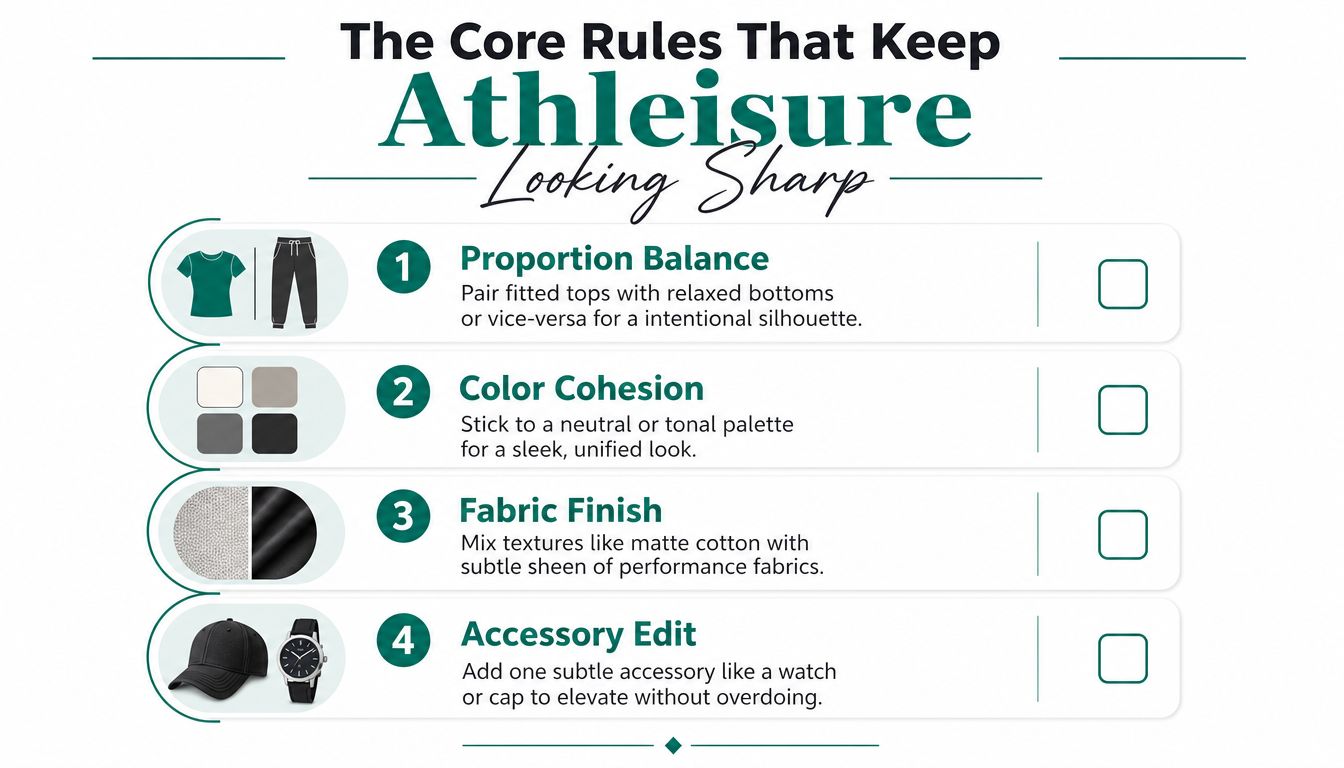
Athleisure looks polished when each piece serves both the activity and the setting. Before leaving home, assess the overall silhouette, color, fabric surface, and condition of the finishing details. The performance versus polish trade-off should guide every choice.
Balance the proportions
A loose top usually needs a controlled bottom, while relaxed trousers pair better with a more defined top. An oversized hoodie with tapered joggers gives the upper body volume while keeping the ankle line neat. A close-fitting tee can support relaxed trousers or wider-leg sweatpants because the contrast makes the shape look deliberate.
Volume throughout the outfit is harder to control. A dropped-shoulder hoodie over wide sweatpants with bulky shoes can appear careless, unless the look is intentionally streetwear-focused and the colors and hems are tightly edited. For everyday errands, start with one relaxed element.
Proportion rule: Choose one dominant volume. Let the other half of the outfit provide definition.
Keep the colors connected
A tonal palette makes performance clothing look less technical and easier to wear away from training. Black, charcoal, navy, gray, olive, bone, and muted blue can work together without creating visual noise. If the tee has a graphic, keep the remaining pieces quiet so the graphic reads as a deliberate choice.
Bright technical tops, contrast-heavy shorts, colorful shoes, and loud caps compete for attention when worn together. That combination suits dedicated training better than a gym-to-street outfit. Use one accent and repeat a neutral elsewhere. An olive outer layer over gray and black pieces has clearer visual control than several competing colors.
Pay attention to fabric finish
Softness and structure need to coexist. Matte cotton or fleece can ground a slightly smooth performance fabric, while a crisp woven jacket can give a soft jersey base more shape. The right choice depends on the activity and how polished the outfit needs to look. A 2022 review cited in performance-fabric testing guidance from SGS found no significant differences in several comfort measures across synthetic and natural fabrics in most light-to-moderate intensity studies. A 2023 wear trial found differences among particular garment constructions and fabrics.
Test each piece for its intended use. Heavyweight fleece can look strong for commuting but feel too warm during hard intervals. Mesh performance fabric may handle high exertion well yet look too gym-specific for dinner.
Edit the finishing details
Clean sneakers, an unwrinkled layer, and a simple watch often matter more than another branded item. A cap works when it is clean and fits the outfit's palette. A worn gym bag, scuffed shoes, or stretched cuffs can weaken otherwise sound clothing.
The No Luck Just Reps Hoodie shows how fabric weight and silhouette affect use. Its oversized boxy fit, drop shoulder, double-layer hood, and heavyweight 10 oz, 330 gsm cotton fleece provide visible structure. That same weight makes it better for warm-ups, cool commutes, and casual wear than intense training.
Choosing the Right Fit Without Looking Sloppy
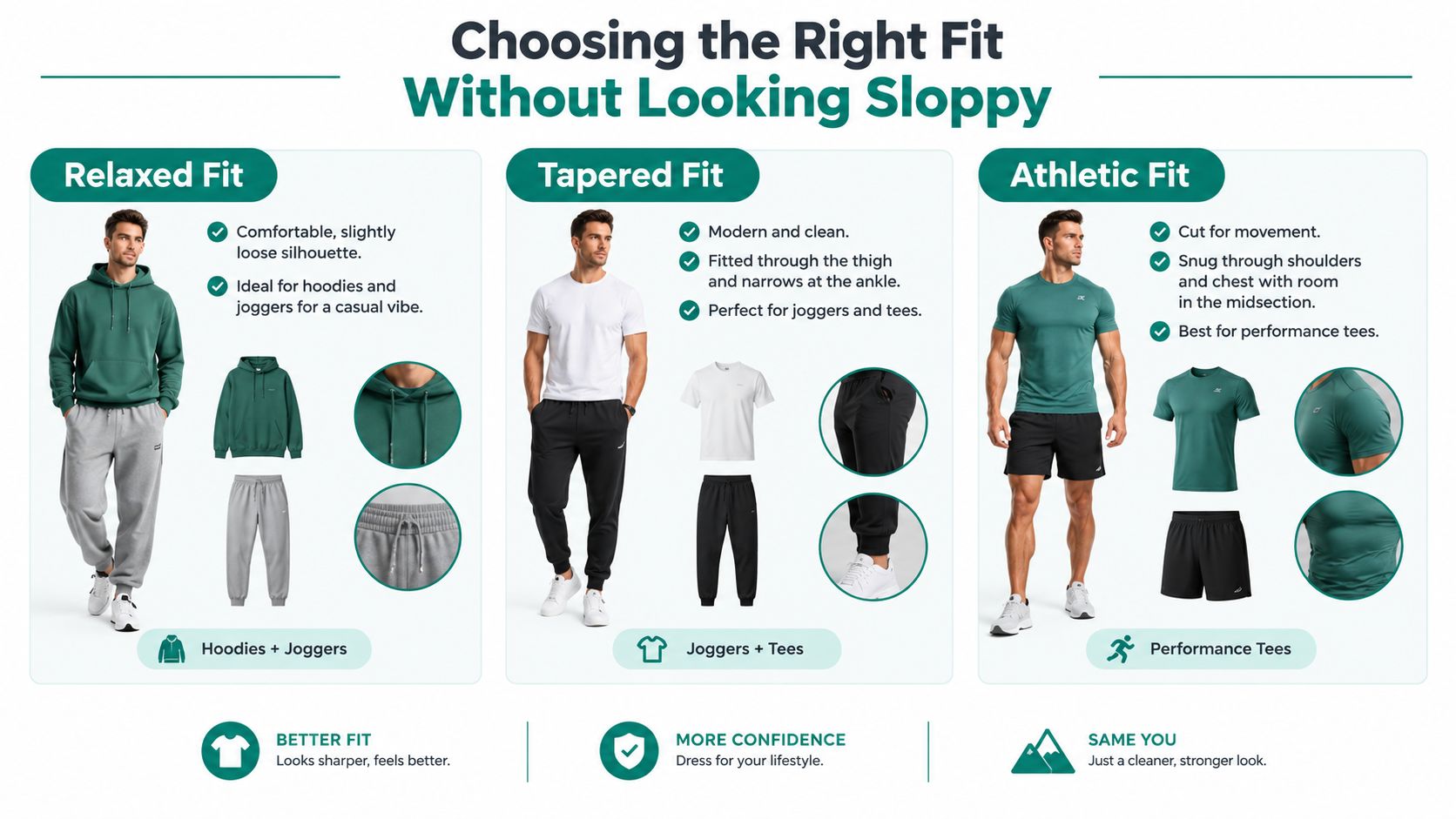
Fit decisions should begin with the activity, not the trend. Relaxed, tapered, and athletic cuts each solve a different problem, and forcing one shape into every setting is how athleisure starts to look careless.
Relaxed fit
Relaxed hoodies and joggers give you room through the torso, thigh, and leg. They're useful for warm-ups, travel, recovery days, and casual settings where comfort carries more weight than structured movement. They also suit a taller frame or a wearer who wants a modern streetwear silhouette.
The danger is lost shape. If relaxed joggers stack heavily at the shoe and the hoodie extends far below the seat, the outfit can look like loungewear. Keep one line controlled. Pair a loose hoodie with a cleaner trouser shape, or wear relaxed pants with a shorter, more defined top.
Tapered fit
Tapered joggers stay easier to style because the leg narrows toward the ankle. They work well with performance tees, crewnecks, bomber jackets, and low-profile sneakers. This shape is especially practical for commuting and errands because the narrower hem keeps the outfit visually tidy.
Tapering shouldn't mean restriction. If the fabric pulls across the thigh or limits a squat, the garment is too narrow for training, regardless of how clean it looks. Use the men's fitness apparel guide as a starting point, then judge the actual garment by movement and recovery.
Athletic fit
Athletic tops usually sit closer through the shoulders and chest while leaving more room around the midsection. They're useful for lifting, running, and other activities where excess fabric can interfere with movement. They also layer cleanly under a light jacket because they don't create unnecessary bulk.
For shorter men, a controlled top length and a tapered or straight lower half can preserve body proportion. For broader shoulders or muscular thighs, avoid sizing down just to create a sharp outline. The better solution is a cut that follows the body without pulling.
Use this quick decision test:
- Training: Choose athletic tops and bottoms that permit movement without loose fabric catching.
- Travel: Combine a relaxed upper layer with tapered pants for comfort and visual control.
- Office-adjacent casual: Favor tapered or lightly structured pieces, quiet colors, and minimal branding.
- Weekend streetwear: Use a relaxed silhouette, but keep either the footwear or the color palette restrained.
How to Layer Athleisure for Gym Errands and Casual Outings
Layering solves the temperature problem, but it also determines whether your outfit looks like a complete look or leftover gym gear. Build from the activity outward. Your base layer handles heat and sweat, the middle layer adds comfort, and the outer layer supplies polish.
Gym to street
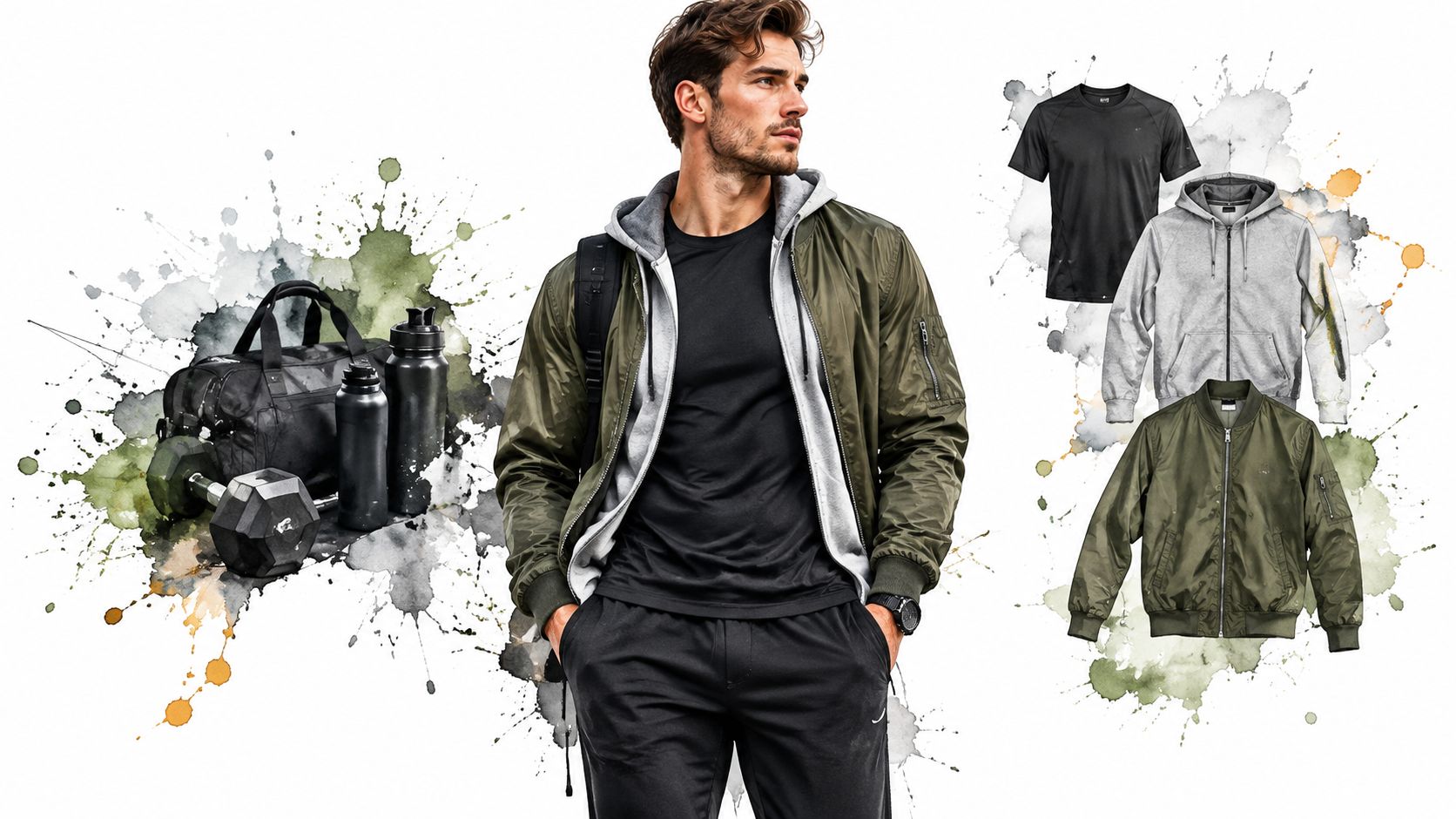
Start with a fitted or athletic-cut performance tee, then add tapered joggers and a lightweight bomber or track jacket. Wear low-profile trainers that can handle the walk from the gym without looking overly specialized. If you train hard, prioritize a breathable, quick-drying base. Keep the jacket matte and uncomplicated so the outfit can move into errands without looking like a uniform.
Don't wear a thick hoodie over a sweat-soaked tee and expect the result to feel fresh. Use a removable layer instead. You can take it off during training, then put it back on for the commute.
For a quarter-zip option, the 1/4 zip fleece guide is useful when you want a warmer middle layer with a cleaner neckline than a hooded sweatshirt.
Errands and coffee runs
Use a soft tee, relaxed but not oversized pants, and a structured overshirt, chore jacket, or light bomber. This formula favors wrinkle resistance and surface texture over maximum ventilation because the activity is lower intensity. A cotton blend or smooth jersey base can feel more natural than mesh, while a woven outer layer prevents the outfit from collapsing into lounge clothes.
Choose clean sneakers and one accessory, such as a watch or restrained cap. Leave the technical vest, compression layer, and loud gym bag at home unless the day requires them.
Evening casual
For dinner or a casual meetup, replace the performance-heavy base with a substantial tee, knit polo, or refined sweatshirt. Pair it with tapered trousers or dark joggers, then add an unlined bomber or clean overshirt. This increases polish without sacrificing movement.
A tonal outfit works particularly well here. Charcoal top, black lower half, and an olive or navy outer layer creates contrast through shade rather than decoration. Before you leave, check the collar, cuffs, and shoe condition. Evening light exposes rumpled fabric and worn footwear quickly.
A visual reference can help you judge how layers interact in a complete outfit:
Four Ready to Wear Men's Athleisure Outfits You Can Copy
These combinations use the same performance-versus-polish filter, but each assigns the relaxed volume to a different part of the outfit. Start with the occasion, then make one deliberate swap instead of changing everything.
The training commute
Wear an athletic-cut moisture-managing tee, tapered black joggers, a lightweight olive bomber, and clean tonal trainers. The tee supports movement, while the bomber gives the outfit enough structure for public transport or a quick shop after training. Swap the bomber for a simple overshirt when you're meeting someone casually.
The relaxed recovery look
Choose a boxy hoodie, straight or relaxed gray sweatpants, and low-profile sneakers. Keep the colors close, then make sure the pants have a clean hem rather than excessive stacking. For a sharper café version, replace the sweatpants with dark tapered joggers.
The shorts and fleece combination
Pair a substantial graphic tee with fleece shorts, crew socks, and a lightweight zip jacket. The outfit works for warm-weather lifting and casual errands when the shorts have a clean cut and the tee isn't overly thin. Swap the gym trainers for minimalist sneakers before heading to a casual meal.
The polished casual set
Use a fitted navy tee, tapered charcoal joggers, a structured overshirt, and understated leather or tonal sneakers. This is the safest option for office-adjacent casual settings because the narrow lower line and woven layer reduce the athletic feel. Replace the tee with a fine-gauge knit or polo if the setting expects slightly more refinement.
| Occasion | Core Pieces | Footwear and Layer | Quick Swap Tip |
|---|---|---|---|
| Training commute | Athletic tee and tapered joggers | Trainers with a lightweight bomber | Change the bomber to an overshirt |
| Recovery day | Boxy hoodie and relaxed sweatpants | Low-profile sneakers | Use dark tapered joggers for a cleaner line |
| Warm-weather errands | Graphic tee and fleece shorts | Trainers with a light zip jacket | Switch to minimalist sneakers |
| Casual evening | Fitted tee and tapered joggers | Structured overshirt with understated sneakers | Replace the tee with a knit polo |
The common thread is restraint. Each outfit has one relaxed element, one structured element, and footwear that looks intentional rather than accidental.
Your Versatile Wardrobe Starts With Discipline Daily
A reliable athleisure wardrobe earns repeated wear. Each piece should support training, handle the commute, and still look composed afterward. Build around performance tees, one or two hoodies, tapered joggers, a relaxed lower option, versatile shorts, and an outer layer that adds structure.
Use this audit before buying:
- Check the activity: Can the piece handle your training?
- Check the proportion: Does its volume balance the item above or below?
- Check the transition: Would you wear it for errands or a casual meetup?
- Check the finish: Are the seams, hems, fabric surface, and shoes presentable?
- Check the rotation: Does it combine with several existing pieces?
Fit proportion controls the performance-to-polish balance. Choose relaxed silhouettes when mobility and recovery matter, then add a structured layer or cleaner footwear. Choose tapered joggers when the outfit must look sharper, especially with a roomier hoodie or tee. Avoid stacking loose pieces together unless the fabric and hems are deliberately clean.
Fabric choice should match intensity and setting. Performance materials can help manage comfort during training, but results depend on the garment, activity, and conditions. Test clothing in the sessions and commutes where you plan to wear it, as noted earlier, rather than treating one fabric as universally superior.
A disciplined rotation keeps decisions simple. It supports the workout, survives the commute, and looks intentional through the rest of the day. From: Me Fitness Apparel offers men's graphic and performance tees, hoodies, outerwear, shorts, and selected accessories for training and everyday athleisure. Visit From: Me Fitness Apparel to build a rotation around your workouts, commute, and daily discipline.