

You're standing in the gym changing room, already late for your session, pulling down a pair of shorts that looked perfect online. The waistband is digging into your stomach, the liner has twisted, and you're wondering whether today's squats are worth the constant adjusting. That isn't a style problem. It's a movement problem, and the wrong pair of gym shorts for women can turn every set into a negotiation with your clothing.
The best shorts aren't the ones that look most impressive while you're standing still. They're the ones that stay put through squats, lunges, runs, hip thrusts, and sweaty transitions without distracting you. Women's gym shorts also sit inside a substantial performance-apparel market. One estimate values the global women's activewear market at USD 196.6 billion in 2023, with a projection of USD 322.2 billion by 2033, at a 5.06% CAGR over that period (Strategic Revenue Insights).
Table of Contents
- Why the Right Pair of Gym Shorts Matters
- Length, Inseam, and How Shorts Behave When You Move
- Liners, Built-In and Otherwise
- Waistband Styles and What They Do to Fit
- Fabric Blends, Sweat, and Stretch Recovery
- Matching Shorts to Your Training Style
- Sizing, Fit Checks, and Common Mistakes to Avoid
Why the Right Pair of Gym Shorts Matters
Your gym bag probably holds shoes for the session, a water bottle, and perhaps straps or a belt. Shorts deserve the same practical attention. They determine how freely your thighs move, how much friction reaches your skin, and whether your focus stays on the lift instead of constant clothing adjustments.
A poor pair exposes its weaknesses during the first demanding movement. Short legs creep upward in squats and lunges. A narrow waistband digs in when you brace for a deadlift. Fabric that feels comfortable while dry may cling after sweat builds, and a poorly designed liner can bunch during a run. Each issue is small, but together they interrupt concentration and make the workout less comfortable.
The cost of a bad fit
During a lower-body session, you may stop before a heavy set to pull the hem away from your inner thigh. Then the waistband rolls as you reset your stance and brace again. By the time you begin the rep, your attention has shifted from your movement to your clothing.
Running creates a different set of problems. A loose liner can twist repeatedly, while a rough seam can turn manageable mileage into chafing. Floor-based training also exposes coverage weaknesses when shorts shift during stretches, bridges, or inverted positions.
Practical rule: If you adjust your shorts during every major movement, the design is wrong for your training, even when the labeled size is technically correct.
Choose the compromise deliberately
Every pair involves a trade-off:
- Coverage offers more security in deep positions, but additional fabric can feel warmer.
- Compression can provide a held-in feel, but excessive tightness may restrict comfort.
- Breathability helps during hard cardio, while very light fabric may provide less coverage.
- Aesthetics matter because you should feel good wearing the garment, but appearance should follow movement needs.
Start with the training pattern you perform most often. Runners usually benefit from light shorts that stay clear of the stride. Lifters need a waistband and hem that remain stable through squats, lunges, and bracing. For mixed sessions, choose the compromise that handles your most demanding movement rather than the pair that looks best at rest.
The next decisions involve inseam, liners, waistbands, fabric behavior, and sizing. Judge each feature by what it does while you run, lift, squat, or work on the floor. Style still has a place, but it should not persuade you to buy shorts that fail during your first set.
Length, Inseam, and How Shorts Behave When You Move
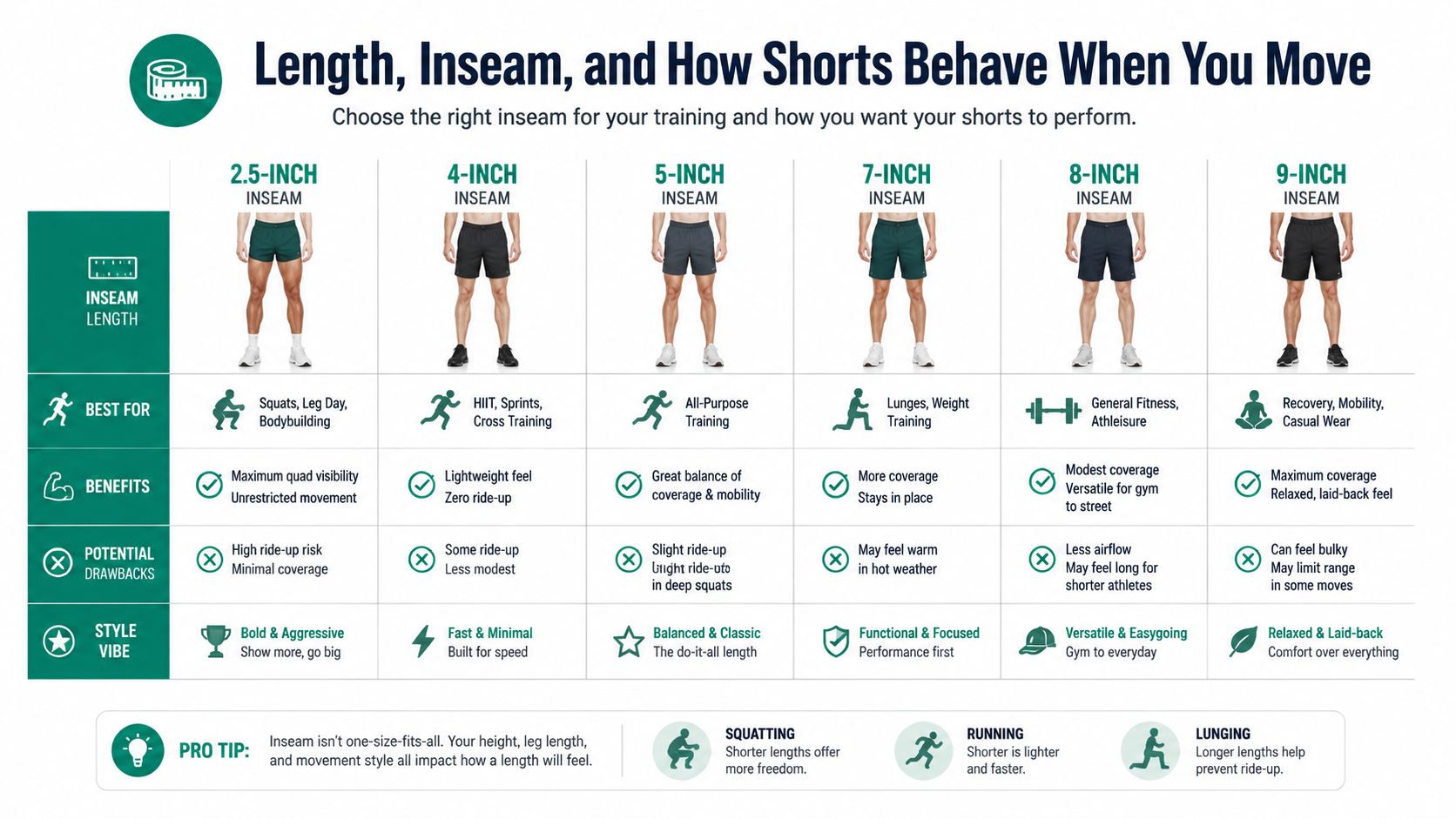
A pair can feel fine while standing still and fail the moment you squat, run, or set up for a lift. Inseam, the distance from the crotch seam to the hem, controls how much fabric stays against your thigh, how freely your legs move, and whether the hem gets in the way of equipment.
Match the length to the movement
Short inseams, around 2.5 to 4 inches, feel light, cool, and unobstructed. They expose more quad during squats and keep the stride open during runs or hot conditioning sessions. Their weakness shows during lunges. As the front thigh folds toward your torso, the shorter hem has less fabric to hold its position, so it may ride upward.
Mid-length shorts, around 5 to 7 inches, are the strongest starting point for mixed gym training. They provide coverage for squats, lunges, and floor work without the enclosed feel of a long biker short. Choose this range if your week includes lifting, cycling, and classes. This 7-inch inseam guide helps compare how a mid-length cut sits against shorter and longer options.
Longer shorts, around 8 to 9 inches, cover more of the thigh and can reduce skin-on-skin contact during longer runs or repeated lower-body work. They feel more secure, though heavy fabric or a narrow hem can make them warmer and cause bunching behind the knee.
| Inseam | Movement behavior | Best match | Main trade-off |
|---|---|---|---|
| 2.5 to 4 inches | Light, open, easy stride | Running and HIIT | More ride-up during lunges |
| 5 to 7 inches | Balanced coverage and mobility | Lifting and mixed training | Less airflow than short cuts |
| 8 to 9 inches | More thigh coverage and friction protection | Long runs and cycling | Can feel warmer or restrictive |
Cut matters as much as length
Inseam alone does not predict performance. A curved hem opens the outer thigh and supports a freer stride, while a straight, closer hem usually stays more anchored. Side slits improve mobility but may expose more during wide squats. A loose drape feels breezy, yet it can catch on a bench or shift during floor-based positions.
Your leg shape changes the result. If your thighs meet higher up, a longer inseam can reduce friction more effectively. If you have shorter legs, pairing a high waistband with a long inseam may make the proportions feel crowded. Equipment clearance matters as well. Loose fabric can bunch under you during a leg press or hip thrust setup, so choose a smoother, closer cut for those exercises.
For relaxed everyday wear, the MENS DAILY STANDARD TRAINING SHORTS use a shorter, lighter cut, an elastic waistband, and a 6-3/4-inch inseam, which prioritizes easy movement over close compression. It is a useful example of a casual short designed for movement and comfort rather than a held-in feel.
Movement rule: Choose the inseam that handles the exercise creating the most friction or exposure. Go short for stride freedom, mid-length for mixed gym work, and long for repeated thigh contact.
Liners, Built-In and Otherwise
A liner changes how shorts behave once you start moving. The right construction keeps fabric in place through squats, runs, and fast transitions. The wrong one bunches, twists, or rubs, turning a useful feature into a distraction.
Compression liners fit lifters who want close support. They limit loose fabric and feel stable during squats, lunges, and quick changes of direction. Research on compression garments has examined effects such as reduced muscle oscillation, and some findings report improved mean power output during jumping tasks (compression garment research). Treat that as context, not a performance guarantee. A liner that is too tight can press into the waistband, restrict comfortable movement, or roll as you train.
Choose compression when stability matters more than airflow.
Loose mesh liners suit runners and hot cardio sessions. They leave more room around the thigh and feel less enclosed as your stride repeats. Their weak point is attachment and construction. Cheap mesh can bunch, twist, or rub, especially when the outer short hangs loosely and the liner lacks secure connection points.
Mesh is the better match for running if the liner stays flat.
Unlined shorts give you the most control over layers. Wear them over separate compression shorts, tights, or underwear selected for the workout. They adapt well to lifting, classes, and casual use, but you must handle coverage and friction yourself. Poorly chosen underwear can create seams, shifting, or extra heat.
Liner Types Compared for Gym Shorts
| Liner Type | Fit Feel | Best For | Common Drawback |
|---|---|---|---|
| Compression liner | Close, secure, second-skin | Heavy lifting and fast transitions | Can roll or feel restrictive |
| Loose mesh liner | Airy and light | Running and hot cardio | May bunch or twist |
| Unlined | Adaptable and less bulky | Mixed training and layering | Requires separate coverage planning |
Match underwear to the liner. Compression liners usually work better without bulky underwear underneath. If you wear underwear with mesh, choose a smooth, low-friction pair. Unlined shorts allow more flexibility, though cotton-rich underwear can hold sweat during a demanding session and increase rubbing. Synthetic blends generally move moisture away from the skin and dry faster than cotton, as noted in this women's workout shorts review.
Care affects comfort too. Wash sweaty shorts promptly and follow the care label. An antimicrobial finish may help manage odor, but it does not replace washing or fix a liner that traps moisture.
For heavy lifting, choose a well-sized compression liner. For longer runs, pick mesh when airflow is your priority, or go unlined when friction control depends on your base layer. Choose unlined shorts when you want one outer layer that works across different workouts.
Waistband Styles and What They Do to Fit
The waistband decides whether your shorts stay where you put them. A leg opening can be perfect, but if the waistband rolls during a squat or slides during a hinge, the garment has failed at its most important job.
Four waistband designs worth understanding
Low-rise elastic waistbands sit below the natural waist and usually feel less restrictive around the stomach. They pair well with short, loose shorts for casual movement and easy cardio. They're less reliable for heavy lifting if the elastic lacks enough grip, especially when you brace, hinge, or move through repeated transitions.
Mid-rise wide bands spread pressure across more fabric instead of concentrating it in a narrow strip. This is my favorite general-purpose choice for mixed gym work because it can stay stable without feeling excessively tight. A softer, wider band also tends to work well during floor exercises, where a narrow elastic edge can dig in.
High-rise compression waistbands sit higher on the torso and create the most held-in feel. They're a strong match for lifting, CrossFit-style transitions, and shorts with shorter inseams, because the higher anchor can balance the reduced coverage below. The danger is overcompression. If you can't breathe comfortably into your brace or the band rolls when you bend, size or construction is wrong.
Drawstring hybrids combine elastic recovery with adjustable tension. They're useful when your waist and hips don't fit neatly into one size or when you want extra security for running. A drawstring shouldn't compensate for a waistband that's too loose. It should fine-tune a sound fit.
Waistband Styles Compared
| Waistband Style | Stability During Movement | Best For |
|---|---|---|
| Low-rise elastic | Comfortable, but may shift during hinges | Casual workouts and relaxed cardio |
| Mid-rise wide band | Balanced stability and pressure distribution | Mixed gym training and classes |
| High-rise compression | Strong anchoring and torso coverage | Lifting and high-intensity transitions |
| Drawstring hybrid | Adjustable hold when properly fitted | Running and variable-intensity sessions |
Curvier hips often expose waistband flaws quickly. A band can fit the waist but gap at the back, or fit the hips while squeezing the middle. Look for stretch that recovers rather than a rigid edge that relies on excessive tightness. Pairing a shorter inseam with a stable high or mid-rise waistband can create a secure silhouette, while a longer inseam often works better with a waistband that doesn't add unnecessary compression.
A waistband should flatten against your body, not fight it. If it rolls, pinches, or gaps during a hinge, don't hope movement will improve the fit.
Fabric Blends, Sweat, and Stretch Recovery
Fabric names don't tell you enough. What matters is how the shorts feel after your body heats up, how they respond at the bottom of a squat, and whether they return to shape after repeated wear.
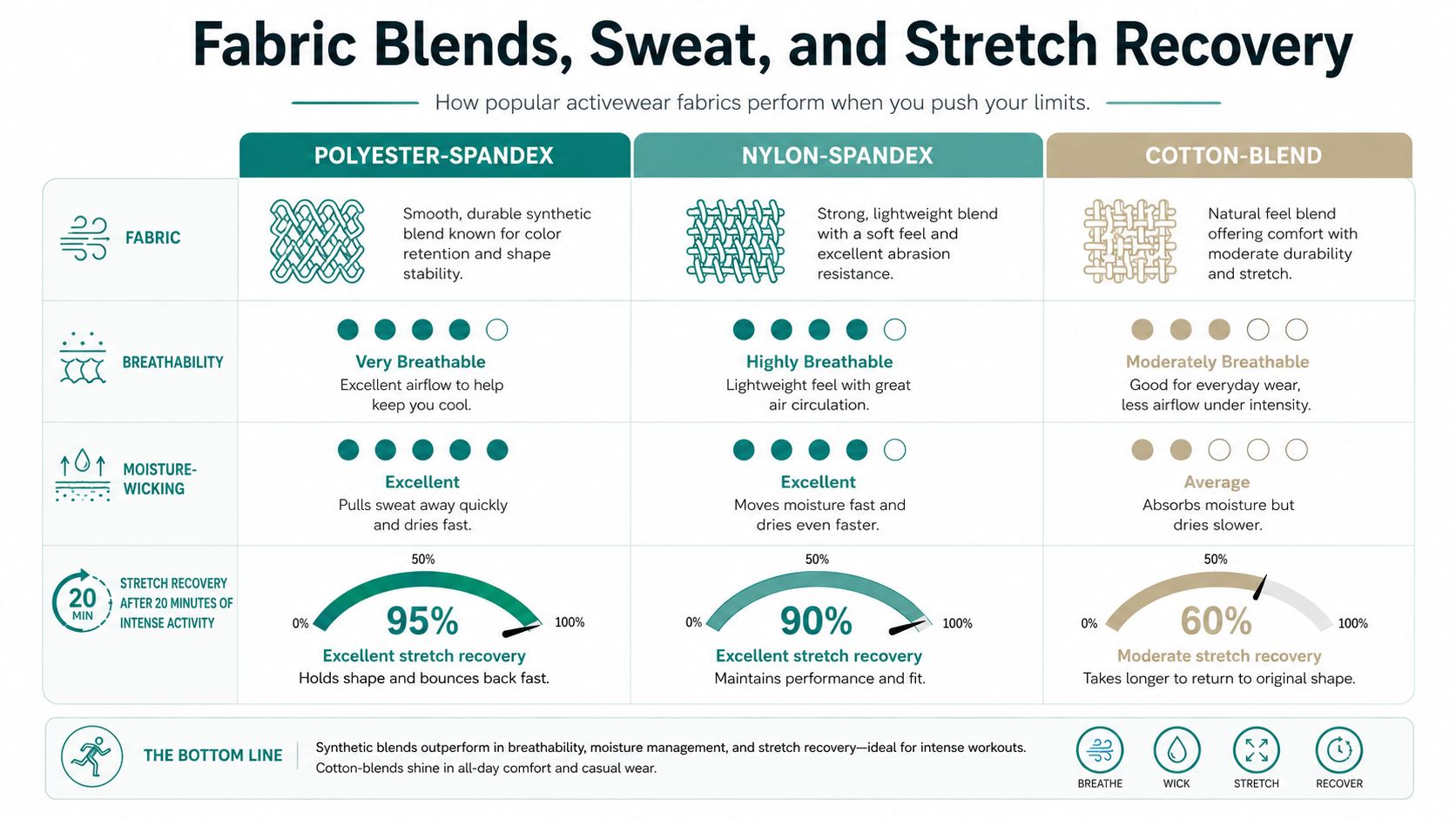
Polyester-spandex blends are common because polyester dries quickly and spandex adds stretch. They can work well for running, HIIT, and general gym sessions, but inexpensive polyester may feel clammy if the knit traps heat or the finish lacks softness.
Nylon-elastane blends usually feel smoother and cooler against the skin. Nylon can give compression shorts a more polished hand feel, while elastane lets the fabric move through deep squats and lunges. This combination is my default recommendation for close-fitting gym shorts because it balances stretch with a stable surface.
Recycled polyester blends can offer similar performance characteristics to conventional polyester, but the label alone doesn't tell you how the garment will feel. Judge the actual knit, weight, waistband, and stitching. Lightweight woven fabrics are excellent for airflow and unrestricted running, though they can provide less body coverage and may need a liner.
Judge the fabric by three behaviors
Sweat handling: Synthetic bases generally move moisture away from the skin and dry faster than cotton. Cotton-rich fabrics retain more sweat, which can increase cling and discomfort during intense sessions, as described in the women's fitness apparel guide.
Stretch under load: The fabric should open across the hips and thighs without becoming transparent or pulling the waistband down. Test this in a deep squat, not just by stretching the garment with your hands.
Recovery after repetition: A fabric that stretches well but fails to recover can sag at the seat, loosen at the waist, or leave the liner shifting. Good recovery keeps seams and hems positioned after repeated movement.
Very high elastane content isn't automatically better. More stretch can feel comfortable at first, but excessive tension at the waistband may create pinching or make the shorts feel unstable as the fabric relaxes. Antimicrobial finishes can help with odor control, but they're a finishing detail, not a substitute for breathability, washing, or a sound liner.
Choose fabric by session. Lightweight woven fabric suits running, nylon-elastane works well for lifting, and softer stretch blends are preferable for yoga and Pilates. The right material is the one that keeps its intended behavior after sweat and movement enter the picture.
Matching Shorts to Your Training Style
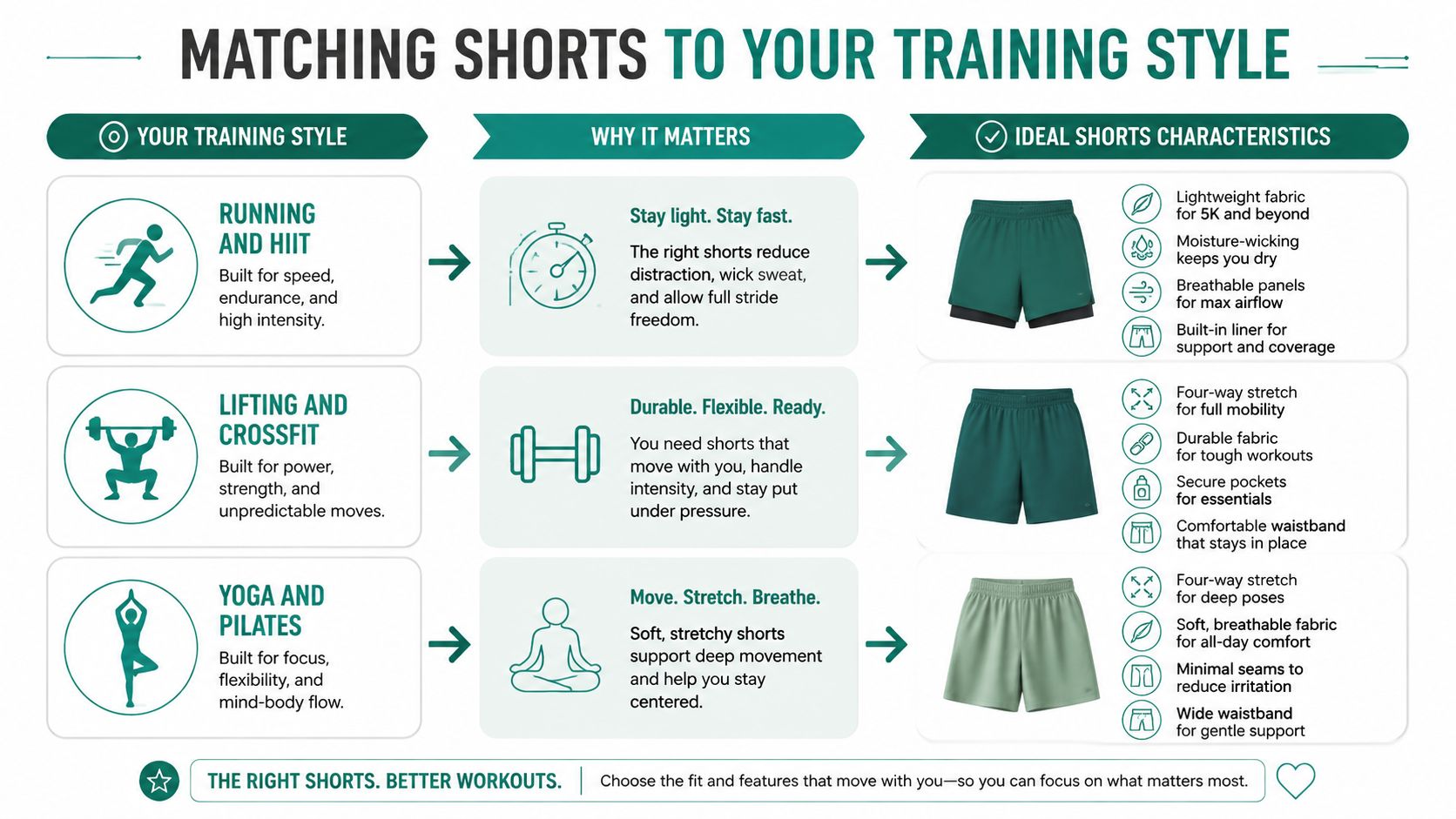
A short that feels excellent on a run can become distracting under a barbell. Running rewards a light hem and free stride, while lifting requires coverage and a waistband that stays put as your hips fold. Judge the pair by what it does during squats, sprints, and floor work, not by fabric labels alone.
Running and HIIT
Choose a 3 to 5-inch inseam, lightweight construction, and either a secure mesh liner or a separate compression layer. A mid-rise waistband with a drawstring helps if acceleration and sudden stops make your shorts slide.
HIIT adds more floor contact and knee drive. Pick a hem that stays clear when you lift your legs, and test side splits during burpees and transitions. Side splits can improve stride freedom, but they also demand a closer coverage check. If inner-thigh friction is the problem, choose a longer cut instead of automatically going shorter.
Lifting and CrossFit
For squats, deadlifts, lunges, and hip thrusts, start with 5 to 7 inches and a stretch fabric that does not pull across the hips. A wide mid-rise or high-rise waistband should remain anchored while you brace. Choose compression liners if loose fabric bunches around your thighs.
CrossFit-style sessions need stability and quick movement. A mid-length short with a secure liner usually works better than an ultra-short running cut because it needs fewer adjustments between strength and cardio drills.
Yoga, Pilates, and floor work
Choose 5 to 7 inches, four-way stretch, and either no liner or a liner that lies smoothly against the body. A soft mid-rise waistband suits folding, rotation, and back-lying positions better than a rigid compression band. Loose outer shorts need a dependable liner before they are suitable for inversions.
Cycling and spin
Go longer, usually 7 to 9 inches, with a close fit that will not catch or ride upward against the saddle. A smooth compression liner limits movement and friction. The waistband should lie flat, especially when you lean forward.
Casual gym-to-street wear
For an easy run, light workout, or daily errands, choose a relaxed women's short rather than tight technical gear. A 4-inch relaxed cut with an elastic waistband gives the legs room to move, while side pockets make it practical beyond the gym. It is less secure for hard intervals and heavy lifting, so reserve it for lower-demand sessions.
If you train across several modalities, buy for the session that creates the hardest fit problem. A 5 to 7-inch short with a stable waistband and adaptable liner is the strongest starting point. Add a shorter running pair or longer anti-chafe pair only when your training exposes a clear limitation.
Sizing, Fit Checks, and Common Mistakes to Avoid
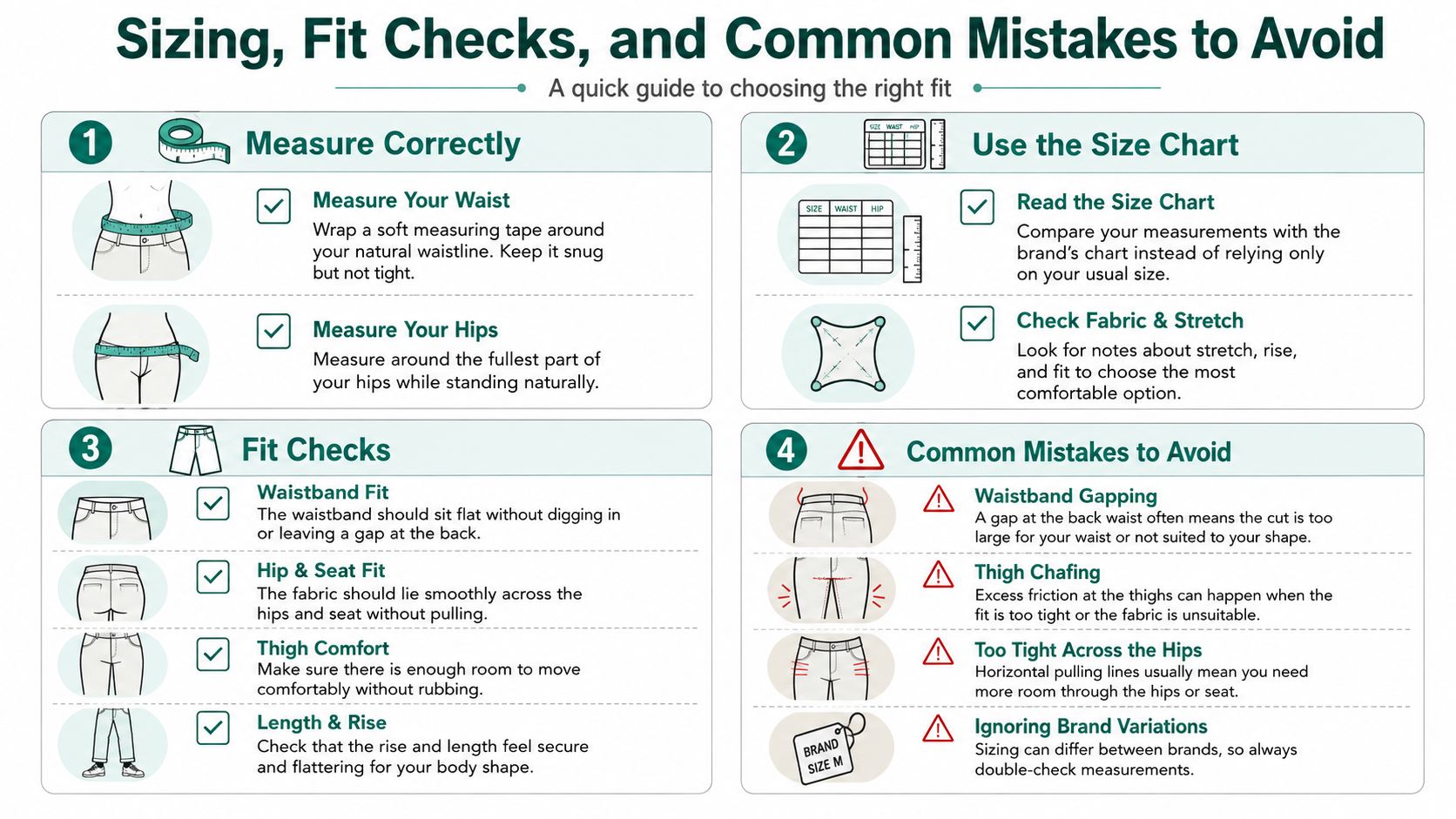
A size chart gives you a starting point. Measure your waist where the waistband will sit and your hips at the fullest point, then compare both with the brand's chart. Do not copy your jeans size or assume another activewear label fits the same. Waistbands, liners, and leg openings vary by brand.
Run these five tests before keeping the pair
- Squat test: Go below your usual depth. Check for a rolling waistband, creeping liner, or fabric that pinches.
- Lunge test: Step forward and backward. Watch the hem on shorter inseams and check whether the crotch seam pulls.
- Jump test: Do controlled jumps or fast knee drives. The shorts should stay anchored without an painfully tight drawstring.
- Waistband grip test: Bend, hinge, and reach overhead. The band should follow your torso without sliding down or gapping at the back.
- Seam chafe check: Walk, squat, and sit long enough to notice pressure at the inner thigh, gusset, or liner edge.
Mistakes that waste money
A standing-mirror check is not enough. Shorts can look sleek while failing during squats, lunges, or runs. Inseam also matters when you are between sizes. Sizing up may relieve thigh pressure but loosen the waist, while sizing down can make the liner restrictive.
If you are unsure how short is too short for your training, the shorts-too-short guide explains the coverage trade-offs. For high-intensity work, check an elastic-only waistband in motion. Elastic feels comfortable, but it needs enough tension and width to stay in place during hinges and jumps.
Compression liners and running liners serve different purposes. Compression gives a closer, held-in feel. Mesh favors airflow and freedom. Choose based on how the shorts behave in your training, not how technical they sound.
If a pair shifts during a full movement set, return it or choose another design. Keep the pair that lets you squat, lunge, run, and brace without adjusting your shorts.
From: Me Fitness Apparel offers women's activewear and athleisure basics, including shorts, tanks, tees, hoodies, sweaters, and outerwear, with U.S. free-shipping messaging and eligible returns. Visit From: Me Fitness Apparel to compare training layers and everyday pieces that fit the rest of your gym wardrobe.