

You're halfway through a hard squat session when your shorts start climbing toward your hips. The waistband folds under your belt, sweat stays trapped against your skin, and your phone thumps against your thigh every time you lunge. You spend more time adjusting your clothes than focusing on the set.
That's not a minor comfort issue. Gym shorts are training equipment. The cut affects your range of motion, the fabric determines how the garment handles sweat and friction, and the pocket layout can either keep your phone secure or turn every sprint into a distraction. The best gym shorts depend on how you train, how often you wash them, and what you need to carry.
The comparison below gives you a practical starting point before the deeper breakdown.
| Training priority | Best starting specification | Why it matters |
|---|---|---|
| Heavy lifting | Mid-length inseam, stable waistband, durable stretch shell | Reduces restriction during squats and protects against repeated friction |
| HIIT and circuits | Lightweight stretch fabric, breathable liner, secure pocket | Handles fast movement, sweat, and constant transitions |
| Running and cardio | Shorter inseam, built-in brief or compression liner, sweat-wicking shell | Limits bulk and helps reduce ride-up and chafe |
| Gym-to-street wear | Mid-length cut, flat drawcord, deeper pockets, neutral styling | Works for training and daily movement |
| Recovery and mobility | Soft relaxed fabric, flexible waistband, open pockets | Prioritizes comfort when intensity and sweat are lower |
Table of Contents
- Why Most Gym Shorts Fail When It Matters
- The Five Features That Define Performance Shorts
- Fabric and Moisture Management Compared
- Matching Shorts to Your Training Style
- The Overlooked Problems That Ruin Gym Shorts
- How to Evaluate Gym Shorts Before You Buy
- Your Action Plan for Choosing the Right Pair
Why Most Gym Shorts Fail When It Matters
A lifter misses the bottom position of a squat because the leg opening catches on the thigh. A runner reaches for the treadmill rail because a loose phone pocket has started bouncing against the hip. During a circuit, a damp cotton-heavy short sticks to the skin, then rides up during burpees. None of these problems appears in a product photo.
The failure usually comes from choosing shorts by appearance instead of workload. A soft, relaxed pair can feel excellent while walking around, yet become hot and heavy during intervals. A very light running short can feel fast on a treadmill but offer little coverage or stability during deep squats. A pair with several pockets may still be poorly designed if the phone sits low and swings with every step.
A good training short disappears during movement. A bad one keeps asking for attention.
Brand loyalty doesn't solve this. One model may work brilliantly for running and fail under barbell friction. Another may feel secure during lifting but trap too much moisture for high-sweat conditioning. The useful question isn't “Which brand is popular?” It's “What does this short need to do during my hardest movement?”
The category has changed because athletes now expect one garment to cover several settings. Athletic shorts moved from early twentieth-century sportswear into mainstream performance clothing, with nylon becoming important after World War II because it supported easier movement and comfort in wind suits and running shorts compared with thicker fabrics such as denim. Gym shorts later moved beyond men's sportswear, and the baggier basketball silhouette popularized through Michael Jordan's 1988 Nike commercial with Spike Lee helped shape modern gym-short styling, as detailed in the history of men's activewear shorts.
That history explains the visual variety, but it doesn't tell you what will survive your training. For that, inspect the inseam, shell fabric, liner, pockets, waistband, and stitching.
The Five Features That Define Performance Shorts
The best gym shorts aren't defined by a logo. They're defined by whether five design choices match the demands of your training.
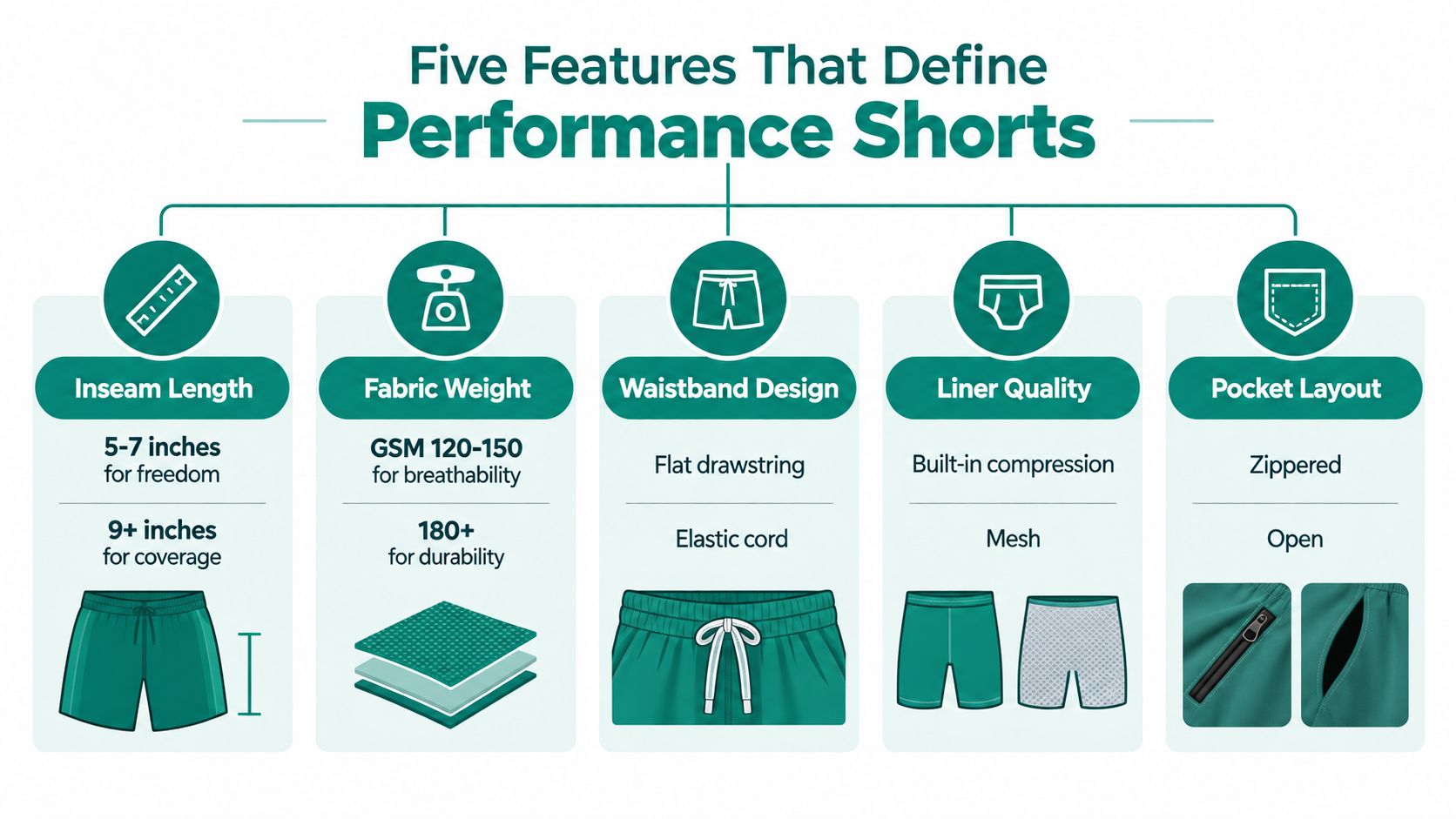
Inseam length controls movement
Shorter inseams expose more of the thigh and usually feel freer during running, lunges, and mobility work. Longer inseams offer more coverage and can protect the inner thigh from friction, but excess fabric can bunch behind the knee or interfere with a deep squat.
For mixed lifting and conditioning, a mid-length cut is the safest choice. If you spend most of your time on heavy lower-body work, prioritize a leg opening that clears the thigh without clinging. If running dominates your week, choose a lighter, shorter design that won't feel bulky as the session continues.
Fabric composition matters more than marketing language
For HIIT and gym use, polyester-spandex and nylon-spandex blends provide the strongest technical baseline. Independent activewear guidance places suitable training fabrics in the 190–220 GSM range, alongside moisture management, breathability, abrasion resistance, and durability as core criteria in this activewear fabric guide.
GSM means fabric weight. It isn't a complete quality score, but it helps distinguish a substantial training shell from a very light lifestyle fabric. Polyester or nylon should lead the composition, while spandex supplies stretch and recovery. Too little stretch can restrict the hips; too much can create a thin, clingy garment that loses shape sooner.
Liner design determines control
A built-in compression liner gives support and reduces direct skin-to-shell friction. Mesh liners feel cooler and less restrictive, but they need clean seams and enough structure to stay in place. A liner that twists, pinches, or has loose elastic is worse than no liner.
Check product photos for the gusset, seam placement, and leg opening. The liner should move with the body without cutting into the thigh when you squat or stride.
Pockets must be tested in motion
An open side pocket is fine for walking to the rack. It isn't automatically suitable for sprinting, jumping, or lunges. A phone needs a deep envelope, a zip closure, or a sweat-resistant pocket integrated into a stable part of the garment.
Pocket placement matters as much as pocket type. A low, loose pocket creates bounce and can pull the shell sideways. A pocket positioned close to the body distributes the load better, especially when carrying a phone during dynamic work.
Construction decides whether the short lasts
Look for a waistband that lies flat, a drawcord that stays anchored, reinforced hems, and stitching that doesn't pucker around the gusset. These details matter because repeated squats, lunges, treadmill contact, and washing stress the same areas over and over.
For lower-intensity use, Women's Camo Wave Wash Fleece Shorts are a relaxed loungewear option made from a 230 GSM 55/45 ring-spun cotton-polyester fleece blend, with an elastic waistband, shoestring drawcord, jersey-lined hand pockets, and blindstitch and coverstitch construction. That specification suits casual movement and streetwear more naturally than high-sweat interval training.
Fabric and Moisture Management Compared
Fabric decides how quickly a short moves sweat away from the skin, how it handles abrasion, and whether it still feels wearable after a demanding session. Polyester-led constructions remain the safest choice for high-sweat training because polyester is described as transporting moisture fastest, with sweat movement beginning roughly 30–60 seconds after contact and drying 50–70% faster than cotton, according to guidance on choosing moisture-wicking sportswear.
| Fabric Type | Moisture Wicking | Drying Speed | Durability | Best For |
|---|---|---|---|---|
| Polyester-spandex | Fast and reliable | Fast | Strong when properly constructed | HIIT, lifting, circuits, general gym use |
| Nylon-spandex | Strong moisture handling | Fast | Excellent abrasion resistance | Heavy training, frequent use, hybrid workouts |
| Cotton-heavy blend | Slower once saturated | Slow compared with polyester-led fabrics | Comfortable but less suited to repeated wet friction | Mobility, recovery, casual wear |
| Spandex-heavy construction | Feels stretchy and close-fitting | Depends on the primary fiber | Can be less stable if the shell is too light | Compression layers and controlled movement |
| Hybrid shell and liner | Performance varies by each layer | Usually good when polyester-led | Depends on seams and liner construction | Running, cross-training, gym-to-street use |
Polyester and nylon serve different priorities
Choose polyester-spandex when sweat transport and quick drying lead your checklist. Choose nylon-spandex when the garment will face constant contact with benches, racks, flooring, or repeated leg movement. Both need enough spandex for recovery, not just initial stretch.
Fabric weight gives the choice more context. A 190–220 GSM shell is a practical baseline for repeated HIIT and gym use because it balances stability with movement. A lighter fabric can feel cooler, but it may prioritize softness and low weight over long-term resistance to friction. A heavier fabric can feel more substantial, yet it may become uncomfortable in hot, high-sweat sessions.
Cotton still has a place. It feels familiar, soft, and suitable for low-intensity movement or athleisure. It's the wrong default for daily intervals if you dislike carrying a damp garment through the rest of your day.
Moisture management doesn't solve odor by itself
A short that dries quickly can feel better during training, but odor depends on sweat, skin contact, fabric, treatments, and laundering. Product pages that say “moisture-wicking” without describing the shell composition or testing approach leave too much unanswered.
For buyers who train frequently, the useful filter is simple: look for a polyester- or nylon-dominant shell, enough stretch for recovery, and construction that allows the garment to dry fully between washes. You can explore broader outfit considerations in this guide to women's fitness apparel, but don't let styling replace a fabric check.
Matching Shorts to Your Training Style
Your primary training style should decide the short, not the other way around. Start with the movement that exposes bad design fastest. For a powerlifter, that's a deep squat or deadlift. For a runner, it's repeated stride and sweat. For a hybrid athlete, it's the abrupt change from lifting to conditioning.
Powerlifting and heavy squats
Choose a mid-to-long inseam with a stable waistband and a durable stretch shell. You want coverage through the thigh, but not a narrow leg opening that catches when the hip closes. A liner is optional if your base layer already provides support, but a secure built-in liner can reduce adjustment between sets.
Prioritize pockets you can empty before a heavy set. A phone in a loose side pocket can pull the garment during bracing, and a key can become an unpleasant pressure point under a belt or bench contact.
HIIT and circuit training
HIIT demands the most from one pair of shorts because the movement changes constantly. Choose a lightweight-to-moderate polyester-spandex or nylon-spandex shell, a breathable liner, and a waistband that stays put through burpees, jumps, squats, and rowing.
A zippered pocket is useful if you need your phone nearby, but don't accept a bulky pocket that bounces. If storage isn't essential, leave the phone outside the workout. Fewer loose objects mean fewer distractions.
Running and cardio
Running favors a shorter inseam, a brief or compression liner, and a polyester-led fabric that moves sweat away from the skin. Excess material can rub and feel heavy, especially when the session becomes hot.
Reflective details can help outdoor visibility, but they don't compensate for poor fit. Test the liner by walking, jogging, and lifting one knee high. If it creeps upward before you run, it won't improve once you're sweating.
Hybrid gym-to-street wear
Pick a mid-length short with a flat drawcord, clean exterior, and pockets that can carry your phone without swinging. A shell around the substantial training range gives you more versatility than an ultra-light running short, while a neutral color makes the transition from gym to errands easier.
The right pair should handle warm-ups, strength work, and a coffee stop without looking like a costume change. This guide to seven-inch inseams offers useful context for shoppers comparing coverage and mobility.
A visual guide can help you narrow the choice before trying anything on.
Recovery and mobility work
Softness matters more when sweat and abrasion are low. A relaxed cotton blend, open pocket, and forgiving waistband can be more comfortable for stretching, walking, and recovery sessions than a compressive performance short.
Don't wear a heavy fleece short for a hot interval session because it feels durable. Match the garment to the stress, not just the activity label.
The Overlooked Problems That Ruin Gym Shorts
Most buying guides stop at softness, stretch, and sweat-wicking. That misses two problems that determine whether you can wear a pair repeatedly: odor retention and pocket security.
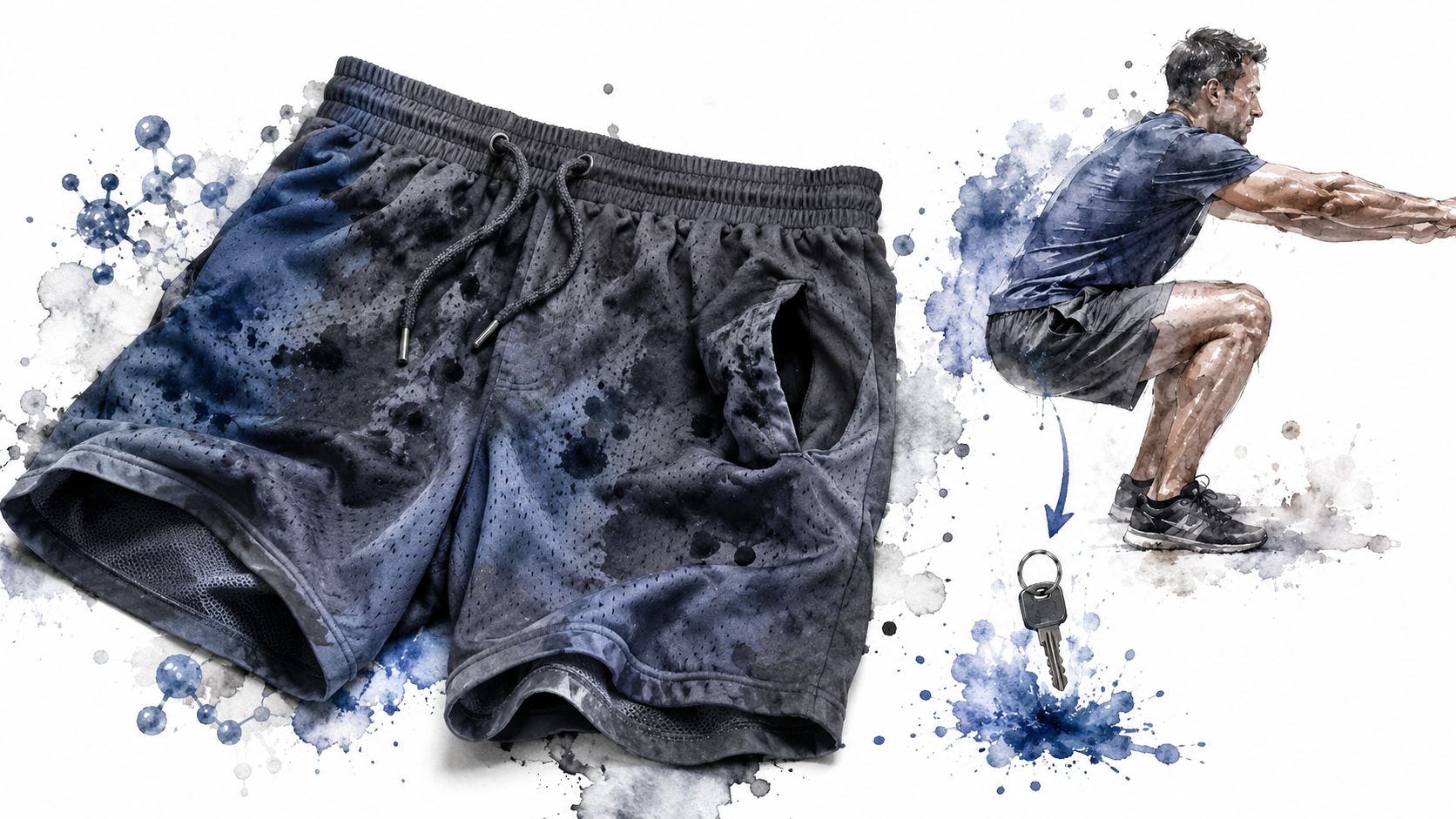
Odor control isn't a substitute for laundering
Sportswear worn next to the skin can retain malodor. Research on odor-control treatments indicates that treatments reduce smell but don't remove laundering concerns, and treated fabrics can still smell stronger than wool, as discussed in this PubMed study on odor in sportswear.
That matters if you train daily. An anti-odor finish may keep a garment fresher for a while, but it doesn't turn one pair into a multi-session uniform. Sweat, skin oils, and bacteria still accumulate, especially in the liner and waistband.
Build your rotation around laundering reality:
- Wash after sweaty sessions: Don't treat an odor-control label as permission to postpone cleaning indefinitely.
- Dry thoroughly: Damp storage gives odor more opportunity to persist.
- Inspect the liner: The layer closest to the skin often needs the most attention.
- Own enough variety: A small rotation reduces the temptation to reuse shorts before they're clean and dry.
Pocket security changes movement quality
A phone sitting in a side pocket can bounce during sprints, slap the thigh during lunges, and tug the shell sideways during squats. A key can become even more irritating because its rigid shape concentrates pressure in one spot.
Pocket design must work with the liner and waistband. A pocket attached to a loose outer shell moves more than one anchored close to the body. A deep envelope can secure a phone without a zipper, while a zip pocket offers stronger closure but may add a hard edge or bulk.
Before buying, ask three questions:
- Does the pocket hold the phone high and close to the body?
- Can the liner move independently without pulling the pocket?
- Is the opening secure enough for the movement you perform?
If the inseam itself causes exposure, rubbing, or constant adjustment, use this guide to shorts that are too short as a fit reference. The goal isn't maximum pocket count or minimum fabric. It's stable movement with nothing digging, bouncing, or shifting.
How to Evaluate Gym Shorts Before You Buy
Shopping photos hide the details that matter most. Use the product page like a specification sheet, then judge the garment under movement before adding it to your daily rotation.
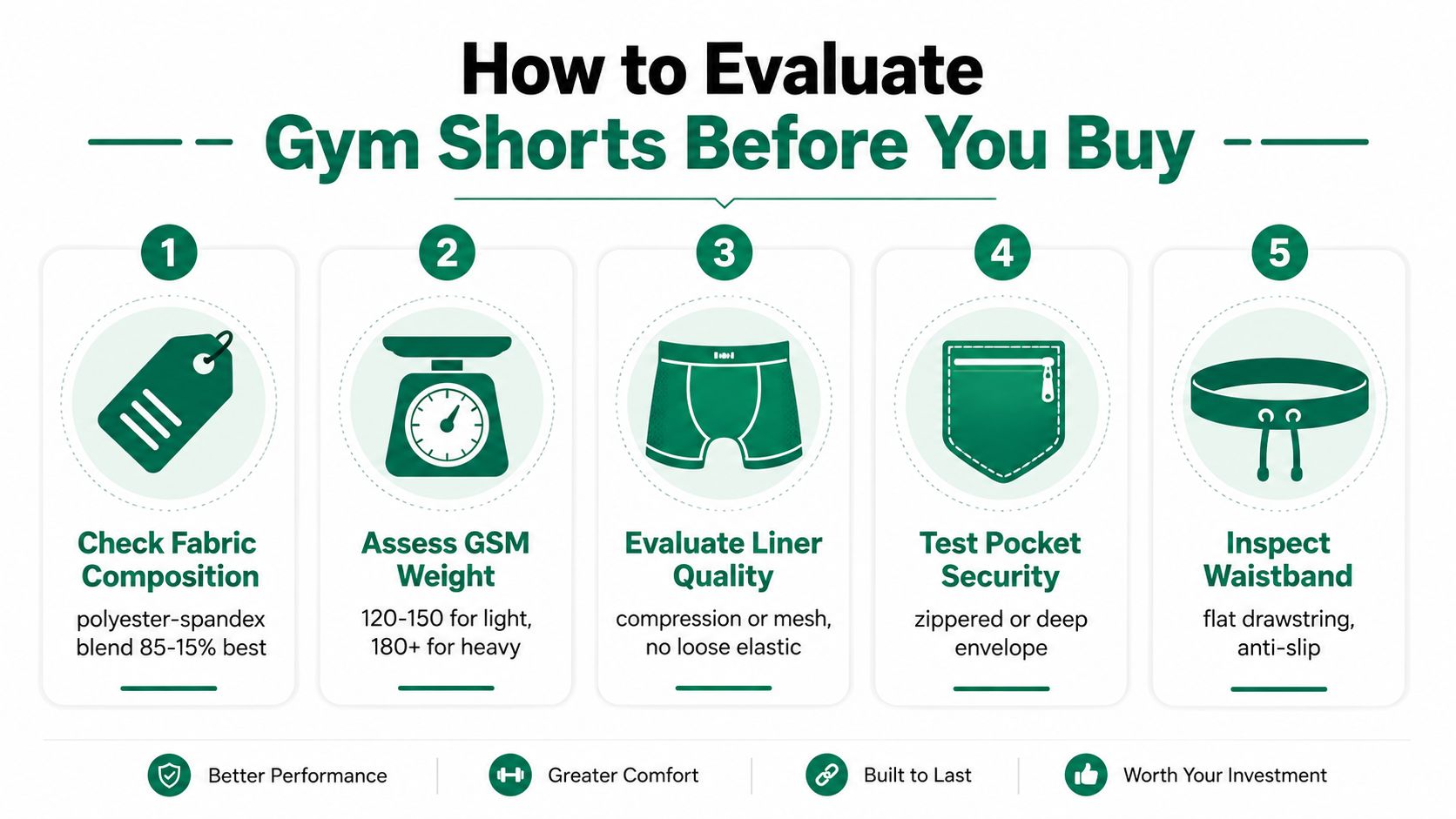
Read the label before the sales copy
Find the fiber composition first. A polyester- or nylon-dominant shell with spandex is a stronger starting point for demanding training than a cotton-heavy construction. Then look for GSM or another clear description of fabric weight. The 190–220 GSM range is the practical performance baseline identified in activewear fabric guidance, while lighter options can make more sense for running or casual use.
Treat unsupported words such as “technical” or “pro performance” as marketing until the composition, weight, liner, and construction support them.
Inspect the hidden hardware
Product photos should show the inside of the liner, waistband, gusset, pocket opening, and hem. Look for flat seams, clean reinforcement, a drawcord that won't pull through, and elastic that lies evenly rather than twisting.
If photos don't reveal these details, contact the seller or choose a product with clearer documentation. You can't assess pocket security from a front-facing model shot alone.
Fit-test before committing
Check the size chart against your own measurements, then perform the movements you train:
- Squat: The shell shouldn't pull across the hips or catch on the thighs.
- Lunge and step up: The liner shouldn't ride or pinch.
- Jog and jump: The waistband should stay stable without constant tightening.
- Carry your phone: Walk, hinge, and accelerate with it in the intended pocket.
- Sit and bend: Seams shouldn't press into sensitive areas.
Read the return policy before removing tags or washing the garment. A short can feel fine for five minutes and fail during a full session. Test it gradually, and don't make it your only pair until it has survived the movements and laundering routine you expect.
Your Action Plan for Choosing the Right Pair
Start with your hardest training demand. Heavy lifters should prioritize a stable waistband, a roomy leg opening, and a durable stretch shell. HIIT athletes need quick moisture handling, a breathable liner, and secure storage. Runners should keep the cut light and short, while gym-to-street shoppers should choose a mid-length design with practical pockets and a clean exterior.
Next, inspect the specification rather than the photos alone. Look for polyester-spandex or nylon-spandex construction, enough spandex for recovery, and a fabric weight suited to the friction and sweat your sessions create. Check the liner seams, pocket attachment, drawcord, hem reinforcement, size chart, and return terms.
Buy for a rotation, not a fantasy of one perfect pair. Keep a technical short for hard conditioning, a stable pair for lifting, and a softer option for recovery or daily wear. Wash sweaty shorts promptly, dry them fully, and retire any pair that repeatedly causes chafe, odor, ride-up, or distraction.
From: Me Fitness Apparel offers women's and men's shorts alongside training tops, outerwear, and athleisure pieces for building a practical rotation. Visit From: Me Fitness Apparel to compare its apparel and choose pieces that fit the way you train and live.