

You leave the house in leggings that look convincingly close to Alo's Airbrush, then reach the squat rack and discover the problem. Under the gym lights, the fabric turns transparent at full depth, the waistband folds at the sides, and you spend the rest of the session arranging a towel with far more care than your workout.
That's why shopping for Alo Yoga dupes isn't really about finding the cheapest visual copy. It's about finding a piece with enough fabric density, stretch recovery, opacity, and construction quality to survive actual use. A low price means nothing if the leggings lose their shape after a few washes or the seams fail during a lunge.
Table of Contents
- The Dupe Trap and the Real Reason People Search
- Inspect the Build Before You Click Buy
- Hands-On Tests That Reveal the Truth
- Price Versus Longevity and When Alo Still Wins
- Red Flags and Where Dupes Quietly Fail
- Care Routine That Makes a Dupe Last
- Your Three-Minute Dupe Decision Framework
The Dupe Trap and the Real Reason People Search
The buyer usually starts with a familiar frustration. Alo's aesthetic is clean, polished, and easy to wear from studio to street, but the price makes every flaw feel personal. Paying premium money for a waistband that loses its snap or a brushed fabric that pills against the inner thigh is worse than buying an inexpensive mistake, because you expected the expensive pair to earn its place in the drawer.
The demand for alternatives is no longer niche. A 2025 McKinsey and Business of Fashion summary reported that nearly one in three U.S. adults had intentionally bought a dupe of a premium or luxury product, while 17% said they'd buy a dupe again even if they could afford the original. Across the U.S., Britain, Germany, and China, 54% said they'd keep buying dupes even with more disposable income. Those figures appear in the McKinsey and Business of Fashion summary.
Alo-style pieces sit directly in the sweet spot for this behavior. Independent dupe directories commonly place lookalike leggings and tops around $25 to $30, while original Alo items often sit roughly between $78 and $198. That creates a visible savings range of about 70% to 85% on some items, especially when shoppers compare a low-cost legging with an Airlift legging priced at $128 or an Alosoft hoodie priced at $98. The same source notes that the global secondhand fashion market is projected to reach $320 billion to $360 billion by 2030, reinforcing the broader shift toward value-conscious apparel.
A popular silhouette attracts bad copies
Alo's growing visibility makes its shapes easy to recognize. Retail analysis cited in 2026 reported Alo Yoga's foot-traffic share across analyzed major U.S. activewear markets rising from 1.4% to 8.6%, while Lululemon's share declined from 86.5% to 77.5%. The analysis also reported 7.5% year-over-year visit growth across 88 same stores and parent-company revenue near $2 billion, with revenue roughly doubling over two years and rising tenfold since 2020. Those figures come from Passby's Alo Yoga retail analysis.
Popularity creates a recognizable design language, but recognition doesn't equal performance. A dupe may copy the high waist, matte finish, and sculpted seam placement while skipping the details that keep the garment opaque and stable.
My rule: treat every dupe as an engineered product, not a mood-board replica.
The rest of your decision should answer one question: will this piece still feel reliable after repeated movement and washing? By the end, you'll have a three-minute filter that works on almost any listing before you spend money.
Inspect the Build Before You Click Buy
Product photos are the least trustworthy part of an activewear listing. They show the silhouette under controlled lighting, not what happens when the fabric stretches across your hips, absorbs sweat, or rubs against equipment. Read the specification panel first, then inspect the construction details.
Start with the fabric specification
“ buttery soft” tells you almost nothing. Look for fabric weight, fiber percentages, stretch direction, and finishing details. For squat-focused leggings, a heavier knit generally gives you more confidence than a featherlight fashion jersey, but weight alone doesn't guarantee opacity. A dense fabric with poor recovery can still sag, while a lighter technical knit may perform well if it's properly constructed.
A nylon-spandex blend is a useful starting point for a smooth, compressive feel. Polyester-spandex can also work well, particularly when the listing gives clear information about moisture management and stretch recovery. I'm suspicious when the seller refuses to name the fiber mix or hides behind phrases such as “premium performance blend.”
You should also check whether the brand identifies its fabric mill or technical finish. It doesn't need to disclose a proprietary formula, but a serious manufacturer usually gives you more than a soft-touch adjective.
Then examine the seams and gusset
Flatlock seams are preferable at high-friction and high-stress points because they reduce bulky ridges against your skin. Coverstitched seams aren't automatically bad, but you need to inspect the thread density and reinforcement around the crotch, seat, and waistband.
A gusseted crotch is essential for leggings marketed as a replacement for a studio or training staple. A triangular or diamond-shaped gusset distributes tension across a larger area and gives you more freedom during lunges, deep squats, and hip rotation. Without one, the center seam carries too much stress and can twist, pull, or split.
Judge the waistband like a garment technician
A wide waistband with internal structure is a strong sign. Look for a band around four to five inches wide, a concealed drawcord, or internal grip features. A narrow exposed elastic strip may feel secure in the fitting room, then roll or lose tension once you start moving.
Check the side seams while the waistband is stretched horizontally. If the stitching opens visibly or the elastic tunnels away from the fabric, the waistband is unlikely to age well. Inspect pockets the same way. A phone pocket should sit close to the body rather than droop away from the hip when loaded.
The same inspection logic applies to tops and layers. For example, the Daily Standard Quarter-Zip (Women's) lists a 280gsm, 60/35/5 cotton/polyester/spandex French terry, four-way stretch, a reverse coil zipper, pre-laundering, and split-side hems. Those are useful construction details because they tell you more than “soft” or “comfortable” ever could.
For a broader checklist on choosing workout clothing, use this guide to women's fitness apparel.
Hands-On Tests That Reveal the Truth
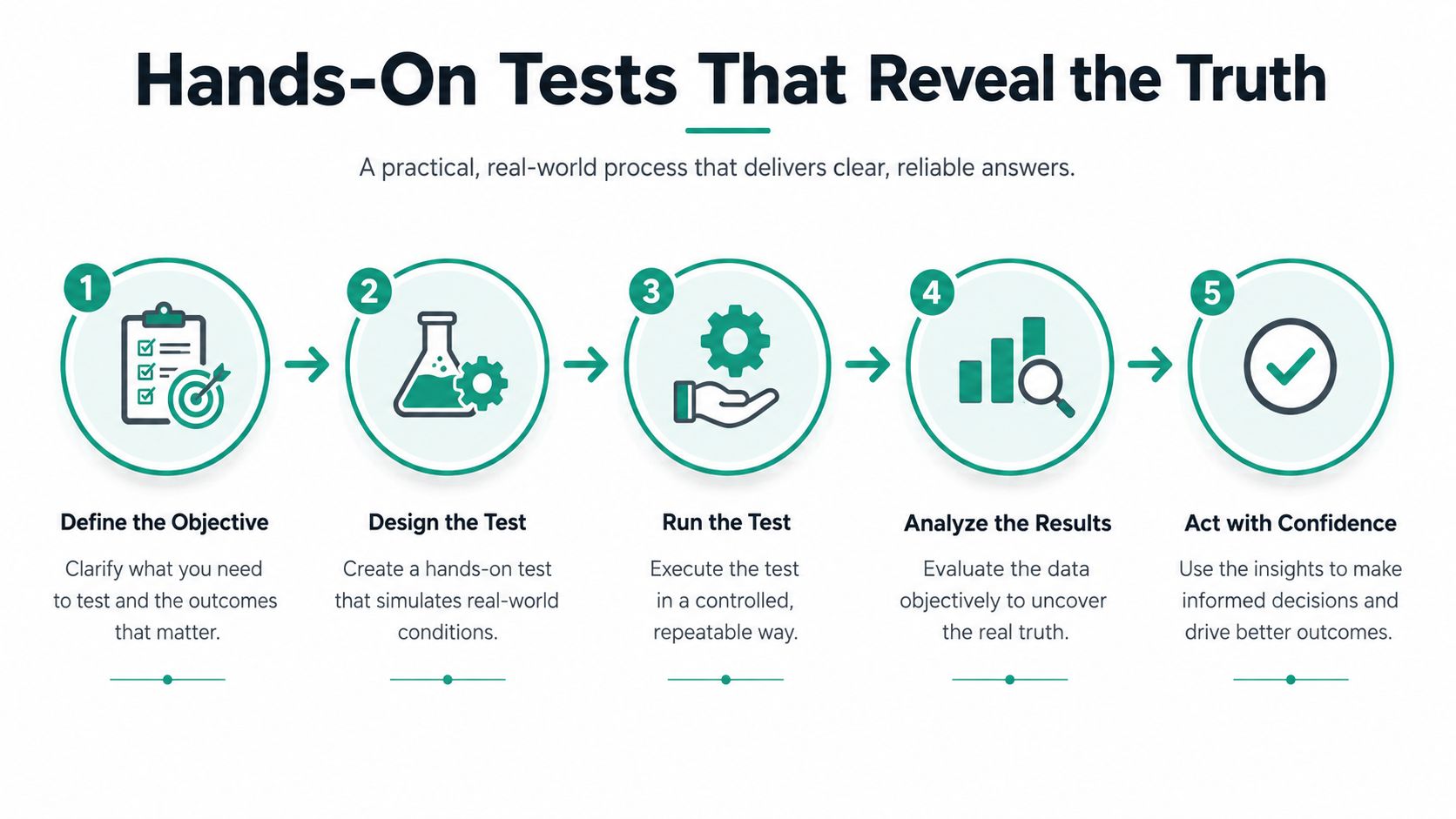
You don't need a laboratory to expose a weak dupe. You need a mirror, a phone, a glass of water, and a few minutes before the return window closes.
Test the fabric in real conditions
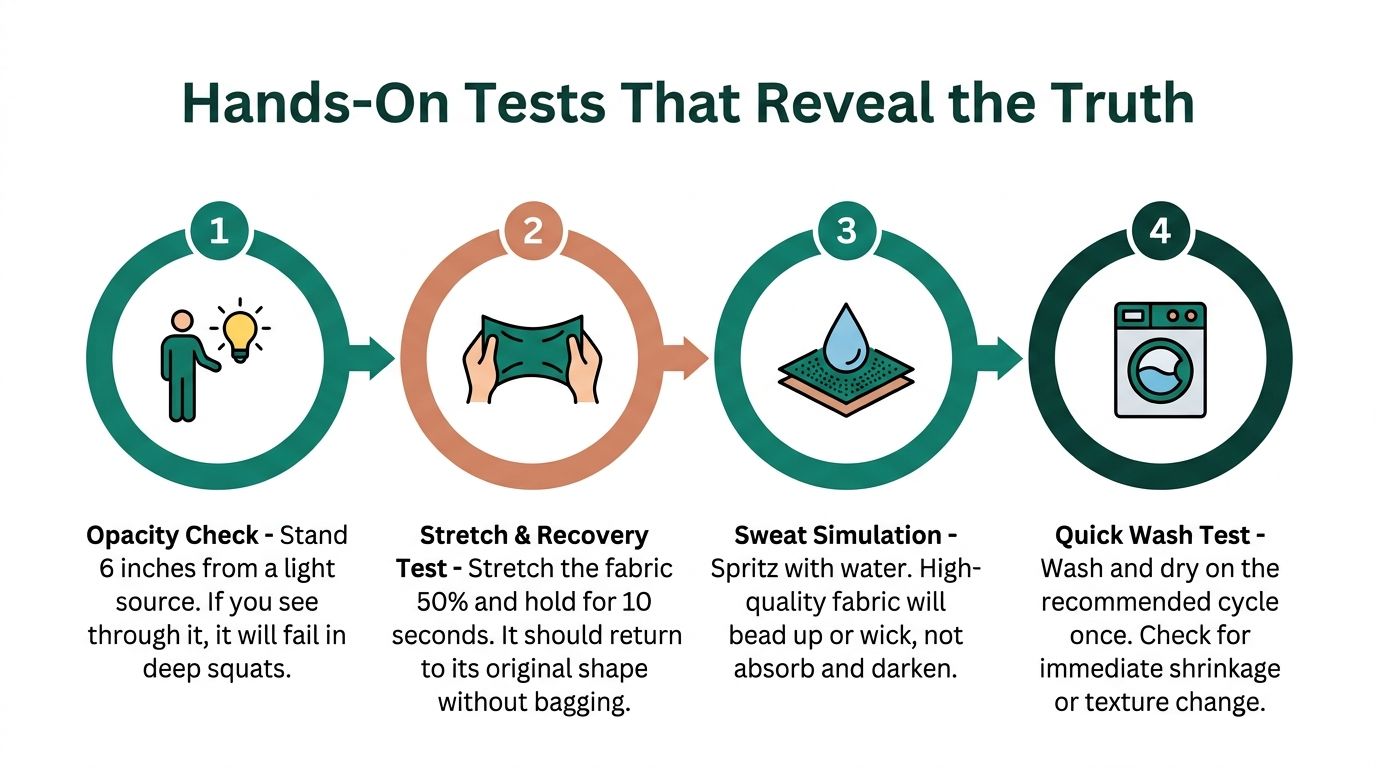
Start with the opacity check. Stand about six inches from a bright light source, pull the fabric across the area it covers, and squat fully. Use your phone to photograph the back view with flash if you're comfortable doing so. If the fabric whites out or reveals the outline of your underwear, fail it immediately. No amount of flattering color or low pricing fixes transparent leggings.
Next, test recovery. Mark or visually identify a section of fabric, stretch it firmly, hold it for ten seconds, then release. Repeat the motion several times. The fabric should return smoothly without a visible bag, ripple, or knee-shaped pocket. Slow recovery signals that the leggings may lose their specific fit quickly.
For a top, the same principle applies across the shoulder, bust, and underarm. A lightweight performance tee such as the Varsity Active Tee lists moisture-wicking fabric, a 4.7 oz weight, built-in UV protection, and a relaxed athletic fit. Those specifications don't replace testing, but they give you a clearer starting point than a listing built entirely around lifestyle photos.
Simulate sweat and movement
Place a small drop of water on the inner surface of the fabric. Watch what happens on the outer face. Rapid spreading or controlled wicking is more encouraging than a dark wet spot that sits in place, although you should remember that a single water drop isn't a full sweat test. If the fabric beads aggressively on the surface, it may have a coating rather than a useful moisture-management structure.
Finish with ten deep squats against a dark background. Check the glute seam, inner thigh, and waistband after every few repetitions. Look for white-out, seam twisting, rolling, or fabric that stays stretched after you stand.
Use this verdict system:
- Opacity: Pass only if the fabric remains visually solid at full squat depth.
- Recovery: Pass if it returns to its original shape without bagging after repeated stretching.
- Water response: Pass if moisture spreads or wicks rather than sitting as a spreading dark patch.
- Movement: Pass if the waistband stays put and the seams remain flat through ten deep squats.
These tests tell you more than a star rating because they reproduce the stresses that cause most dupe failures. For more guidance on moisture management in tops, see this resource on women's moisture-wicking tops.
Price Versus Longevity and When Alo Still Wins
A cheap legging only saves money if it stays usable. The simple way to judge value is to divide the purchase price by the months or wears you expect to get from it, then compare that result with the original.
The supplied comparison scenario makes the point clearly. A $38 dupe that lasts four months costs roughly $114 when annualized, while a $98 Alo pair that remains strong through the first year costs $98 over that period. Those figures are part of the assigned comparison framework, not a promise about how every garment will perform.
| Product Tier | Price Point | Avg Lifespan | Est. Annual Cost | Best Use |
|---|---|---|---|---|
| Budget dupe | $38 | Four months in the example | Roughly $114 annualized | Occasional wear if it passes testing |
| Alo original | $98 | One year in the example | $98 in the example | Frequent studio wear and signature pieces |
| From: Me Fitness comparison layer | Not specified | Not specified | Not specified | Training tops and layers where construction details are disclosed |
When the original earns its place
Alo still makes sense when you wear one piece constantly and need predictable fit, compression, and finish. I'd favor the original for frequent hot yoga, where moisture handling matters session after session, and for signature pieces such as Airlift leggings, where the fabric feel is the reason you're buying that model rather than just the silhouette.
I'd also pay for the original when the garment is a wardrobe anchor. If you wear black leggings several times a week, pilling after a few wears is visible every time you leave the house. A lower price doesn't compensate for a piece you stop reaching for.
Where dupes are the smarter buy
Dupes often make more sense for cropped tanks, lounge joggers, and matte basics. These pieces usually face less demanding compression and opacity requirements, so the gap between the original and a well-specified alternative can be smaller.
From: Me Fitness Apparel offers a different mid-range comparison point, with training tops and layers that disclose construction details instead of relying only on visual similarity. Use its brands like Alo Yoga guide as a reference point when you're comparing lifestyle pieces rather than technical leggings.
My recommendation is blunt: don't buy the original automatically, and don't buy the dupe automatically. Buy the garment whose cost per wear matches its actual job.
Red Flags and Where Dupes Quietly Fail
The obvious warning signs are easy to spot. The expensive mistakes appear after the first wash, when the return label is gone and the listing photos no longer matter.
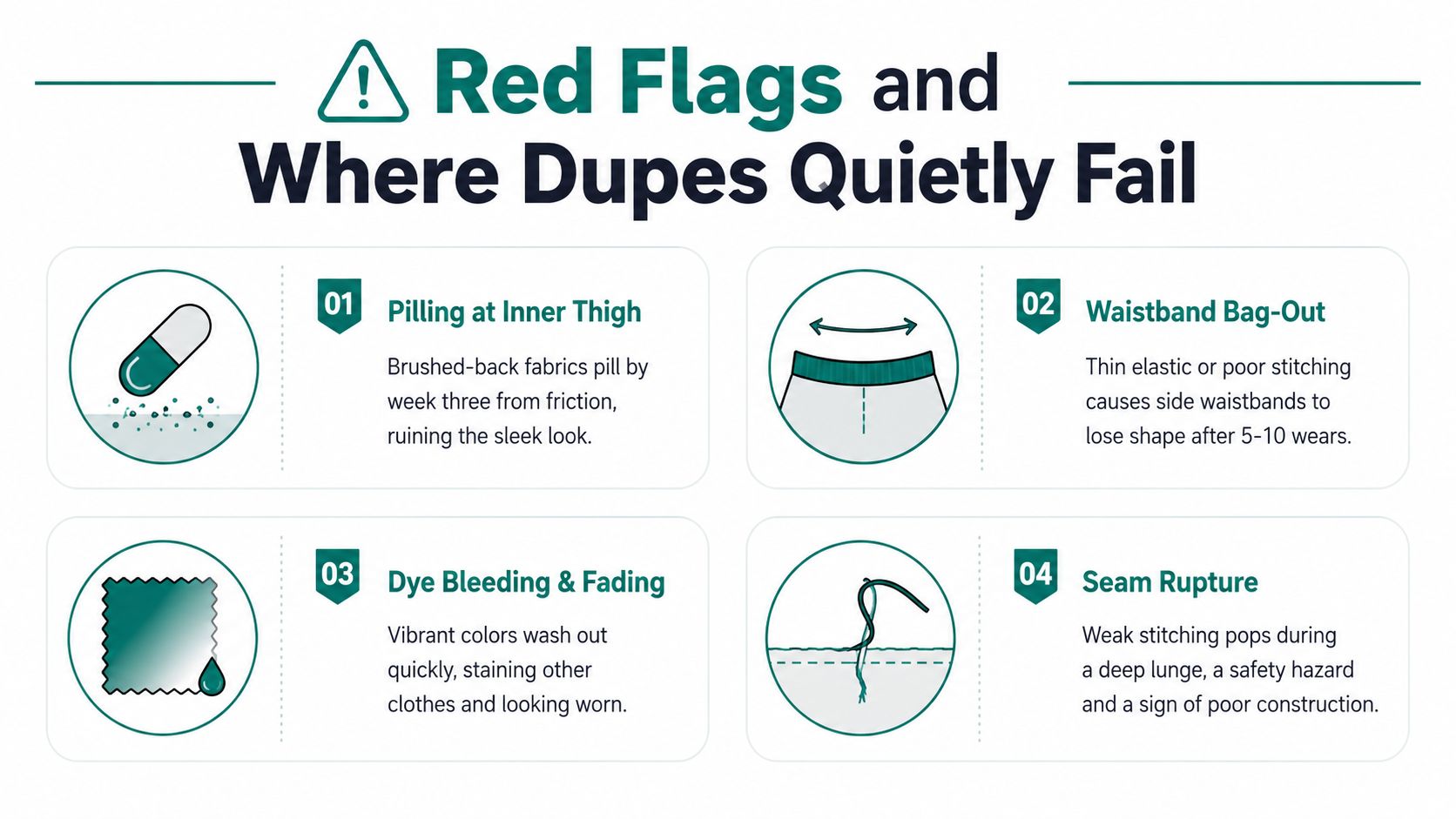
Brushed-back fabrics can feel luxurious at first and then pill where your thighs rub. Waistbands may look wide but lose shape at the side seams when you pull them sideways. Gussets can twist after washing, leaving the center seam misaligned during movement. Dark dye can migrate onto lighter garments in the same load, turning a coordinated set into a laundry problem.
Read the listing language skeptically
Walk away from a product page that combines vague material language with missing construction information. These are the signals I treat as disqualifying:
- “Buttery-soft blend” without fiber content: The phrase describes a sensation, not a specification.
- No fabric weight: You can't assess density or compare the garment with another option.
- No origin or manufacturer information: Lack of transparency makes quality control harder to judge.
- Stock photography that mirrors Alo imagery: The seller may be selling a visual promise rather than documenting the actual product.
- No close-up seam photos: You can't inspect the points most likely to fail.
Dupes struggle most during HIIT with explosive lateral movement, reformer Pilates where seam placement rubs against equipment, and high-heat machine drying. Those activities punish weak stitching, unstable waistbands, and poor elastane recovery faster than casual errands do.
If a listing gives you two soft signals, such as vague fabric language and missing weight, skip it. You're being asked to pay before the seller proves the garment exists at the quality shown.
Care Routine That Makes a Dupe Last
A good dupe can still die young in a careless laundry routine. Nylon, polyester, and elastane blends need less heat and friction than ordinary cotton basics, so treat them as technical textiles even when the price tag says otherwise.
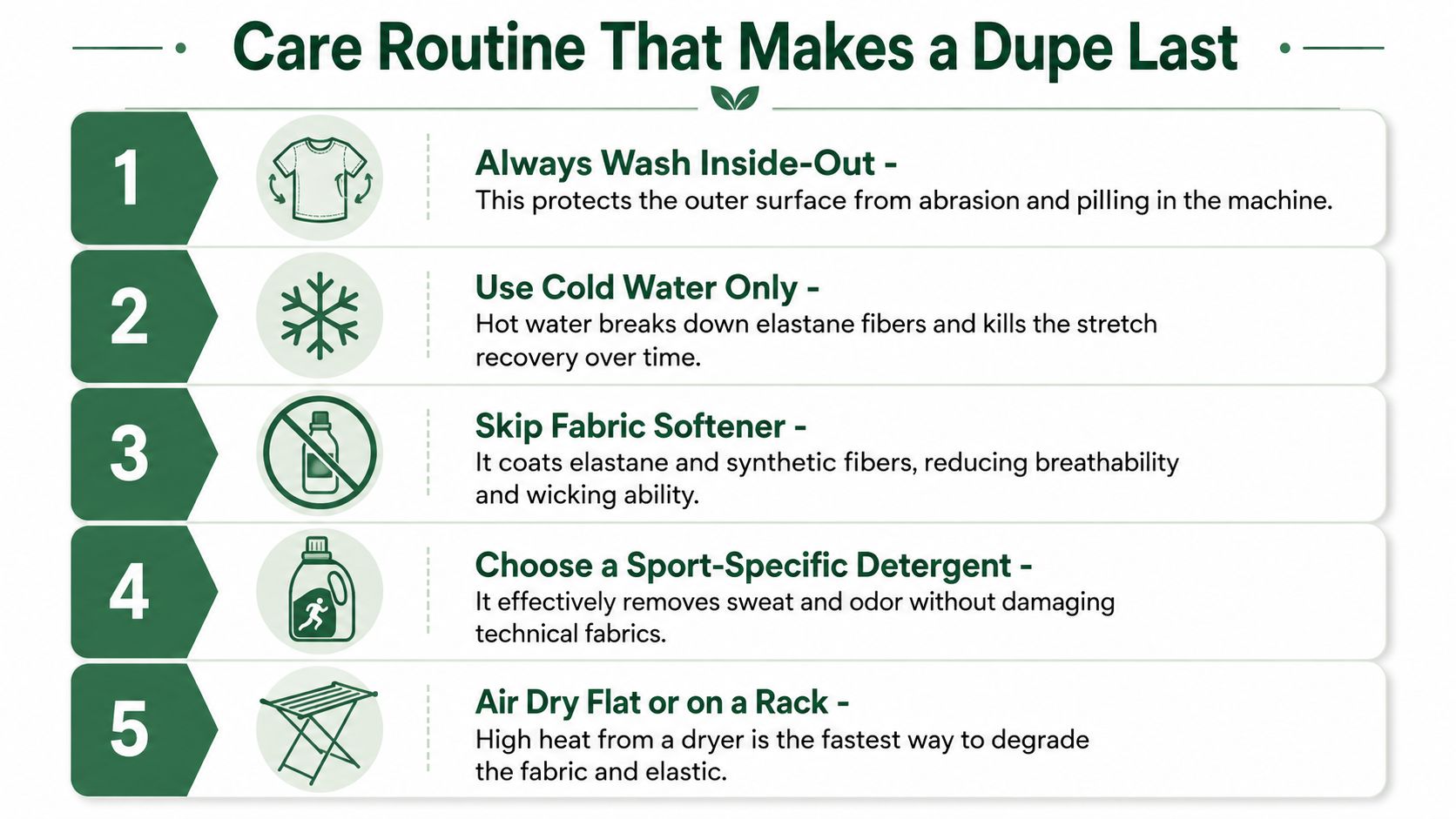
Wash activewear inside out in cold water. Turning garments protects the outer face from abrasion, while cold water reduces stress on elastic fibers. Use a sport-specific detergent that rinses clean, and skip fabric softener entirely. Softener can coat synthetic fibers and elastane, which may reduce breathability, wicking, and stretch recovery.
Use the dryer as little as possible
Air-dry leggings flat or on a rack. If the care label allows tumble drying, use low heat, not a hot cycle. High heat is one of the fastest ways to degrade elastic components, and no premium logo can reverse that damage.
Rotate pieces instead of wearing the same legging for every session. Rest gives elastane time to recover between uses, and it reduces the friction concentrated on one garment. Store leggings folded rather than hung, because a hanger can gradually stretch the waistband.
Protect color and shape
Wash new dark dupes alone for their first three cycles to reduce the chance of dye bleeding onto lighter pieces. That step matters most for matching sets, where one unstable garment can stain an entire outfit.
Use this compact routine:
- Turn garments inside out.
- Wash in cold water.
- Use technical detergent without softener.
- Air-dry flat or use low heat if permitted.
- Fold for storage and rotate your workout pieces.
Your Three-Minute Dupe Decision Framework
Save the product listing, then run this sequence before checkout.
First, read the fiber content. Look for a clearly stated nylon or polyester base with meaningful spandex content. A blend can't guarantee performance, but an undisclosed blend guarantees uncertainty.
Second, find the fabric weight. Compare the listed weight with the intended use. Dense studio leggings should give you more confidence for opacity and compression than a thin fashion legging, while a light tee may be appropriate for training if the seller provides clear moisture and construction information.
Third, test the garment before removing tags. Squat fully, stretch the fabric, check recovery, and inspect the waistband from the side. Don't let a flattering mirror view replace movement.
Fourth, calculate cost per wear. Ask how often you'll use the piece and how long it needs to last. A low upfront price isn't a bargain if the item becomes unusable after a short rotation.
Fifth, search reviews for failure language. Ignore comments that only say “cute” or “soft.” Look for reports about pilling, seam splits, waistband roll-down, transparency, dye bleeding, and fit after repeated washing.
Sixth, apply the red-flag filter. Missing fabric information, missing weight, stock photography, and vague claims should lower your confidence immediately. Two of those signals together are enough reason to leave the listing.
The rule is simple: buy the dupe if it passes the build inspection, the at-home tests, and the review scan, and costs less than half the Alo original with comparable fabric specifications. If it fails any one of those checks, either keep searching or pay for the original. Style gets you into the fitting room. Construction determines whether the garment stays in your rotation.
From: Me Fitness Apparel offers made-to-order training layers and performance tops, including a women's quarter-zip and a lightweight active tee with disclosed fabric and construction details. Visit From: Me Fitness Apparel to compare those options with the dupe you're considering and choose the piece that matches how you train.