

On a cool morning run, a women's long sleeve athletic shirt can keep the first miles comfortable, soften a light chill, and cover your arms from the sun. Wear that same top through a heated gym session, however, and trapped humid air may make it feel too warm within minutes. The right choice depends on how the shirt manages changing heat, not on its color or the words “moisture-wicking.”
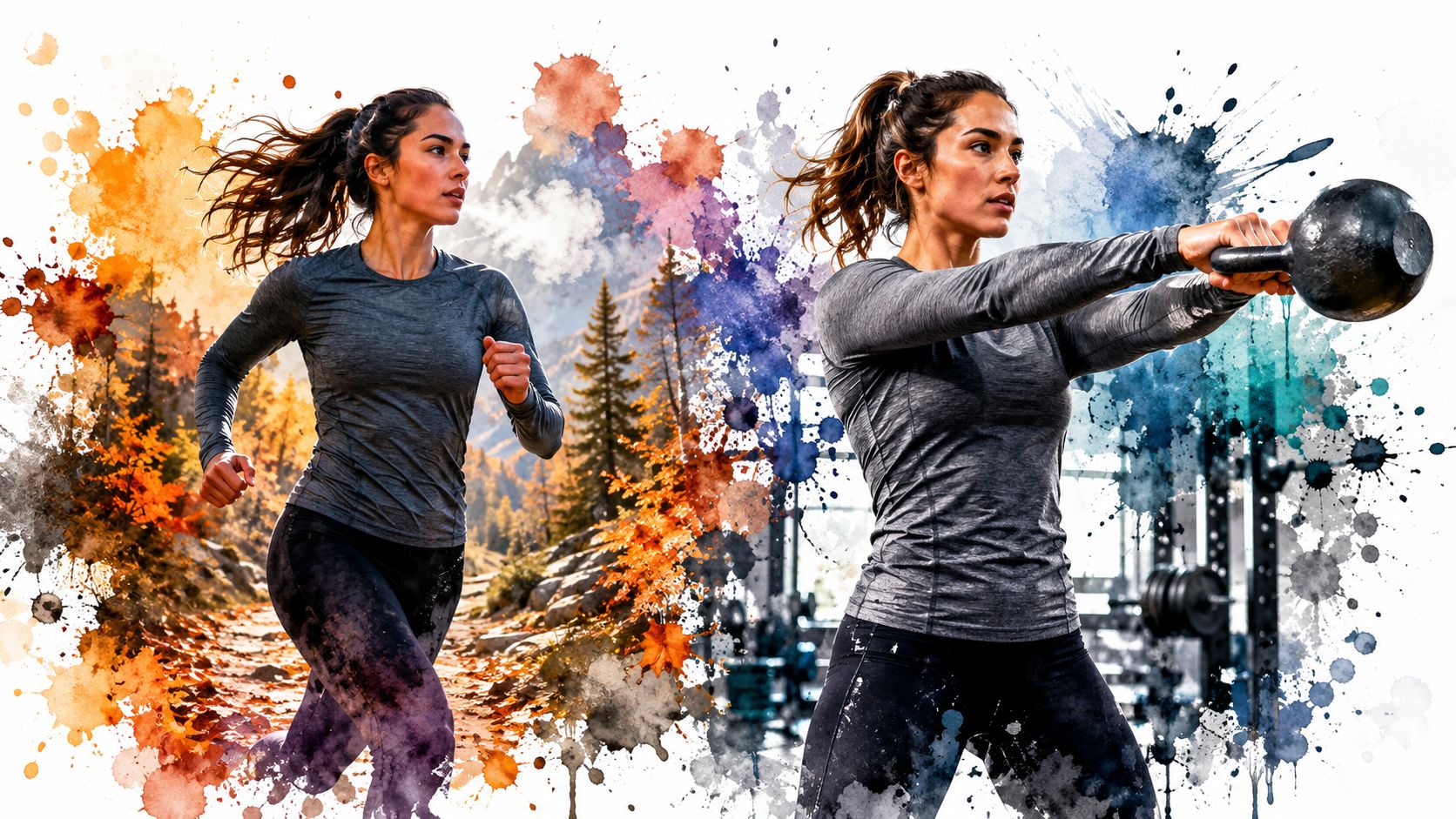
Fabric, knit density, stretch blend, fit, and sleeve details work together like parts of a thermostat. A more open, flexible shirt can release heat during intense indoor training, while a denser structure may hold warmth and provide greater coverage outdoors. A close fit can move with the body during running, a less restrictive cut can suit gym exercises, and a slim layer can sit comfortably beneath a jacket on recovery days.
Euromonitor's women's sportswear analysis reported that women's sportswear represented 36% of global sportswear sales in 2023, while growing faster than men's sportswear over the previous five years. Other market estimates place women's sportswear near USD 170 billion in 2025, with a projection of approximately USD 283.7 billion by 2034 at a 5.3% CAGR. This broad demand reflects uses ranging from running and gym training to outdoor recreation, commuting, and athleisure.
The guide ahead turns those choices into practical steps. It explains when ventilation should take priority over insulation, how polyester and elastane blends differ from cotton-heavy knits, how UPF structure affects outdoor comfort, and how to choose a fit for solo wear or layering.
Table of Contents
- Understanding What Makes a Long Sleeve Athletic Shirt Different
- Fabric Choices That Control Sweat Warmth and Stretch
- Finding Your Perfect Fit and Layering System
- Best Uses From Outdoor Runs to Gym Sessions and Recovery Days
- Common Misconceptions About Breathability Sun Protection and Sustainability
- Choosing Your Go To Long Sleeve With Confidence
Understanding What Makes a Long Sleeve Athletic Shirt Different
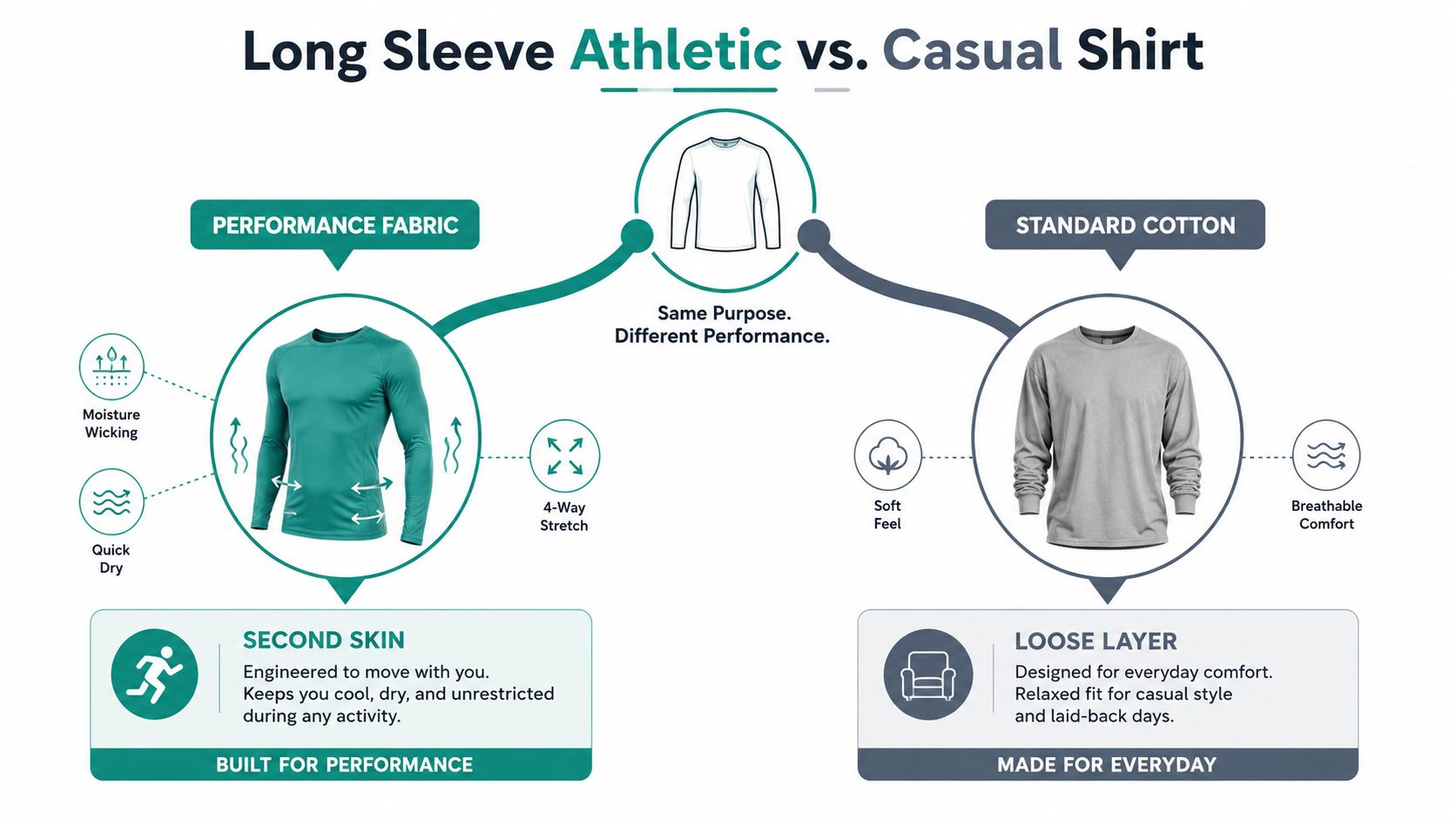
A casual long sleeve top is usually designed to look and feel comfortable while you're standing, sitting, or walking. An athletic shirt has a more demanding job. It has to move as your shoulders rotate, manage moisture as your effort rises, and stay in place while your torso bends, reaches, presses, or runs.
Think of the difference as second skin versus loose blanket. A fitted performance knit follows your movement and keeps fabric close enough for sweat to travel away from the skin. A relaxed cotton layer may feel pleasant at rest, but once it absorbs moisture, it can become heavy, clingy, and slow to dry.
Start with the construction
Look beyond the fiber name. Two tops can both list polyester and spandex yet feel different because their knit density, yarn arrangement, and surface finish differ.
- Knit structure controls how air and moisture move through the garment. Open construction can ventilate more freely, while a denser knit can feel smoother, warmer, and more protective.
- Stretch recovery determines whether the shirt returns to its shape after repeated reaches, presses, or overhead movements. Stretch that only expands without recovering can leave the elbows and waist looking loose.
- Seam placement affects friction. Flat or carefully positioned seams can reduce irritation under the arms, across the shoulders, or beneath a backpack strap.
- Sleeve articulation gives the elbows room to bend without pulling the cuffs backward. This matters during lifting, rowing, yoga, and running.
A casual top may use a straight sleeve and broad side seam because the wearer isn't expected to cycle through demanding movements. An athletic design treats the body as a moving map. The best details disappear while you're using them.
Use the product page as a design brief
Product descriptions often reveal more than the phrase “activewear.” Search for language such as four-way stretch, articulated sleeves, thumbholes, raglan sleeves, flat seams, breathable knit, or a stated UPF rating. Each term answers a practical question: will the shirt move, stay positioned, ventilate, or cover you outdoors?
A standard-fit layer such as the Daily Standard Quarter-Zip (Women's) serves a different role from a close-fitting base layer. Its four-way stretch French terry, cadet collar, reverse coil zipper, and split-side hems make it suitable as a comfortable layer between training clothes and outerwear, rather than a next-to-skin sweat top.
Practical rule: If a shirt feels fine while you're standing but pulls across your upper back when you raise both arms, it isn't ready for your workout.
Fabric Choices That Control Sweat Warmth and Stretch
During a hard outdoor run, an airy knit can feel like an open window for heat. On a cool recovery walk, that same level of ventilation may leave you wishing for a warmer layer. Fabric choice controls this difference, but the label alone cannot predict it. Fiber content, knit construction, air permeability, and fit work together, so match the shirt to your effort level and climate rather than choosing by a marketing phrase.
Polyester and elastane, also called spandex, are common in women's performance tops. Polyester absorbs little moisture, while elastane supplies stretch and helps the fabric recover after movement. A technical textile study found that a polyester-spandex sample containing 86.06% polyester and 13.94% spandex achieved Grade 5 in accumulative one-way transport and overall moisture management capacity. The same study reported that a blend containing 91.13% polyester and 8.87% spandex had the highest air permeability and comparatively lower thermal and water-vapor resistance. In practical terms, the first blend demonstrates directional moisture movement, while the second favors airflow and less heat retention.
That difference explains why two stretchy polyester shirts can feel completely unlike each other. A more open, permeable knit suits intervals, hot gyms, and warm outdoor runs. A denser knit can provide more insulation during a cool start, easy session, or recovery layer. Stretch also changes comfort: a blend that moves with the shoulders and arms feels less restrictive, while excessive looseness can interrupt moisture contact with the skin.
Compare the main tradeoffs
| Fabric Blend | Moisture Management | Breathability and Warmth | Best For |
|---|---|---|---|
| Polyester and elastane or spandex | Strong option for directional sweat movement when the blend and knit are well engineered | Can range from airy to moderately insulating depending on pore structure and density | Running, gym intervals, studio training, and active layering |
| Cotton-heavy blend | Soft hand feel, but cotton can retain more moisture than synthetic performance fibers | Often feels comfortable at rest, then warmer or heavier when damp | Recovery, casual wear, warm-ups, and low-sweat sessions |
| Recycled polyester with stretch fiber | Can provide performance similar to virgin polyester when the garment is well constructed | Depends on the same knit and fit variables as other polyester garments | Frequent training when durability and material sourcing both matter |
Cotton-heavy fabric still has a place. For walking, stretching, commuting, or cooling down, its softness may matter more than rapid drying. During repeated high-output intervals, retained moisture can make the shirt feel heavier and warmer.
For practical guidance on sweat-related fabric wording, read this guide to women's moisture-wicking tops. Treat terms such as moisture-wicking as starting clues, then check the blend, fabric weight, knit density, and intended fit.
Recycled polyester deserves a balanced answer
Recycled polyester can reduce production energy and emissions compared with virgin polyester, but the fiber label does not settle every sustainability question. A sportswear materials review reports that recycled polyester may shed as many or more microplastic particles during washing as virgin polyester.
Judge the whole garment instead. Consider durability, how often you'll wash it, whether you'll keep wearing it, and how you manage laundry. A shirt that stays useful through repeated training creates a different result from one that performs well briefly and is discarded soon after.
Finding Your Perfect Fit and Layering System
Fit changes performance more than many shoppers expect. A shirt can have excellent fibers and still feel wrong if it binds at the shoulders, rides up during movement, or sits so loosely that sweat never reaches the fabric efficiently.
Choose the silhouette according to the job:
- Fitted works well as a next-to-skin base layer. It minimizes loose fabric and can slide smoothly beneath a jacket or quarter-zip.
- Standard gives you room for movement without looking oversized. It's the most adaptable choice for gym sessions, commuting, and everyday wear.
- Relaxed creates more airflow and an easy recovery-day shape. It may be more comfortable in casual use, but excess fabric can shift during technical training.
Test the fit in motion
A fitting room check should resemble your workout, not a passport photo. Raise both arms, rotate your torso, reach forward, bend your elbows, and sit down. Watch what the fabric does.
The shoulder seam should stay near the shoulder rather than sliding down the arm or cutting toward the neck. The underarm should allow a full reach without pulling. The sleeves should cover the wrist during movement if you want protection, while cuffs should remain secure without pressing uncomfortably.
Thumbholes can keep sleeves from creeping toward the elbow and add hand coverage during a cold start. They're useful under gloves or an outer layer, but they aren't mandatory for indoor training. A curved hem can offer extra coverage while bending, whereas a straight hem often layers more cleanly.
A simple layering system works like adjustable volume on a speaker. The base layer controls moisture near your skin, the middle layer adds warmth, and the outer layer blocks wind or rain. You can turn the volume down by removing a layer, rather than forcing one shirt to handle every condition.
- Base: Choose a close or gently fitted athletic shirt when sweat control and easy movement come first.
- Mid: Add a quarter-zip, fleece, or light vest when the air is cool and your effort varies.
- Outer: Use a wind-resistant or weather-protective shell when exposure matters more than softness.
For more guidance on choosing a warm middle layer, see this quarter-zip fleece guide.
The shirt should be close enough to manage moisture but never so tight that it restricts breathing, shoulder rotation, or comfortable layering. If you prioritize airflow and casual versatility, size and silhouette may lean roomier. If you're buying a technical base layer for intervals, closer contact usually makes more sense.
Best Uses From Outdoor Runs to Gym Sessions and Recovery Days
One long sleeve can cover several activities, but it won't optimize every one of them. The useful question isn't “Is this shirt versatile?” It's “Which compromise will I notice least?”
Outdoor runs and hikes
Outdoor training exposes you to sun, wind, changing temperatures, and uneven effort. Look for a verified UPF label if sun protection is part of the reason you're buying the shirt. REI's women's UPF long sleeve product information describes UPF 50 protection, and explains that UPF 50 blocks approximately 97.5% of UVA and UVB radiation, allowing 1/50 of UV exposure to reach the skin.
Fabric structure matters as much as the fiber name. A tighter knit, full sleeve coverage, and a fit that doesn't pull excessively across the skin can support more consistent protection. If the fabric stretches sharply over the shoulders or becomes thin when wet, coverage may change.
For a brisk run in cool air, a denser knit can feel reassuring at the start. For a hot-weather hike, a looser and more ventilated design may feel better, even if it offers less insulation. You're choosing between a windbreaker-like effect and an open-window effect.
Gym and studio training
Indoor training usually rewards stretch, mobility, and moisture movement over sun coverage. A close or standard fit keeps the shirt from catching on equipment and makes it easier to monitor how your body moves during presses, pulls, squats, and floor work.
A lower-air-permeability knit may feel warmer, but that doesn't automatically mean it manages sweat poorly. Moisture transport and heat release are separate behaviors. A shirt can move sweat toward the outer surface while still limiting air exchange, which may suit a cool strength session but feel uncomfortable during high-output cardio.
Use the practical recommendations in this guide to what women can wear to the gym as a starting point, then adjust for your gym's temperature, training intensity, and preference for fitted or relaxed clothing.
Recovery and casual wear
Recovery days call for softness, easy movement, and simple layering. Cotton blends can make sense when you aren't generating much sweat, especially if you want the top to work with jeans, joggers, or a casual outer layer.
A standard or relaxed silhouette can also feel less restrictive after a demanding session. The tradeoff is that extra fabric may bunch beneath a jacket or feel warm once activity rises. That's fine if the garment's job is commuting, stretching, or coffee after training rather than repeated intervals.
A useful buying test: Choose the activity you'll do most often, then make sure the shirt can tolerate your second-most-common use without becoming annoying.
Common Misconceptions About Breathability Sun Protection and Sustainability
“Moisture-wicking” sounds like a complete answer, but it describes only one part of the experience. A shirt can move sweat away from your skin and still feel hot if its knit releases heat slowly or its fit holds humid air close to the body.
Research on heat exercise shows that synthetic long sleeve tops can change skin temperature, humidity, and perceived comfort according to air permeability and fit. The practical lesson is simple: wicking doesn't equal cooling. For indoor intervals or hot-weather running, examine the knit and silhouette, not just the marketing phrase.
Think of fabric as a traffic system: sweat transport moves moisture along the road, while air permeability determines whether heat can leave the city.
Myth one, every wicking shirt feels cool
A close, dense shirt may manage sweat effectively while feeling warmer because less air moves through the fabric. That can be useful during a cool outdoor warm-up or recovery walk, but uncomfortable during sustained high-intensity work.
A looser knit can ventilate better, yet it may provide less insulation and less consistent contact with the skin. Neither design wins universally. Your effort level and surroundings decide which compromise feels better.
Myth two, every long sleeve protects from the sun
Coverage helps, but a long sleeve alone doesn't verify a specific level of UV protection. UPF depends on construction, coverage, color, thickness, stretch, and whether the fabric is wet. A verified UPF rating gives shoppers a clearer basis for comparison than assuming every long sleeve performs the same way.
Look for a labeled rating and inspect how the shirt behaves when you reach or bend. A design that pulls thin across the arms may not offer the same protection in motion as it does on a hanger.
Myth three, recycled polyester is automatically better
Recycled polyester can lower some production impacts and perform similarly to virgin polyester, but microfiber shedding complicates a simple “eco” conclusion. The material choice should sit beside questions about garment lifespan, wash frequency, construction quality, and whether you'll keep wearing the piece.
Buy for the use case first. A durable shirt that stays in rotation can be a more sensible choice than a garment selected for one sustainability label but abandoned because it feels too hot, too restrictive, or too fragile.
Choosing Your Go To Long Sleeve With Confidence
Start with the workout you repeat most. For intervals and gym sessions, prioritize a polyester-spandex or polyester-elastane knit with useful stretch, a stable fit, and enough ventilation for your training space. For outdoor runs and hikes, add verified UPF protection, full sleeve coverage, and a structure suited to sun and wind.
Use this quick checklist before buying:
- Primary use: Run, gym, hike, studio, recovery, or daily layering.
- Fabric behavior: Directional moisture transport, softness, air movement, or warmth.
- Fit: Fitted for a base layer, standard for versatility, relaxed for airflow and casual comfort.
- Movement: No shoulder pull, underarm binding, sleeve creep, or hem ride-up.
- Sun needs: A verified UPF label when outdoor exposure is central.
- Care reality: Follow the garment's washing instructions and avoid treating recycled content as a substitute for long-term wear.
The right long sleeve athletic shirt for women should earn its place by solving a real problem. It might make cold starts easier, keep sleeves positioned during lifting, cover your arms on a bright trail, or add a comfortable layer between the gym and the rest of your day.
From: Me Fitness Apparel offers women's training and athleisure pieces, including graphic and performance tops, outerwear, shorts, and accessories, with U.S. free-shipping messaging and easy returns or exchanges. Visit From: Me Fitness Apparel to compare a long sleeve layering approach with the surrounding pieces you'll wear before and after training.